
Published On: 26 August 2026
How long do individual lashes last? The answer depends on more than just the lash type because adhesive, application technique, natural lash condition, and aftercare all influence retention.
Individual lashes are not all designed for the same wear period, which is why DIY individual lashes and professional individual lash extensions should be understood separately.
In this guide, you will learn how long different individual lash types can last, why some lashes fall off quickly, and which factors affect retention.
The article also explains the role of adhesive bond, application technique, natural lash growth cycle, aftercare routine, lifestyle habits, and practical steps to help individual lashes maintain their appearance for longer.
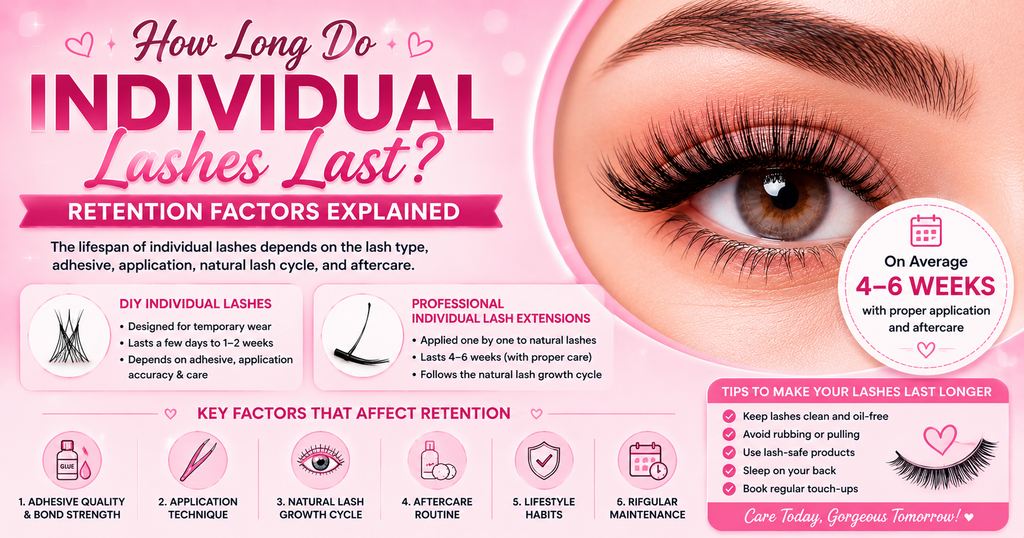
How Long Do Individual Lashes Last On Average
The lifespan of individual lashes depends on the type of lashes being used, the adhesive system, the application method, and how the lashes are cared for after application. Commonly, the individual lashes last for almost 4-6 weeks.
However, there is no single wear time that applies to every individual lash product because DIY individual lashes and professional individual lash extensions use different application methods and are designed for different purposes.
DIY individual lashes
DIY individual lashes are designed for temporary wear because they are commonly applied at home for short-term lash enhancement.
The time they remain attached depends on the adhesive used, the accuracy of application, and how the lashes are handled after placement.
The adhesive used for DIY individual lashes affects retention. A suitable adhesive combined with correct application can improve how long the individual lash pieces maintain their position.
The application technique affects DIY individual lash lifespan because poor placement or insufficient adhesive contact can weaken the attachment between the lash piece and the natural lash.
Professional individual lash
Professional individual lash extensions are applied individually to natural lashes, which means their retention is connected to the natural lash cycle. The extension remains attached until the natural lash holding it naturally sheds, causing the attached extension to fall as part of that process.
Professional individual lash extensions can maintain their appearance for several weeks, but the overall lash set changes gradually as natural lashes shed and new lashes grow.
The retention period of individual lashes should be judged by both attachment and appearance because lashes may still be attached while the overall style becomes less full over time.
To understand how long individual lashes last, consider the lash type first, then evaluate the adhesive, application quality, natural lash cycle, and aftercare routine that influence retention.
Factors That Affect How Long Individual Lashes Last
1. Lash Adhesive Quality And Bond Strength
Lash adhesive quality is one of the main factors that affects how long individual lashes last because the adhesive creates the connection between the individual lash base and the natural lash.
The strength and stability of this adhesive bond influence how securely each lash piece remains attached after application.
The individual lash adhesive forms a bond at the lash base where the added lash piece connects with the natural lash.
The adhesive bond quality affects individual lash retention because a weak or unsuitable bond may allow lash pieces to detach earlier than expected.
The lash adhesive should be suitable for the specific individual lash system because different lash products may require different adhesive characteristics.
The amount of adhesive applied to the individual lash base can also influence retention because insufficient adhesive may create an unstable attachment.
The natural lash surface should be properly prepared before applying adhesive because oil, residue, or makeup around the lash base can interfere with the adhesive connection.
The adhesive bond should be allowed to set properly after application because movement before the bond stabilizes can affect how securely the individual lash remains attached.
2. Individual Lash Application Technique
Individual lash application technique directly affects how long lashes remain attached because the adhesive bond depends on correct contact between the individual lash base and the natural lash.
Even with a suitable adhesive, poor preparation or incorrect placement can reduce retention and cause lash pieces to loosen earlier.
The natural lashes should be cleaned before applying individual lashes because oil, makeup residue, and product buildup can interfere with adhesive contact.
The adhesive amount applied to each individual lash piece affects retention because the bond depends on having enough product to create attachment without creating unnecessary buildup.
The individual lash should be attached at the correct point near the natural lash base because the attachment location influences how securely the lash piece sits during wear.
The individual lash direction should follow the natural lash growth pattern because proper alignment helps the lash piece sit correctly on the natural lash.
The application process should allow the adhesive bond to stabilize after placement because movement before the connection becomes secure can affect retention.
Beginners often focus only on adding more individual lashes instead of improving placement technique because they assume density determines retention..
3. Natural Lash Condition And Growth Cycle
Natural lash conditions and the natural growth cycle influence how long professional individual lash extensions remain attached because each extension is connected to an existing natural lash.
The retention period depends partly on the condition and lifecycle of the natural lash supporting the extension.
Professional individual lash extensions are attached directly to individual natural lashes rather than being applied as one continuous strip.
The natural lash growth cycle affects extension retention because natural lashes naturally shed and are replaced over time.
The natural lash condition can influence how well an individual lash extension remains attached because weak or unsuitable natural lashes may provide a less stable base for the extension.
The number of extensions remaining on the lash line can change over time because natural lash shedding does not happen to every lash at the same moment.
The appearance of professional individual lash extensions should be evaluated separately from simple attachment because some extensions may still be attached while the overall fullness and style have changed.
Beginners often expect all professional individual lash extensions to remain unchanged for a fixed period because they focus only on the extension itself. The natural lash cycle plays an important role because the extension depends on the natural lash where it is attached.
4. Aftercare Routine
Aftercare routine plays an important role in individual lash retention because daily habits can affect the condition of the adhesive bond and the overall appearance of the lashes.
Proper care helps maintain the attachment between the individual lash and natural lash after application.
The lash area should be cleaned gently after individual lash application because makeup residue, oil, and buildup around the lash base can affect lash appearance and comfort.
The eyes should not be rubbed after applying individual lashes because friction can disturb the adhesive bond between the individual lash and natural lash.
Oil-based products should be used carefully around individual lashes because oils may affect some lash adhesives and reduce bond performance.
The individual lashes should be handled carefully during daily activities because unnecessary pulling or pressing can place stress on the adhesive attachment points.
The eye area should be treated carefully during makeup removal because aggressive wiping can create friction against individual lashes.
Beginners often focus only on the application process and overlook aftercare because they assume lash retention depends only on adhesive.
5. Lifestyle Habits
Daily lifestyle habits can influence how long individual lashes maintain their appearance because activities involving moisture, friction, and pressure can affect the adhesive attachment and lash condition.
The way you treat your lashes during normal routines can impact the stability of the lash bond over time.
Swimming can affect individual lash retention because prolonged exposure to water may influence the condition of the adhesive bond depending on the lash system used.
Heavy sweating can affect individual lashes because moisture around the eye area may interact with the adhesive and make the lash line harder to maintain.
Sleeping position can influence individual lash appearance because pressing the lashes against a pillow can create friction and unwanted pressure on the attached lash pieces.
Touching individual lashes frequently can reduce retention because repeated contact can create movement at the adhesive attachment points.
The products used during daily routines should be considered because oils, makeup, and skincare products near the eye area may affect some adhesive systems.
Beginners often focus only on application quality and overlook lifestyle habits because they do not realize daily activities can affect lash appearance. Retention depends not only on the initial application but also on how the lashes are handled afterward.
How To Make Individual Lashes Last Longer
1. Before Application
Making individual lashes last longer depends on improving the factors that affect adhesive retention, lash placement, and daily wear.
The process starts before application because proper preparation creates a better foundation for the individual lash attachment.
The natural lash area should be cleaned before applying individual lashes because oil, makeup residue, and buildup can interfere with adhesive contact.
The suitable adhesive should be selected for the specific individual lash system because different lash products may require different adhesive properties.
The natural lashes should be completely prepared before adhesive application because the condition of the lash surface affects how well the individual lash attaches.
The adhesive amount should be controlled during application because both insufficient and excessive adhesive can affect lash retention.
The individual lashes should be placed accurately during application because correct attachment at the lash base supports better retention.
To improve individual lash lifespan, prepare the lash area properly, choose a suitable adhesive, and focus on creating a clean and secure attachment before moving to aftercare.
2. During Application
The application stage directly affects individual lash retention because each lash piece depends on accurate placement and proper adhesive contact with the natural lash.
Careful application helps create a stable attachment that can support better wear.
The individual lash should be applied correctly at the natural lash base because proper placement allows the adhesive to create a stronger connection.
The adhesive should be applied in the correct amount because the bond quality depends on having enough product to secure the lash without creating unnecessary buildup.
The individual lash should remain still after placement because movement before the adhesive sets can affect the final attachment position.
The adhesive setting time should be followed according to the specific product instructions because different adhesive formulas may require different amounts of time to become fully secure.
The individual lash placement should be checked before the adhesive completely sets because adjustments become more difficult once the bond becomes secure.
To improve individual lash retention during application, place each lash carefully, use the correct adhesive amount, and allow the adhesive enough time to set before disturbing the lashes.
3. After Application
After-application care plays an important role in maintaining individual lash retention because the adhesive bond needs protection during daily wear.
The way individual lashes are handled after placement can influence how long the lash pieces maintain their position and appearance.
The individual lashes should not be touched unnecessarily after application because repeated contact can create movement at the adhesive attachment points.
The lash area should be cleaned carefully after application because makeup residue, oil, and buildup can affect the appearance of individual lashes.
The cleaning method should involve gentle movements around the lash line because rough rubbing can disturb the adhesive bond.
The product instructions should be followed after application because individual lash systems may use different adhesives, application methods, and recommended care routines.
The individual lash products should be maintained according to their intended use because DIY lash systems and professional lash extensions may have different care requirements.
Beginners often focus on applying individual lashes correctly but overlook what happens after application because they assume retention depends only on the initial adhesive bond.
To help individual lashes last longer after application, avoid unnecessary touching, clean the lash area gently, and follow the care instructions provided with your specific lash product.
Why Are My Individual Lashes Falling Off Quickly
1. Weak Adhesive Bond
A weak adhesive bond is one of the common reasons individual lashes fall off quickly because the lash piece may not have formed a stable connection with the natural lash.
The attachment quality depends on proper contact between the individual lash base and the natural lash surface.
The adhesive may fail to attach properly when the lash base does not create sufficient contact with the natural lash during application.
The natural lash surface can affect adhesive attachment because oil, makeup residue, or buildup may interfere with the connection between the adhesive and the lash.
The adhesive amount can influence bond strength because too little adhesive may not provide enough attachment between the individual lash and natural lash.
The placement of the individual lash can affect the adhesive bond because incorrect positioning may prevent the lash base from sitting securely on the natural lash.
The adhesive setting process should not be disturbed because movement before the bond stabilizes can weaken the attachment.
To improve adhesive bond strength, prepare the natural lashes properly, apply the correct amount of adhesive, and ensure the individual lash base makes secure contact with the natural lash.
2. Incorrect Preparation
Incorrect preparation before applying individual lashes can reduce retention because the adhesive needs a clean surface to create a stable connection between the individual lash base and the natural lash.
Residue on the natural lash can interfere with the attachment process and make the lash pieces more likely to loosen.
Oil residue on the natural lashes can affect adhesive attachment because oils may create a barrier between the adhesive and the lash surface.
Makeup residue around the lash line can interfere with individual lash application because leftover products may prevent the adhesive from attaching directly to the natural lash.
The natural lashes should be cleaned before individual lash application because preparation affects how effectively the adhesive connects with the lash base.
The lash line should be checked before application because hidden buildup can affect individual lash placement and retention.
Beginners often focus on adhesive quality but overlook lash preparation because they assume stronger glue alone will improve retention. However, the adhesive still requires proper contact with a clean natural lash surface to work effectively.
To improve individual lash retention, clean the natural lashes before application, remove oil or residue, and ensure the lash base has a clear surface for adhesive attachment.
3. Poor Application Technique
Poor application technique can reduce individual lash retention because the adhesive bond depends on accurate placement between the individual lash base and the natural lash.
When the lash piece is not positioned correctly, the attachment may become unstable and cause the lash to loosen sooner.
Incorrect placement of individual lashes can reduce retention because the lash base may not sit securely against the natural lash during application.
The individual lash should be placed at the correct position near the natural lash base because the attachment point affects how securely the lash piece remains connected.
The individual lash direction should follow the natural lash growth pattern because incorrect alignment can affect how the lash piece sits after application.
The adhesive contact area should be maintained during placement because movement before the lash settles can weaken the connection between the individual lash and natural lash.
The amount of pressure used during application should be controlled because excessive pressure or repeated adjustment can disturb the adhesive before it sets.
Beginners often focus on adding more individual lashes instead of improving placement accuracy because they associate fuller lashes with better results. However, each individual lash requires a secure attachment point to maintain better retention.
To improve individual lash retention, focus on accurate placement, proper alignment, and secure contact between the individual lash base and the natural lash during application.
4. Aftercare Issues
Aftercare issues can reduce individual lash retention even when the lashes were applied correctly because daily habits can affect the adhesive bond and the condition of the attached lash pieces.
Proper handling after application helps maintain the connection between the individual lash and natural lash.
Rubbing the eyes after individual lash application can weaken retention because repeated friction creates movement around the lash attachment points.
Oil-based products around the eye area can affect some individual lash adhesives because oil may interfere with the performance of the adhesive bond.
Excess moisture can affect individual lash retention because frequent exposure to water, humidity, or heavy sweating may influence the condition of the adhesive bond.
The lash area should be handled carefully during daily routines because unnecessary touching, rubbing, or product buildup can affect how individual lashes look over time.
Beginners often focus only on the application process and overlook aftercare because they assume lash retention depends only on adhesive strength.
To prevent aftercare-related retention problems, avoid rubbing the eyes, choose suitable products around the lash area, and follow the care instructions provided with your individual lash system.
How to Remove Individual Lashes
Individual lashes should be removed gently so you do not pull unnecessarily on your natural lashes or irritate the eyelid area.
The correct method depends on the lash adhesive and wear system, so temporary lashes and longer-wear individual lashes may require different removal products or techniques.
Avoid pulling the lash pieces off while the adhesive is still holding firmly. If you want detailed removal steps, suitable products, aftercare guidance, and common mistakes to avoid, read our complete guide on How to Remove Individual Lashes.
Conclusion
Individual lash lifespan depends on multiple factors rather than one fixed timeframe. The lash type, adhesive bond, application technique, natural lash condition, and aftercare routine all influence how long individual lashes maintain their attachment and appearance.
A strong adhesive connection, proper lash preparation, accurate placement, and careful handling after application can support better retention.
However, daily habits such as rubbing the eyes, using unsuitable products, and exposing lashes to moisture can affect how long the lashes continue to look their best.
Understanding these factors helps you set realistic expectations and maintain individual lashes more effectively.