
Published On: 23 August 2026
Do lash clusters ruin your lashes? The answer depends on how they are applied, worn, and removed. Lash clusters can create a beautiful lash effect, but certain practices may increase stress on natural lashes.
In this article, you will learn the main situations where lash clusters can contribute to lash problems, including excessive weight, incorrect adhesive use, poor placement, improper removal, and extended wear.
You will also discover how correct application, suitable cluster choices, careful removal, recovery time, and balanced wear habits can help reduce unnecessary stress on your natural lashes. Understanding these factors can help you make safer decisions when using lash clusters.
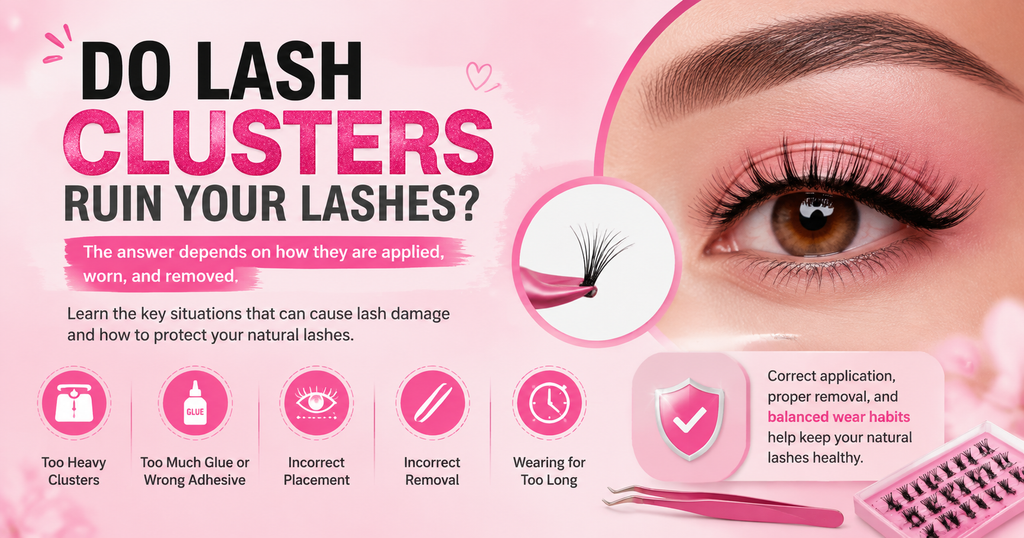
Lash Clusters Can Ruin Your Lashes If You Are
Using Lash Clusters That Are Too Heavy for Your Natural Lashes
Lash clusters that are too heavy for your natural lashes can increase stress on the lashes supporting them.
Natural eyelashes are attached to follicles that control their growth and movement, but excessive external weight can place additional pulling force on this structure.
When a heavy cluster is attached to thin or weak natural lashes, the added load may increase the risk of lash breakage or premature shedding.
Cluster weight depends on factors such as lash fiber length, density, and the number of fibers included in the cluster. A fuller cluster contains more material, which increases the weight carried by the natural lashes.
When one cluster connects multiple natural lashes, the weight can create uneven tension because each lash may have a different thickness and strength.
Applying Too Much Glue or Using Incorrect Adhesive
Using excessive glue or an unsuitable adhesive for lash clusters can increase the risk of lash damage by creating a stronger, harder-to-remove bond that may place stress on natural lashes during wear or removal.
Lash cluster adhesives are designed to create a temporary bond between the cluster and natural lashes, but applying too much product can create a thicker adhesive layer that makes the lashes feel heavier and harder to remove safely.
The type of adhesive also matters because different formulas have different bonding strengths, drying times, and sensitivity risks.
An unsuitable adhesive may cause discomfort around the eye area or make removal more difficult, which can increase the chance of pulling natural lashes when the cluster is removed.
Applying the correct amount of adhesive helps maintain a secure but manageable bond. Excess glue does not necessarily create a better hold because it can increase product buildup and make the removal process more challenging.
However, individual sensitivity to lash adhesives can vary, and some people may experience irritation even when the adhesive is applied correctly.
Placing Lash Clusters Incorrectly
Incorrect placement of lash clusters can increase the risk of natural lash damage by creating unnecessary tension, discomfort, or stress on the lash line.
When lash clusters are attached too close to the skin or placed incorrectly on natural lashes, the attachment point can create pressure that affects how the lashes move naturally.
Lash clusters need enough space from the eyelid skin to allow comfortable movement and reduce irritation. Placing clusters too close to the skin can cause discomfort, while incorrect attachment can create uneven weight distribution across the supporting natural lashes.
This uneven pull may place more stress on certain lashes instead of spreading the load properly.
The position of a lash cluster also affects how easily it can be removed later. Incorrectly placed clusters may require more force during removal, which can increase the chance of pulling or weakening natural lashes.
Proper placement helps maintain a safer connection between the cluster and natural lashes while reducing unnecessary strain.
Removing Lash Clusters Incorrectly
Removing lash clusters incorrectly can increase the risk of natural lash damage because forceful removal can pull on the lashes attached to the cluster.
Lash cluster adhesive creates a bond between the cluster and natural lashes, and removing the cluster without properly loosening that bond can transfer unnecessary force to the natural lash fibers.
Pulling or peeling lash clusters aggressively may cause attached natural lashes to experience sudden tension. This stress can lead to lash breakage or premature shedding, especially when multiple natural lashes are connected to the same cluster.
The risk increases when the adhesive bond remains strong during removal and the cluster is removed without allowing the bond to weaken.
A careful removal process is important because natural lashes need to remain protected during the separation of the cluster from the lash line.
Using excessive force does not make removal faster or safer, and it can create avoidable stress on the lashes supporting the cluster.
Wearing Lash Clusters for Too Long
Wearing lash clusters for an extended period can increase the risk of natural lash problems because the lashes remain exposed to external weight, adhesive, and product buildup for longer.
Lash clusters create a temporary bond with natural lashes, and prolonged wear keeps that added weight and adhesive connection attached beyond the intended short-term use period.
Longer wear can also allow oils, makeup residue, and environmental debris to accumulate around the lash line.
This buildup may affect lash hygiene and can increase the chance of irritation or discomfort around the eyes.
The longer adhesive remains on the natural lashes, the more careful removal becomes because the bond may become harder to separate.
Extended use does not automatically mean every person will experience lash damage, but prolonged exposure can increase risk when combined with factors such as heavy clusters, unsuitable adhesive, or poor maintenance.
Proper wear duration helps reduce unnecessary stress on the natural lash line.
Lash Clusters Cannot Ruin Your Lashes If You Are
Using Lash Cluster Accurately
Lash clusters are less likely to damage your natural lashes when they are applied and maintained according to safe practices.
Proper use reduces unnecessary stress on the lash line by controlling factors such as cluster weight, adhesive application, placement, and removal technique. The main risk with lash clusters usually comes from incorrect use rather than the presence of the clusters alone.
Correct application allows the cluster to sit securely without creating excessive pulling force on natural lashes.
Suitable cluster size, appropriate adhesive use, and careful placement help reduce the chances of strain, irritation, or breakage.
Gentle removal also helps protect natural lashes because it prevents unnecessary pulling during separation.
Choosing the Right Lash Cluster Weight
Choosing the right lash cluster weight helps reduce unnecessary stress on your natural lashes during wear.
Natural lashes have different thicknesses, lengths, and strengths, so a cluster style that is too heavy for your lash condition may create additional strain on the lashes supporting it.
Matching the cluster weight with your natural lash strength helps maintain a more balanced attachment.
Heavy volume clusters and dense lash designs contain more synthetic fibers, which increases the amount of weight placed on natural lashes.
Selecting lighter clusters is especially important for fine or weaker lashes because excessive weight can make the lashes more vulnerable to stress and breakage.
The right lash cluster choice should enhance your appearance without placing unnecessary load on your natural lashes.
Using a Suitable Lash Adhesive and Applying It Correctly
Using a suitable lash adhesive and applying the correct amount can help reduce the risk of lash damage during cluster wear.
Lash cluster adhesives create the bond that connects the cluster to natural lashes, so an unsuitable formula or excessive adhesive can make the attachment harder to manage and increase stress during wear or removal.
The right adhesive application creates a secure connection without unnecessary buildup around the lash line. Applying too much adhesive can make clusters heavier and may make removal more difficult because the stronger buildup can require more force to separate the cluster from natural lashes.
A suitable adhesive should also be compatible with the intended use and applied carefully to reduce the chance of irritation around the sensitive eye area.
Applying Lash Clusters in the Correct Position
Applying lash clusters in the correct position helps reduce unnecessary stress on natural lashes and lowers the chance of discomfort or irritation.
Lash clusters should be attached in a way that allows the natural lashes to move normally without creating pressure against the eyelid skin or lash line.
Incorrect placement can affect how the weight of the cluster is distributed across natural lashes. When a cluster is positioned too close to the skin or attached unevenly, it may create tension on certain lashes and make the attachment feel uncomfortable during wear.
Proper positioning helps the cluster sit securely while maintaining a more balanced connection with the natural lashes.
The placement of lash clusters also affects removal because poorly positioned clusters may be harder to separate without applying additional force.
Keeping the attachment position appropriate helps protect the natural lashes from unnecessary pulling during removal.
Removing Lash Clusters Gently and Properly
Removing lash clusters gently and properly helps protect natural lashes from unnecessary pulling and breakage.
Lash clusters are attached through an adhesive bond, and forcing them off while the bond is still strong can transfer stress directly to the natural lashes connected to the cluster.
A careful removal process allows the adhesive bond to loosen before the cluster is separated from the lash line.
This reduces the amount of force needed during removal and helps prevent natural lashes from being pulled or weakened.
Aggressive actions such as peeling, tugging, or rubbing the lash clusters can create avoidable tension on the natural lashes.
Proper removal is especially important because lash clusters may attach to multiple natural lashes at the same time. Separating the cluster carefully helps protect the individual lashes supporting the attachment and maintains the condition of the natural lash line.
Giving Your Natural Lashes Recovery Time
Giving your natural lashes recovery time between lash cluster applications can help reduce continuous stress on the lash line.
Lash clusters add external weight and maintain an adhesive connection with natural lashes during wear, so repeated application without breaks may increase ongoing exposure to these factors.
Natural eyelashes follow their own growth cycle, including periods of growth, transition, and shedding.
Allowing time between applications gives you the opportunity to observe the condition of your natural lashes and identify any signs of weakness, irritation, or increased shedding before applying new clusters.
Regular breaks are especially useful when your natural lashes feel weaker or when previous applications have caused discomfort.
Avoiding Overloading Your Natural Lashes
Avoiding excessive load on natural lashes helps reduce the mechanical stress created by lash clusters.
Natural eyelashes can support only a certain amount of external weight, and adding multiple heavy or dense clusters can increase the force placed on the lashes holding them.
Overloading occurs when the size, density, or number of lash clusters exceeds what your natural lashes can comfortably support.
This extra weight can create uneven tension across the lash line because individual lashes may differ in thickness and strength. Weaker lashes may experience more stress when they are required to carry heavier attachments.
Maintaining a balanced lash design helps reduce unnecessary strain during wear. Choosing cluster styles that suit your natural lash condition and avoiding excessive volume can help protect the lash structure while still achieving the desired appearance
Limiting How Long You Wear Lash Clusters
Limiting lash cluster wear time can help reduce prolonged stress on natural lashes and the surrounding lash line.
Lash clusters keep external weight and adhesive attached to natural lashes during wear, so longer attachment periods increase the time these factors remain present.
Extended wear may allow more buildup of oils, makeup residue, and debris around the lash area, which can contribute to discomfort or irritation.
Longer wear can also make removal more challenging if the adhesive bond becomes harder to separate, increasing the chance of unnecessary pulling during removal.
Keeping wear duration within a reasonable period helps reduce continuous exposure to adhesive, weight, and daily friction.
However, the ideal lash cluster wear duration can vary depending on the adhesive used, application method, and individual lash condition.
Conclusion
Lash clusters do not automatically ruin your natural lashes, but the way you use them can influence your lash health. Excessive weight, unsuitable adhesive, incorrect placement, harsh removal, and prolonged wear can increase stress on natural lashes.
On the other hand, choosing suitable cluster weight, applying them correctly, removing them gently, and allowing recovery time can help reduce unnecessary strain.
The key is understanding how lash clusters interact with your natural lashes and avoiding practices that create excessive tension or irritation.
By using a careful approach, you can enjoy lash clusters while making choices that support the condition of your natural lashes.