

Published On: 22 Jan 2026
Smooth, hair-free skin sounds simple—until you try waxing at home and realize how many things can go wrong. Sugar waxing has quickly become a favorite because it’s natural, gentle, and effective, but only when it’s done the right way.
From understanding what sugar wax actually is to learning the exact steps, hair length, prep, and aftercare, every detail matters. One small mistake can mean patchy results, irritation, or wasted effort.
That’s why this guide breaks everything down clearly and honestly—no myths, no fluff. Whether you’re a first-timer or someone who’s struggled with sugar wax before, this article walks you through how to sugar wax at home to get smooth, long-lasting results with confidence.
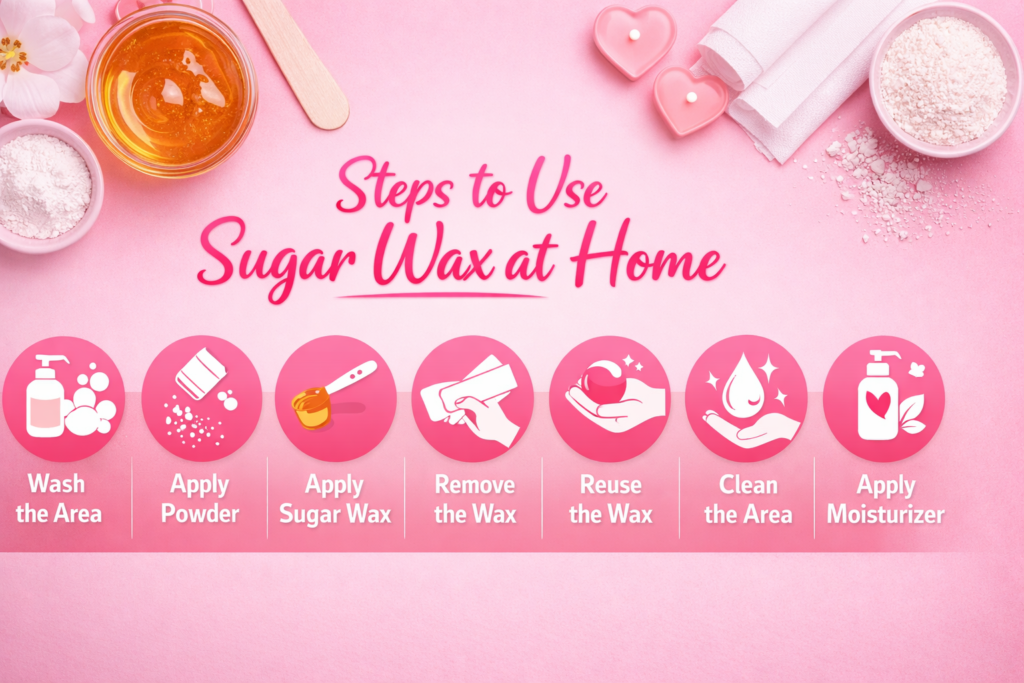
What is Sugar Wax
Sugar wax is a natural hair-removal method made from simple ingredients like sugar, lemon juice, and water. It works by wrapping around the hair rather than sticking aggressively to the skin, which can make it gentler and less irritating than traditional wax.
Sugar wax is applied against hair growth and removed in the direction of growth, helping lift hair from the root with more control. It’s suitable for most body areas, including sensitive skin. To learn more about how it works, its benefits, and common questions, read our full guide: What Is Sugar Waxing | Complete Guide With Common FAQs.
What to Do Before and After Sugar Waxing
Before sugar waxing, keep things simple but intentional. Clean the skin thoroughly, make sure it’s completely dry, and let hair grow to about ¼ inch so the wax can grip properly. Light exfoliation a day or two before also helps prevent ingrown hairs.
After sugar waxing, gently rinse the area, apply a fragrance-free soothing moisturizer, and avoid heat, sweating, or tight clothing for at least 24 hours. Regular exfoliation after a few days helps maintain smooth results.
These are just the basics—if you want to explore each step in more detail, read our full guide on What to Do Before and After Sugar Waxing for expert tips and deeper guidance.
How Long Does Hair Have to be to Sugar Wax
For sugar waxing, hair should be about ¼ inch to ¾ inch long—no guessing, no shortcuts. This length allows the sugar wax to properly wrap around the hair and remove it cleanly from the root. If the hair is too short, the wax won’t grip well and may leave patches behind. If it’s too long, the pull feels stronger and the process becomes more uncomfortable.
Many people think longer hair is better, but that’s a common mistake. Too short leads to breakage. Too long leads to tugging. If your hair has grown past the ideal range, simply trim it with clean scissors—avoid razors or clippers. The American Academy of Dermatology confirms that proper hair length improves wax adhesion and helps reduce irritation and uneven results.
Use Our Mirror Online While Doing Sugar Waxing at Home
When you’re doing sugar wax at home, the hardest part isn’t the wax — it’s seeing what you’re doing clearly. Bathroom mirrors are often too far, lighting isn’t great, and holding a phone in one hand just doesn’t work. That’s where an online mirror makes the whole process easier and way less stressful. You can position your screen exactly where you need it, adjust the view, and focus without rushing.
Our mirror online is perfect for moments like sugar waxing. It comes with a clean, delay-free display, adjustable brightness, and smooth zoom in and zoom out options. You can pause the screen, take pictures, and share them if needed. Best of all, nothing is saved internally — your privacy stays fully protected while you prep, wax, and glow confidently.
Step by Step Guide to Apply Sugar Wax
1. Wash the Area
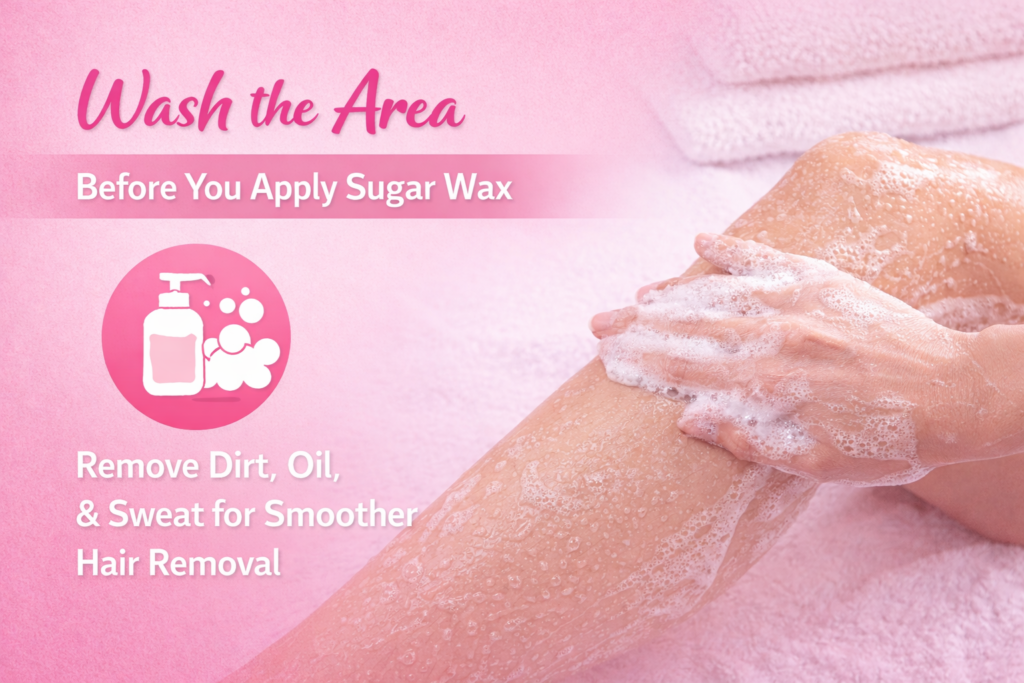
Before you apply sugar wax, washing the area is a step you should never skip. Think of it as prepping the canvas before painting. When your skin is clean, the wax can do its job properly.
According to the American Academy of Dermatology, waxing works best on skin that is completely dry and free from oil or residue. Dirt, sweat, lotions, or natural oils can create a barrier that prevents the sugar wax from gripping the hair effectively.
By washing the area with a gentle cleanser and drying it thoroughly, you help the wax stick to the hair effectively, resulting in smoother removal and less discomfort. This simple step also reduces the risk of irritation, clogged pores, and ingrown hairs, giving you cleaner, longer-lasting results at home.
2. Apply the Powder
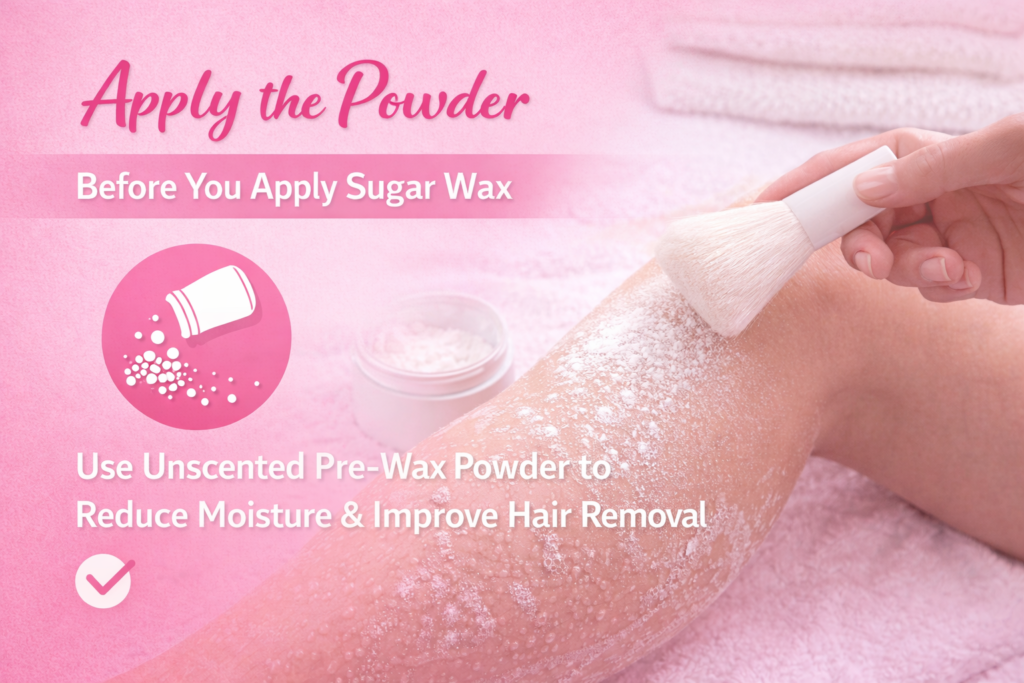
Before applying sugar wax, lightly dusting powder over the area may seem minor, but it makes a noticeable difference. The powder creates a thin, protective barrier between your skin and the sugar wax, and absorbs extra oil and moisture, allowing the wax to grip the hair instead of skin.
This is especially helpful around sensitive areas like the bikini line, upper inner thighs, and pubic bone. Research shows that powders such as cornstarch or baby powder absorb excess oil and moisture, helping wax adhere better for cleaner hair removal.
While many people use baby powder, professional pre-wax powders often work better because they contain soothing ingredients like zinc oxide or vitamin E. Always choose an unscented option and patch-test first to reduce irritation and achieve smoother, more comfortable results.
What to Use Instead of Baby Powder for Sugar Waxing
If you prefer not to use baby powder for sugar waxing, there are several effective alternatives that still help control moisture and improve results. Kitchen staples like cornstarch, arrowroot powder, and tapioca starch work well because they absorb excess sweat and oil, allowing the sugar wax to grip hair instead of skin.
Some people also use a small amount of baking soda for moisture control. In professional settings, many estheticians prefer pre-wax oils or gels, especially for dry or sensitive skin, because they create a light barrier and can reduce discomfort without blocking hair adhesion.
Whichever option you choose, the goal is the same: keep the skin dry, protected, and ready for clean hair removal.
3. Apply the Sugar Wax
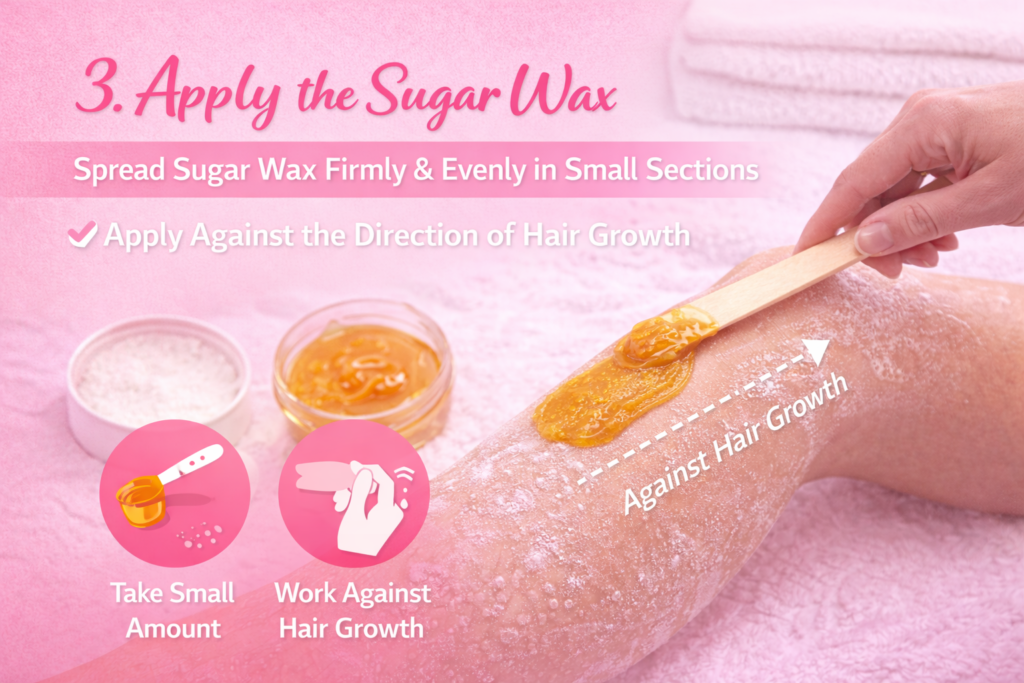
Now that your skin is clean and the powder has been applied, it’s time for the most important step—applying the sugar wax. Take a small amount of sugar wax from the container using a spatula. You can also use a sugar wax applicator stick if you prefer. If you’re using the traditional method, roll the sugar wax into a small ball with your hands.
Place the wax onto the area and gently press it down, flattening it until it covers the section where you want to remove hair. It’s best to work in small sections for better control and results. Most importantly, always apply sugar wax against the direction of hair growth, not with it. Sugar wax is designed to be applied against hair growth for effective removal.
How Long Do You Leave Sugar Wax on Before Removing
You don’t leave sugar wax on at all—and that’s the key point most people miss.
Sugar wax is applied, pressed into the hair, and removed immediately. There’s no waiting time like with hard wax or hair-removal creams. Once the sugar paste has bonded to the hair (which happens in just 3-7 seconds with light pressure), it’s ready to come off. Waiting longer does not improve results and can actually make removal less effective, especially if the paste softens from body heat.
This is because sugar wax works mechanically, not chemically. It wraps around the hair shaft rather than sticking aggressively to skin. As long as the paste has been smoothed on against hair growth and is firmly in place, it should be flicked or pulled right away in the direction of hair growth.
In short: apply, press, remove—no pause needed.
4. Remove the Sugar Wax
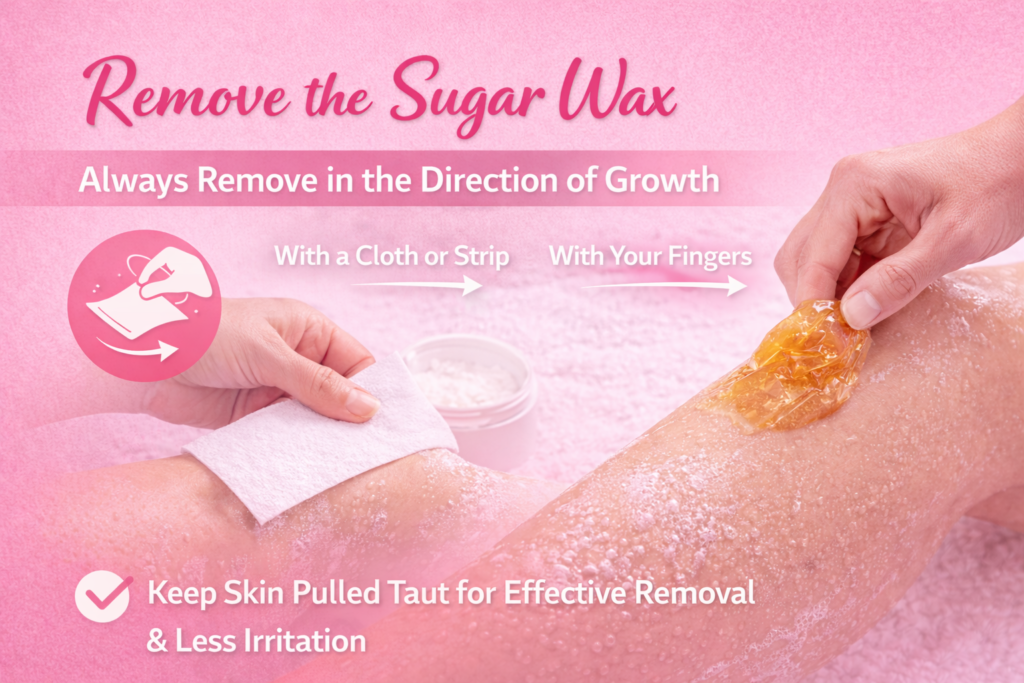
Now that the sugar wax has been applied, it’s time to remove it. You can place a cloth or waxing strip over the sugar wax and use it to pull the wax off, or you can remove it directly by grabbing one corner of the sugar wax with your fingers and pulling it away.
Whichever method you choose to remove sugar wax, make sure to keep your skin pulled taut to make the removal more effective and comfortable. Most importantly, always remove sugar wax in the direction of hair growth, not against it. Sugar wax is specifically designed to be removed in the same direction as hair growth for smoother results and less irritation.
5. Reuse the Sugar Wax
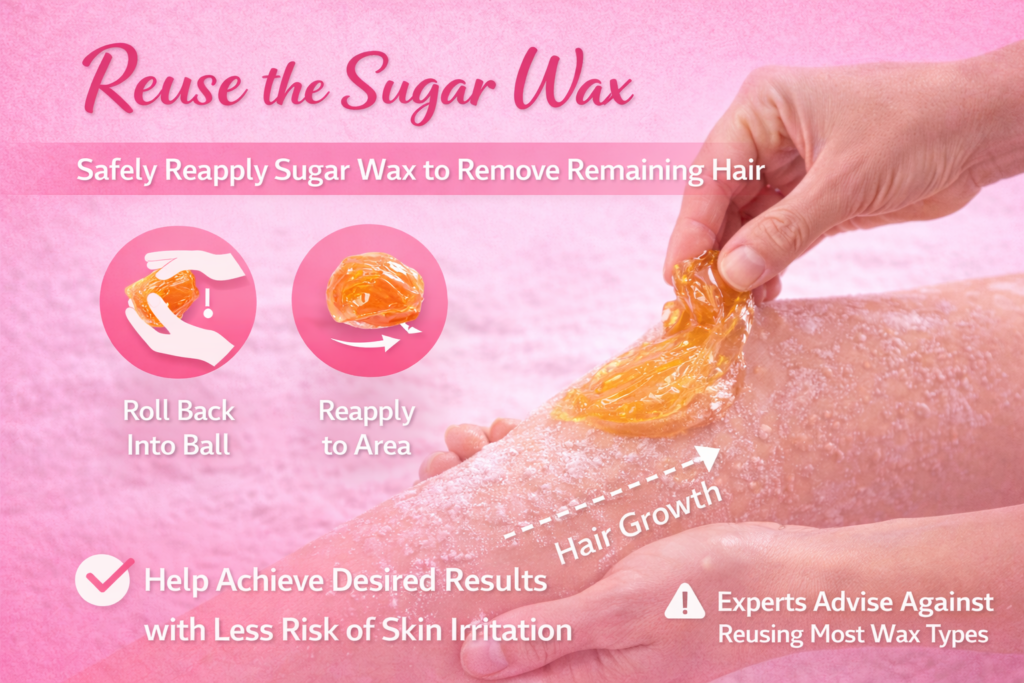
If you feel that some hair hasn’t been removed properly, don’t worry. You can reuse the same sugar wax on the same area. Simply roll the used sugar wax back into a ball, apply it again, and remove it once more. In short, sugar wax can be reused on the same area until you achieve the desired results.
However, experts generally advise against reusing any type of wax to avoid the risk of infection. That said, sugar wax is often considered safer to reuse because it sticks mainly to the hair rather than the skin, which lowers the chance of skin-to-skin contamination. Still, the risk is not completely eliminated, so in the end, the choice is yours.
6. Clean the Area
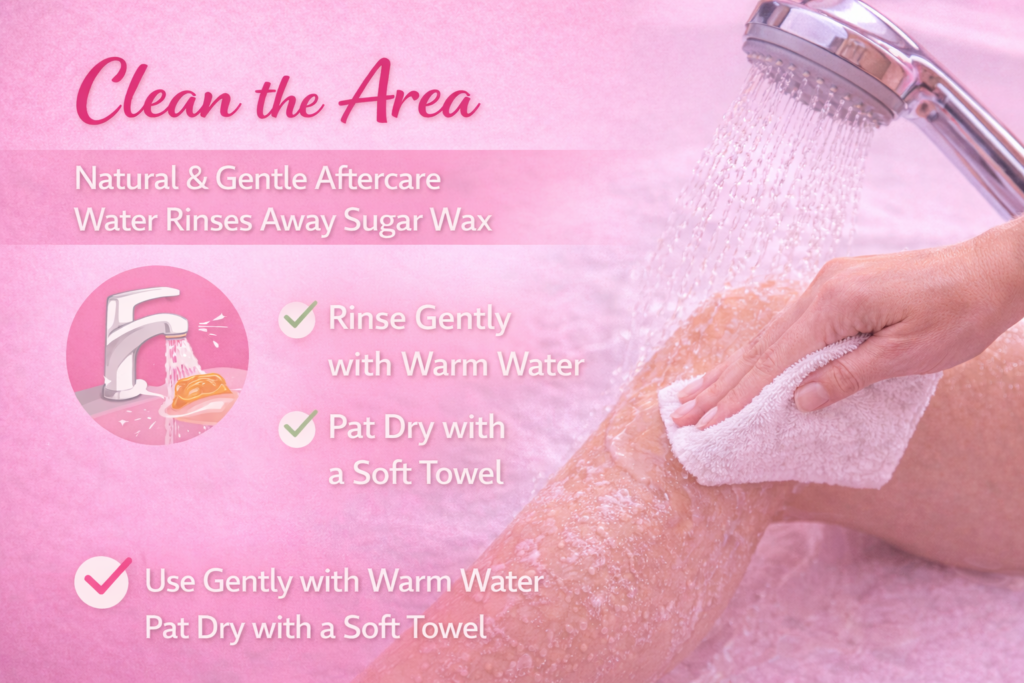
After removing the sugar wax, cleaning the area is simple and stress-free. One of the best things about sugar wax is that it’s made from natural ingredients, which makes it water-soluble. That means you don’t need any special products or harsh chemicals to clean your skin.
Just rinse the area gently with warm water, and any leftover sugar wax will wash away easily. Take your time and be gentle—your skin has just been waxed and may be a little sensitive.
Once the area is clean, pat it dry with a soft towel instead of rubbing. This step helps your skin feel fresh, comfortable, and smooth, and you don’t need to spend extra money on special removers to get clean results.
7. Apply Moisturizer
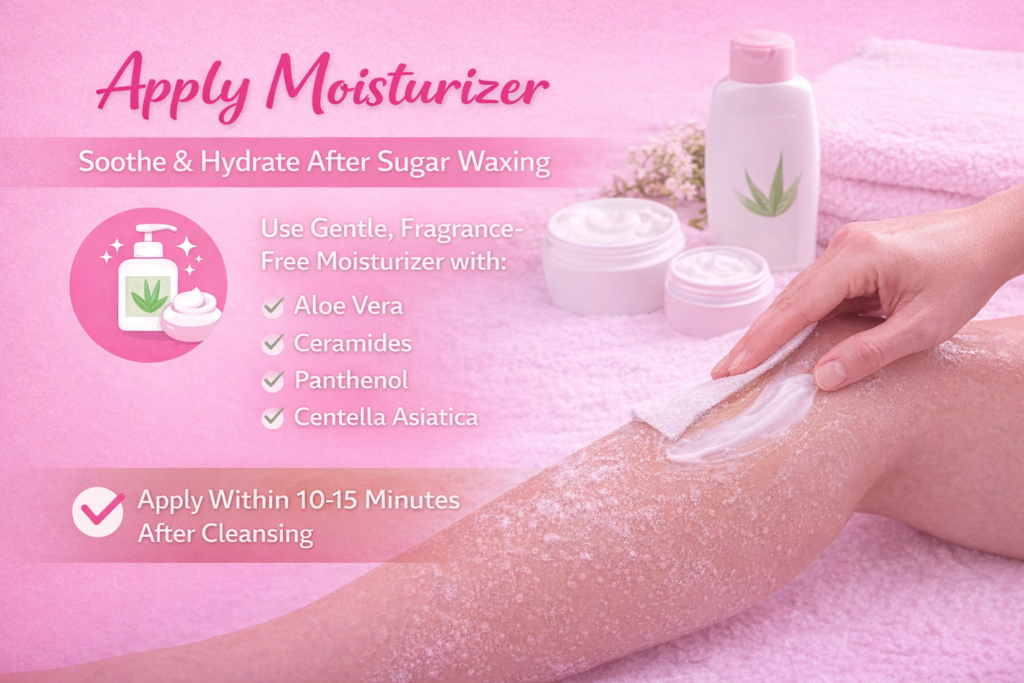
After a sugar wax, your skin may feel smooth but slightly sensitive because the natural skin barrier is temporarily weakened. That’s why applying a gentle, fragrance-free moisturizer is an essential aftercare step. Look for products with soothing, skin-repairing ingredients like aloe vera, panthenol, ceramides, niacinamide, or Centella asiatica, which help calm redness and support healing.
Dermatologist Dr. Brendan Camp recommends ceramide-rich moisturizers because they restore hydration and reduce the risk of irritation after waxing. Avoid formulas with alcohol, artificial fragrance, or essential oils, as these can sting freshly sugared skin.
For best results, apply moisturizer within 10–15 minutes after cleansing the area, then continue twice daily for the next 48 hours to keep skin soft, calm, and healthy.
How to Make Sugaring Last Longer
To make sugaring last longer, focus on what happens before, during, and after the wax—not shortcuts or hype. Start by letting hair reach the correct length (about ¼ inch), exfoliating gently 24–48 hours beforehand, and keeping skin clean and dry.
Proper technique matters too: apply sugar wax against hair growth, remove it with growth, and work in small sections to remove hair cleanly from the root. Consistent sugaring also pays off over time.
A 2022 study found that hair regrowth after sugaring was slower, thinner, and less dense over four weeks compared to hard waxing. Finish with calming aftercare and regular exfoliation to maintain smooth results longer.
Can You Sugar Wax Your Privates
Yes, you can sugar wax your privates, but it’s not something to rush into without understanding the risks. The skin in the genital area is thinner, more sensitive, and prone to irritation, which means technique and hygiene matter a lot.
Sugar wax is often preferred for intimate areas because it sticks more to hair than skin and is removed in the direction of hair growth, which can reduce pulling and inflammation. That said, improper prep, poor sanitation, or reusing wax can increase the risk of irritation or infection. If you’re inexperienced or have very sensitive skin, professional sugaring is the safer option.
Is it Safe to Sugar Wax Your Private Area
Yes, sugar waxing your private area can be safe if it’s done correctly, using proper technique and care. Safety largely depends on preparation, application, and aftercare. When sugar wax is applied and removed the right way—and the skin is properly cleaned, powdered, and moisturized—it significantly reduces the risk of irritation or injury to make sugar wax safe for private area.
Research supports this as well. Sugar wax is made from natural ingredients like sugar, lemon juice, and water, which makes it gentle and suitable for most body areas, including sensitive and intimate zones. Because it adheres more to hair than skin and is removed in the direction of hair growth, it can cause less trauma compared to other waxing methods. Hence, sugar waxing is safe for private areas.
Can You Sugar Wax Pubic Area
Yes, you can sugar wax the pubic area, and many people choose this method because it’s gentler on sensitive skin. Sugar wax is made from natural ingredients and sticks more to hair than skin, which helps reduce irritation.
When applied against hair growth and removed in the direction of growth, it can be less painful than traditional waxing. Proper preparation, clean tools, and good aftercare are essential. If you’re new to sugaring or have very sensitive skin, seeing a professional is the safest option.
Can I Use Sugar Wax on My Face
Yes, you can use sugar wax on your face, and it’s actually one of the gentler hair-removal options for facial skin. Sugar wax is made from natural ingredients like sugar, lemon juice, and water, which makes it suitable for sensitive areas such as the upper lip, eyebrows, chin, and cheeks.
Many well-known brands even offer specially formulated sugar wax for face and other delicate areas. Because sugar wax sticks more to hair than skin and is removed in the direction of hair growth, it can help reduce irritation compared to traditional waxes. Still, facial skin is delicate, so proper technique, clean skin, and gentle aftercare are essential for safe, smooth results.
Can I Get Sugared on My Period
Yes, you can get sugared during your period—but it’s important to know what to expect. During menstruation, hormonal shifts can make your skin more sensitive than usual, which often means sugaring feels more uncomfortable and may lead to extra redness or irritation.
Research shows that hormone fluctuations throughout the menstrual cycle can increase skin sensitivity, which is why many experts suggest waiting until your period ends if you have the option. That said, if timing doesn’t allow, sugaring is still possible.
Just be extra mindful of hygiene, communicate your comfort level, and focus on gentle technique and proper aftercare to keep your skin calm and supported.
Common Problems People Face While Doing Sugar Wax at Home
Why Won’t My Sugar Wax Pull Hair
If you’re wondering why sugar wax isn’t pulling your hair, it usually comes down to a few fixable mistakes. Sugar wax won’t remove hair properly if the skin isn’t held taut, the pull is in the wrong direction, or the wax is applied too thick. It requires firm pressure, a thin layer, and a fast pull parallel to the skin to grip hair rather than skin.
Sugar wax also fails to pull hair when the skin isn’t properly prepped. Moisture, oils, or lotion can block adhesion, which is why clean, dry skin and a light dusting of powder are essential. Wax consistency matters as well—if it’s too soft, sticky, or overcooked, it won’t grab hair effectively. Finally, sugar wax won’t pull hair if it’s too short or too long. Fix these issues, and your results will improve quickly.
Why Isn’t Sugar Wax Sticking to My Skin
Sugar wax usually doesn’t stick to the skin because something is interfering with proper adhesion. The most common reason is poor skin prep—if the skin isn’t clean or is coated with lotion, oil, sweat, or dirt, the wax can’t grip properly.
Wax consistency is another major factor. If the sugar wax is too hot or runny from being undercooked, it will slide off the skin. If it’s too cold or overcooked, it becomes hard and won’t spread or stick evenly, that’s why you should learn proper sugar wax recipe to make sugar wax at home. Hair length also matters; hair that’s too short won’t give the wax anything to grab onto. Clean, dry skin, correct consistency, and proper hair length make all the difference.
At Home Waxing Service in Dubai With Most Features
Pink Beauty Salon offers at-home waxing service in Dubai with the most features, designed for comfort, convenience, and quality. You get professional home service, so there’s no need to visit a salon or deal with travel and waiting time. The service includes all types of waxing, such as legs, arms, underarms, bikini, and Brazilian.
Affordable rates make it easy to maintain regular waxing without overspending. Pink Beauty Salon uses high-quality products that are gentle on the skin and deliver smooth results.
All waxing services are performed by expert, trained technicians who follow proper hygiene and professional standards. If you want reliable, hassle-free waxing at home in Dubai, this service offers everything in one place.
Conclusion
Sugar waxing can be a safe, effective, and skin-friendly hair removal method when you understand how it works and follow the right steps. From proper preparation and correct technique to aftercare and problem-solving, each part plays a role in your final results.
This guide covers everything you need to know—from hair length and application to common mistakes and sensitive areas—so you can sugar wax at home with fewer issues and better outcomes.
When done correctly, sugar waxing not only removes hair efficiently but can also lead to smoother skin and slower regrowth over time. With patience, practice, and the right approach, sugar waxing can easily become a reliable part of your self-care routine.