

Published On: 12 Dec 2025
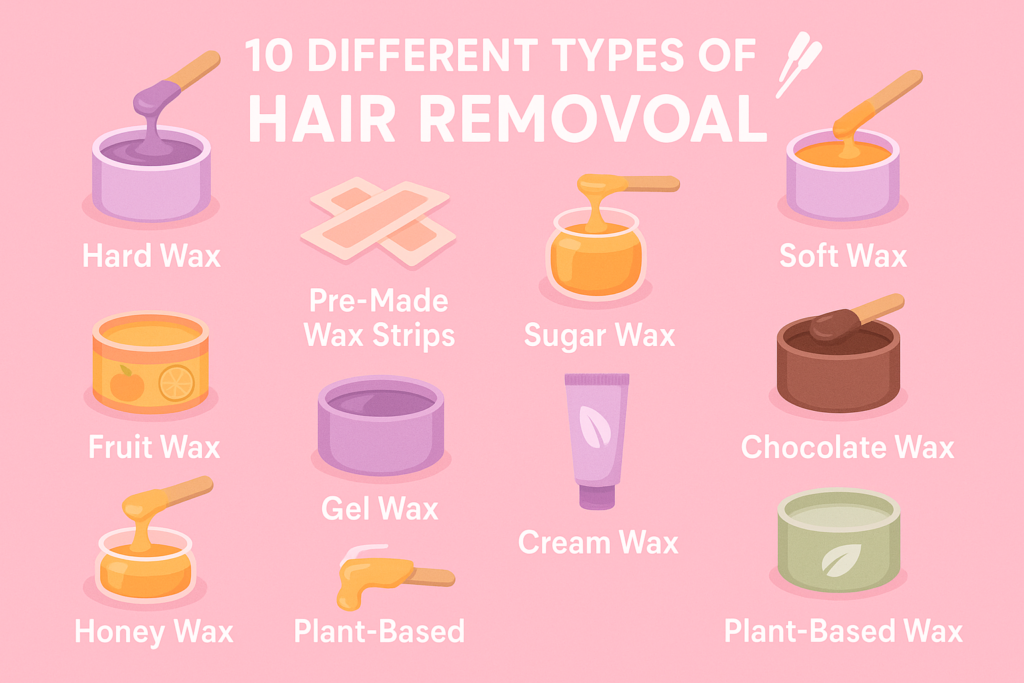
Choosing the right type of wax plays a major role in how effective, comfortable, and skin-friendly hair removal can be. With so many waxing options available—from traditional hard and soft wax to natural alternatives like sugar, honey, and plant-based wax—it’s important to understand how each type works and which areas of the body they’re best suited for.
Different waxes vary in ingredients, application methods, pain levels, and suitability for sensitive skin. Some are designed for large areas like the legs, while others are formulated specifically for delicate zones such as the face or bikini area.
This guide explores 10 different types of wax for hair removal, breaking down their benefits, drawbacks, and ideal uses, so you can make an informed choice based on your skin type, pain tolerance, and personal preferences.
1. Hard Wax
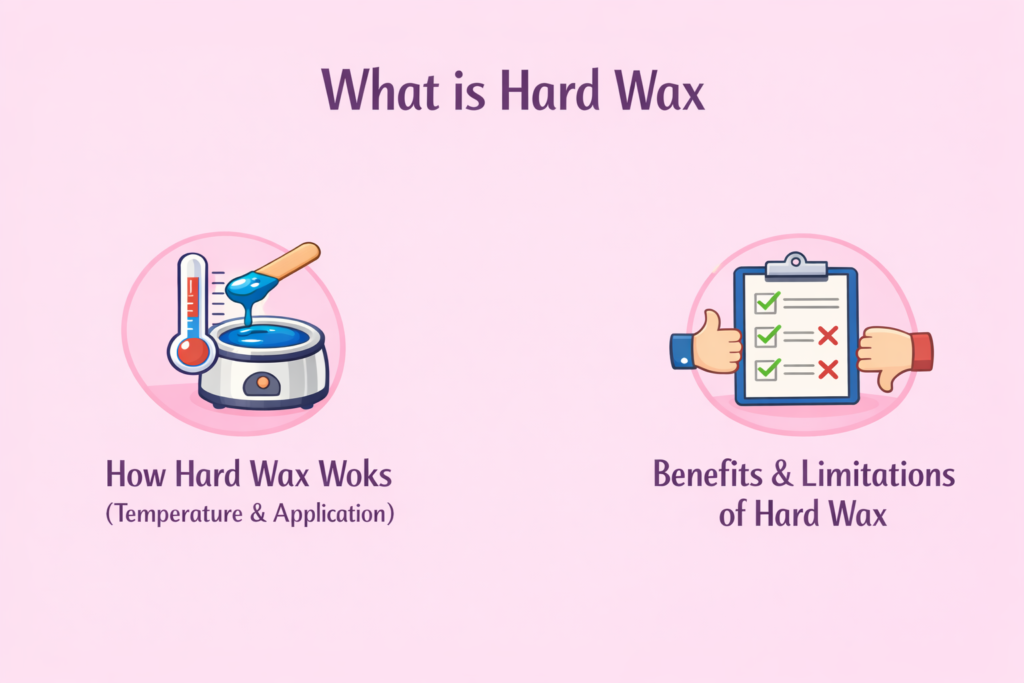
Hard wax is a popular hair removal option used on many areas of the body, including the face, underarms, arms, legs, bikini area, and other sensitive zones. It’s typically formulated with ingredients like beeswax and rosin, along with soothing additives such as natural oils and vitamins, which help reduce irritation during the hair removal process.
Before application, hard wax is heated to approximately 130°F (54°C). Proper temperature control is essential—wax that’s too hot can cause burns or skin damage, while wax that’s too cool won’t spread evenly or grip the hair effectively, resulting in uneven hair removal.
To use hard wax, apply a thin, even layer onto the skin in the direction of hair growth. Allow it to cool and harden slightly, then lift one edge and remove it swiftly in the opposite direction of hair growth. Because hard wax hardens on its own, no waxing strips are required, making it convenient for both professional and at-home use.
One of the biggest advantages of hard wax is that it adheres primarily to the hair rather than the skin. This makes it a great choice for sensitive or fragile skin types and areas with coarse hair, as it generally causes less discomfort and leaves minimal residue. Research referenced by the BCIT Environmental Public Health Journal also highlights hard wax as a safer option for delicate skin because it effectively grips hair while lifting cleanly from the skin.
The main downside is that hard wax requires careful and sometimes time-consuming heating, especially when treating larger areas of the body, which can slow down the overall hair removal process.
2. Soft Wax
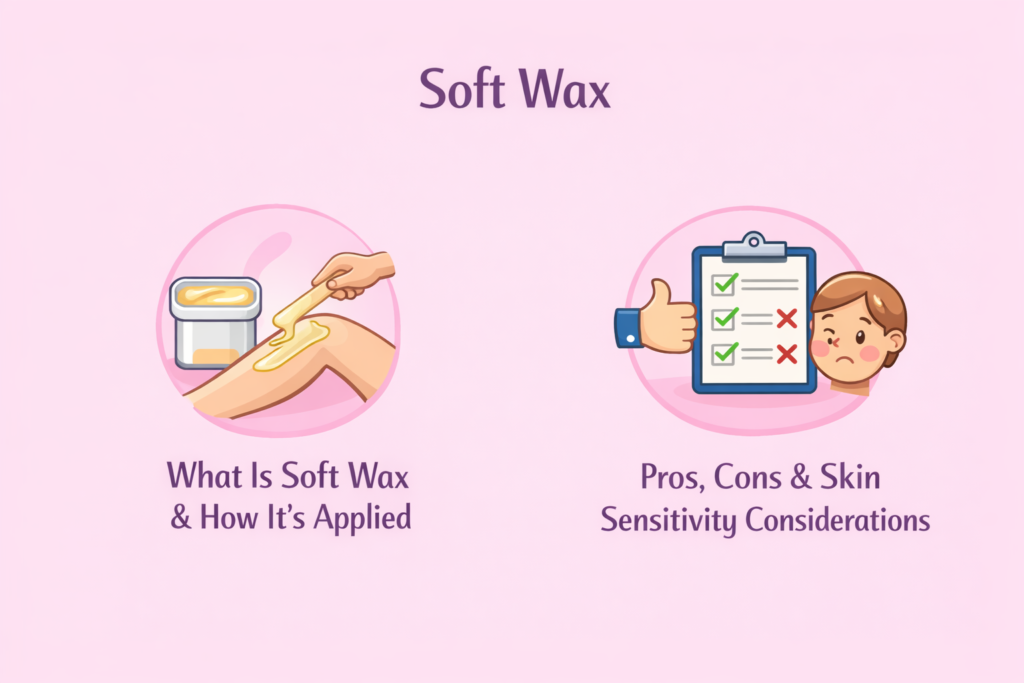
Soft wax is another widely used hair removal method, suitable for most areas of the body, including the legs, arms, back, chest, face, and bikini area. It’s typically formulated with rosin derivatives such as glyceryl rosinate, which research notes is responsible for giving the wax its strong “grip” on hair.
Other common ingredients include liquid paraffin (a mineral oil) and mel (honey), which help improve spreadability and adhesion during application. Unlike hard wax, there is no single universal heating temperature for soft wax, so it’s important to follow the specific instructions provided with each product to avoid overheating or applying it too cool.
To use soft wax, warm it as directed and apply a thin, even layer to clean, dry skin in the direction of hair growth. Place a fabric or paper waxing strip over the wax and rub firmly to ensure proper adhesion. While holding the skin taut, remove the strip quickly in the opposite direction of hair growth.
Because soft wax adheres to both hair and the outermost layer of skin, it may cause more redness and irritation than hard wax. Repeated waxing of the same area in one session should be avoided. Its advantages include efficient hair removal on large body areas, lower operating temperatures, and a smooth application.
However, it requires strips and may increase post-wax sensitivity. For reactive skin, formulas containing allantoin are supported by research as soothing and skin-calming additives.
3. Pre-Made Wax Strips

Pre-made wax strips are a convenient option for body hair removal and can be used on areas such as the legs, arms, underarms, face, and bikini area. They are not a separate type of wax; rather, they are a ready-to-use form of soft wax.
Unlike traditional soft waxing—which requires heating the wax, spreading it on the skin, applying a strip, and then removing it—pre-made wax strips come with the wax already applied to the strip, eliminating the need for warming or additional tools.
To use pre-made wax strips, place one strip onto clean, dry skin in the direction of hair growth and press firmly to ensure good contact between the wax and the hair. After smoothing it down, pull the strip off quickly in the opposite direction of hair growth while keeping the skin taut.
This quick, single-step process makes them especially appealing for at-home hair removal or touch-ups.
The main advantage of pre-made wax strips is their ease of use and time efficiency, as there’s no melting, spreading, or cleanup involved. However, because they function like soft wax, they may still cause some irritation on sensitive skin, especially if used repeatedly on the same area.
4. Sugar Wax
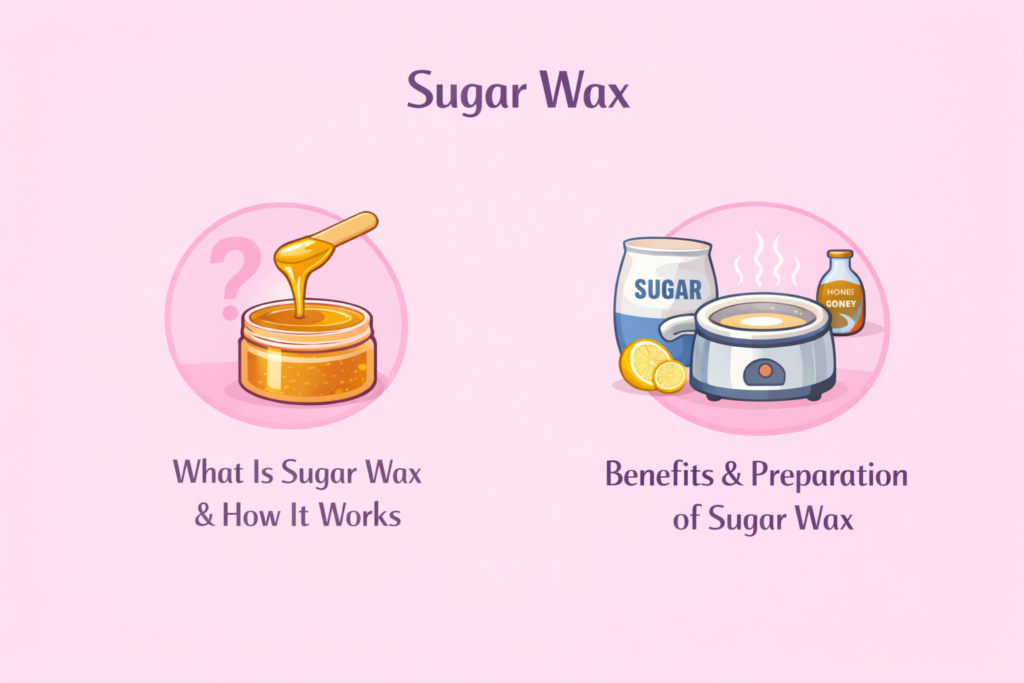
Sugar wax is not technically a wax; it’s a natural paste made from sugar, water, and lemon juice that forms when these ingredients are gently heated together. Despite the name, it’s used in a similar way to traditional hair-removal wax and is suitable for most areas of the body, including the legs, arms, underarms, face, and bikini area.
The sugar paste can be applied once it has cooled and is often used with fabric strips for removal, much like soft wax. In some techniques, it can also be molded and removed by hand. One advantage of sugar wax is that it can be used at room temperature, reducing the risk of burns and making it gentler on the skin.
Sugar wax can be prepared at home using inexpensive, widely available ingredients. To make it, mix sugar, water, and lemon juice in a bowl, then transfer the mixture to a saucepan and heat it slowly, bringing it to medium-high heat without allowing it to boil. Using a food thermometer, remove the mixture from heat when it reaches 230–260°F (110–126°C). Higher temperatures produce a firmer consistency, allowing you to adjust the texture based on personal preference.
Pour the mixture into a glass container and allow it to cool to room temperature before application. Research indicates that sugar waxing may cause less irritation and pain than traditional waxing, making it a popular option for sensitive skin.
5. Fruit Wax
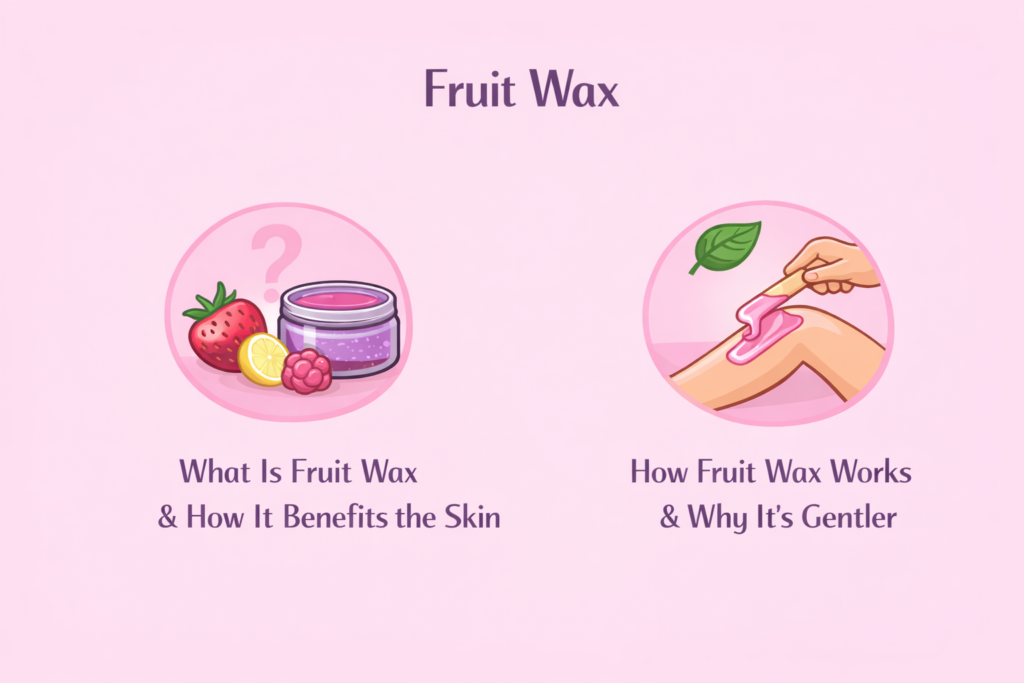
Fruit wax is a hair removal option suitable for most areas of the body, including the legs, arms, underarms, face, and bikini area, and it offers a dual benefit: effective hair removal along with gentle skin exfoliation. This makes it a popular choice for those who want smoother skin in addition to removing unwanted hair.
The exfoliating effect comes from natural fruit enzymes, which help lift away dead skin cells during the waxing process. According to Byrdie, fruit wax formulations often contain extracts from fruits such as plum, papaya, and strawberry.
These fruit extracts are rich in antioxidants, have anti-inflammatory properties, and can help improve overall skin brightness and texture, especially when used regularly as part of a hair removal routine.
Application is relatively simple and does not require fabric or paper strips. The wax is applied directly to clean, dry skin and allowed to set briefly before being removed in one motion.
Similar to hard wax, fruit wax adheres mainly to the hair rather than the skin, which generally results in less pain and reduced irritation compared to traditional soft waxing methods, making it suitable for sensitive areas as well as larger body regions.
6. Chocolate Wax
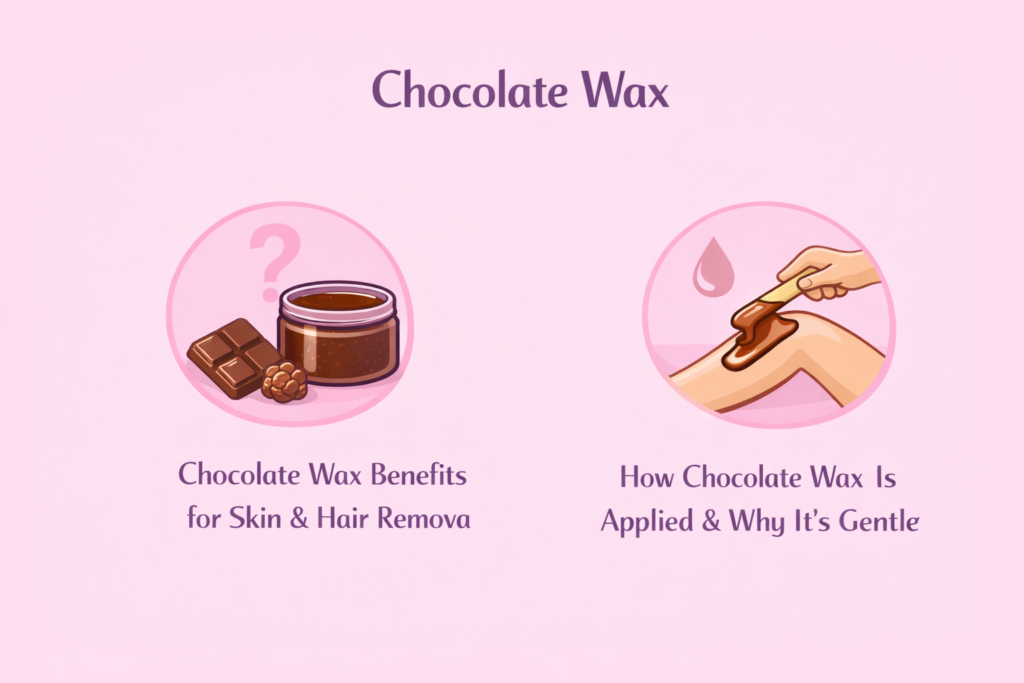
Chocolate wax is a hair removal option suitable for most areas of the body, including the legs, arms, underarms, face, and bikini area. It’s enriched with skin-nourishing ingredients such as cocoa, soybean oil, almond oil, glycerin, sunflower oil, and vitamins like Vitamin E and Vitamin C, which help support skin health during and after waxing.
Research highlights that cocoa contains antioxidants, and because cocoa acts as an emollient, it helps soften and condition the skin throughout the hair removal process.
Chocolate wax can be formulated as either soft or hard wax, but it is always applied warm. It has a low melting point, which reduces the risk of burns and makes it safer and more comfortable to use.
To apply, melt the wax in a wax heater and cleanse the area to be treated. Spread a thin, even layer in the direction of hair growth using a spatula or applicator. Once the wax cools slightly, hold the skin taut and remove it quickly against the direction of hair growth.
The key benefits of chocolate wax include effective hair removal, improved skin softness, and anti-inflammatory properties, which are especially helpful when hair is being pulled from the follicles.
7. Gel Wax
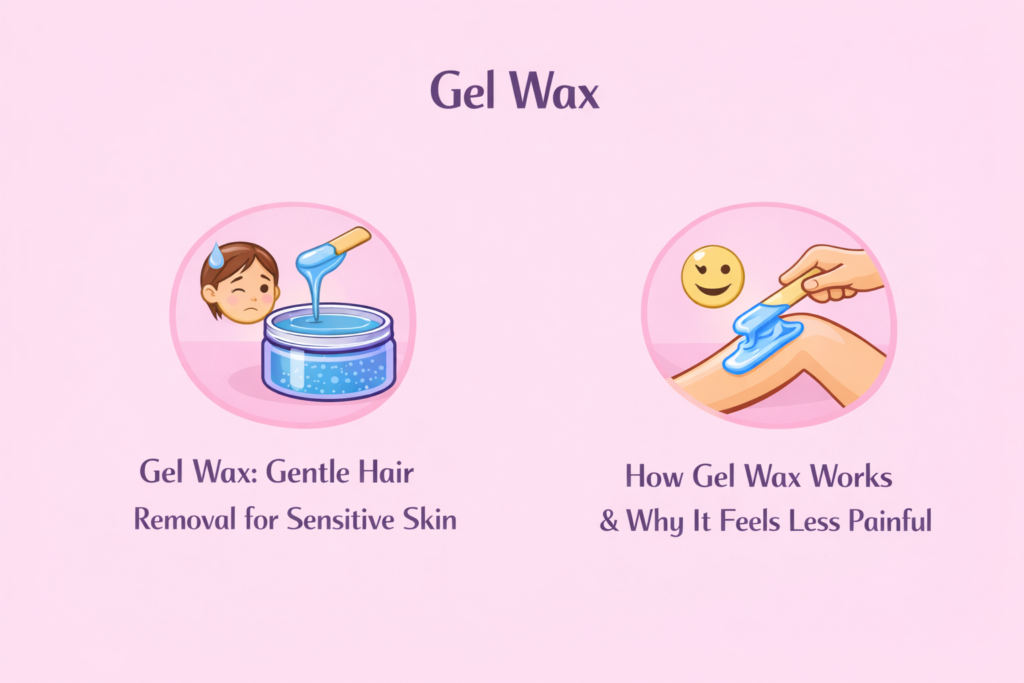
Gel wax has a jelly-like consistency and is formulated to be gentle, making it suitable for multiple areas of the body, especially sensitive or delicate regions such as the face, underarms, and bikini line. Its smooth, translucent texture allows it to glide easily over the skin while gripping hair effectively, helping reduce unnecessary pulling and discomfort during hair removal.
This type of wax is typically made with a clear gel base and is often enriched with soothing ingredients, most commonly aloe vera, which helps calm the skin during and after waxing. These skin-conditioning components make gel wax a preferred choice for individuals prone to redness or irritation.
To apply gel wax, spread a thin, even layer onto clean, dry skin in the direction of hair growth. Place a cloth or paper strip over the wax and press firmly to ensure proper adhesion. While holding the skin taut, remove the strip quickly in the opposite direction of hair growth.
Gel wax offers strong adhesion to hair with a gentler feel on the skin, making it less painful for many users. It performs well on sensitive areas while still being effective on finer body hair, combining comfort with reliable results.
8. Cream Wax
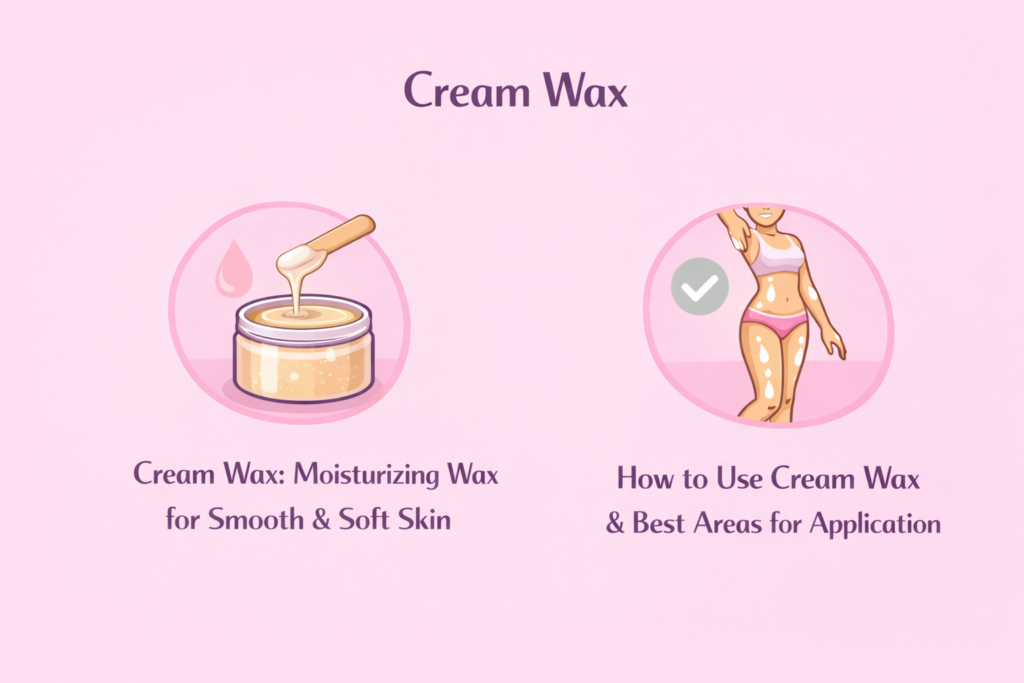
Cream wax is a rich, creamy-textured hair removal wax that can be used on the bikini area as well as many other parts of the body, including the legs, arms, and underarms. It’s commonly infused with moisturizing and skin-conditioning ingredients, such as chamomile or coconut oil, which help nourish and protect the skin during the waxing process.
To use cream wax, apply a thin, even layer onto clean, dry skin in the direction of hair growth. Place a cloth strip firmly over the wax, hold the skin taut, and remove the strip quickly in the opposite direction of hair growth. Proper technique is important to ensure effective hair removal and minimize discomfort.
Cream wax is known for its smooth application and luxurious, moisturizing feel, making it a good option for those concerned about post-wax dryness.
It leaves the skin feeling soft and supple after hair removal. Because it spreads easily and works well over larger surface areas, cream wax is particularly suitable for areas like the legs. For sensitive zones or best overall results, professional application is often recommended.
9. Honey Wax
Honey wax is a minimalist hair removal option that can be used on various areas of the body, including the legs, arms, underarms, face, and bikini area. It typically avoids many of the additives, chemicals, and preservatives found in conventional wax formulas, making it appealing to those who prefer simpler or more natural hair removal products.
Research highlights that honey has natural antimicrobial properties, which may help keep freshly waxed skin cleaner and reduce the risk of post-wax irritation.
For application, work in small sections. Using a wooden spatula or applicator, spread a thin layer of honey wax onto clean, dry skin in the direction of hair growth. Place a fabric or paper strip over the wax and press firmly to ensure proper adhesion.
While holding the skin taut, remove the strip quickly in the opposite direction of hair growth.
One of the most commonly cited benefits of honey waxing is its gentle, nourishing effect on the skin. Honey is a natural humectant, meaning it helps the skin retain moisture and feel soft and hydrated after hair removal. For sensitive skin types, these properties can be beneficial, though a patch test is recommended to confirm tolerance.
10. Plant-Based Wax
Plant-based wax is made from naturally derived ingredients, often sourced from plants such as soy, beeswax, or other botanical materials. It’s commonly chosen by those seeking a more eco-friendly and sustainable hair removal option, as many formulas avoid synthetic additives.
Plant-based wax is available in both soft and hard forms, making it suitable for different hair textures and body areas.
This type of wax can be used on most areas of the body, including the legs, arms, underarms, face, and bikini area. It is known for being gentle on the skin, with a lower likelihood of irritation compared to some traditional waxes, particularly for individuals with sensitive or reactive skin.
Application varies depending on whether the wax is soft or hard. Soft plant-based wax requires fabric or paper strips, while hard varieties set on the skin and are removed without strips. Both types are applied warm and removed against the direction of hair growth.
The main benefits include its skin-friendly nature and environmental sustainability. The primary drawbacks are limited availability and a higher price point, which reflects the use of natural ingredients.
What Kind of Wax is The Least Painful
Hard wax is widely considered one of the least painful waxing options because it adheres primarily to the hair rather than the skin, which significantly reduces pulling, discomfort, and post-wax irritation.
As the wax cools, it shrinks around the hair shaft, allowing for more efficient removal with less trauma to the surrounding skin. This makes hard wax especially suitable for areas with coarse hair or heightened sensitivity.
According to the BCIT Environmental Public Health Journal, hard wax is particularly well suited for delicate and fragile skin, as it effectively grips hair while lifting cleanly from the skin. While pain levels can still vary based on hair thickness and individual tolerance, hard wax is generally preferred by those who irritate easily.
What is The Most Painless Waxing Method
Among waxing methods, hard waxing and sugaring are generally regarded as the most painless options because both techniques focus on gripping the hair rather than the skin, which helps minimize discomfort during removal.
They are particularly effective for coarse hair and sensitive areas, where traditional soft wax may cause more irritation. According to the BCIT Environmental Public Health Journal, hard wax is especially suitable for delicate and fragile skin, making it a safer choice for individuals who irritate easily.
Additionally, research indicates that sugar waxing may cause less irritation and pain than traditional waxing, as it adheres primarily to hair and dead skin cells. Proper temperature control and correct technique remain essential, as poor application can increase pain regardless of the method used.
Is Sugaring or Waxing Less Painful
Sugaring is often considered less painful than traditional waxing, largely because the sugar paste adheres mainly to hair and dead skin cells rather than live skin, which helps reduce irritation.
It is applied at room temperature, lowering the risk of burns and making it gentler for sensitive skin. Hair is typically removed in the direction of growth, which can minimize breakage and discomfort. Research also suggests that sugar waxing may cause less irritation and pain than conventional soft waxing.
However, pain levels vary based on hair length, skin sensitivity, and technique. When performed correctly, sugaring can be more comfortable, while improper application may reduce its benefits and lead to discomfort.
What is the Most Gentle Form of Waxing
Sugaring is widely regarded as the most gentle form of waxing, especially for sensitive or reactive skin. Made from simple, natural ingredients like sugar, water, and lemon juice, it is less likely to cause irritation or allergic reactions.
The paste adheres mainly to hair and dead skin cells rather than live skin, which helps reduce redness and inflammation. Many people experience calmer skin and fewer ingrown hairs after treatment. Because of its mild nature and lower irritation risk, sugaring is a popular choice for delicate areas and individuals prone to sensitivity.
What Wax is Best for Intimate Areas
Hard wax is commonly considered the best option for intimate areas because it is effective on coarse hair while being gentler on sensitive skin. Unlike soft wax, hard wax adheres mainly to the hair rather than the skin, which helps reduce pulling, irritation, and post-wax discomfort.
Since it hardens on its own and does not require strips, it allows for greater control and precision during application.
For this reason, many professionals prefer hard wax for bikini and Brazilian waxing, as it also leaves behind minimal residue and promotes a cleaner, more comfortable hair removal experience.
What is The Healthiest Way to Remove Pubic Hair
There is no single “healthiest” way to remove pubic hair, as the best option depends on skin sensitivity and personal preference. Trimming is generally considered the safest method because it avoids cuts, burns, ingrown hairs, and skin irritation.
If complete hair removal is preferred, sugaring or hard wax are often viewed as gentler alternatives, as they cause less trauma to the skin compared to traditional soft waxing. Choosing a professional service can further reduce the risk of injury or infection.
Regardless of the method used, proper hygiene and post-removal aftercare are essential for maintaining healthy skin.
Conclusion
There is no single “best” wax for everyone, as the ideal choice depends on factors like skin sensitivity, hair thickness, body area, and comfort level. Hard wax and sugaring are often preferred for sensitive or intimate areas, while soft, cream, and paraffin-based waxes work efficiently on larger surfaces.
Natural options such as honey, fruit, and plant-based waxes appeal to those seeking gentler or more eco-conscious solutions. Understanding how each wax functions—and following proper application and aftercare—can significantly reduce irritation and improve results.
Whether waxing at home or professionally, selecting the right wax helps ensure smoother skin and a safer hair removal experience.