

Published On: 07 Jan 2026
Leg waxing is one of the best ways to enjoy smooth, hair-free skin—but what you do after the wax matters just as much as the waxing itself. Right after waxing, your skin is more sensitive, your pores are open, and your legs need a little extra care to recover properly. Without the right aftercare, common issues like redness, irritation, ingrown hairs, or bumps can easily sneak in and ruin the results you were excited about.
The good news? With a few simple do’s and don’ts, you can help your skin calm down faster and stay smooth for longer. This guide walks you through everything you need to know about leg waxing aftercare—so your skin feels comfortable, looks healthy, and stays confident between waxing sessions.
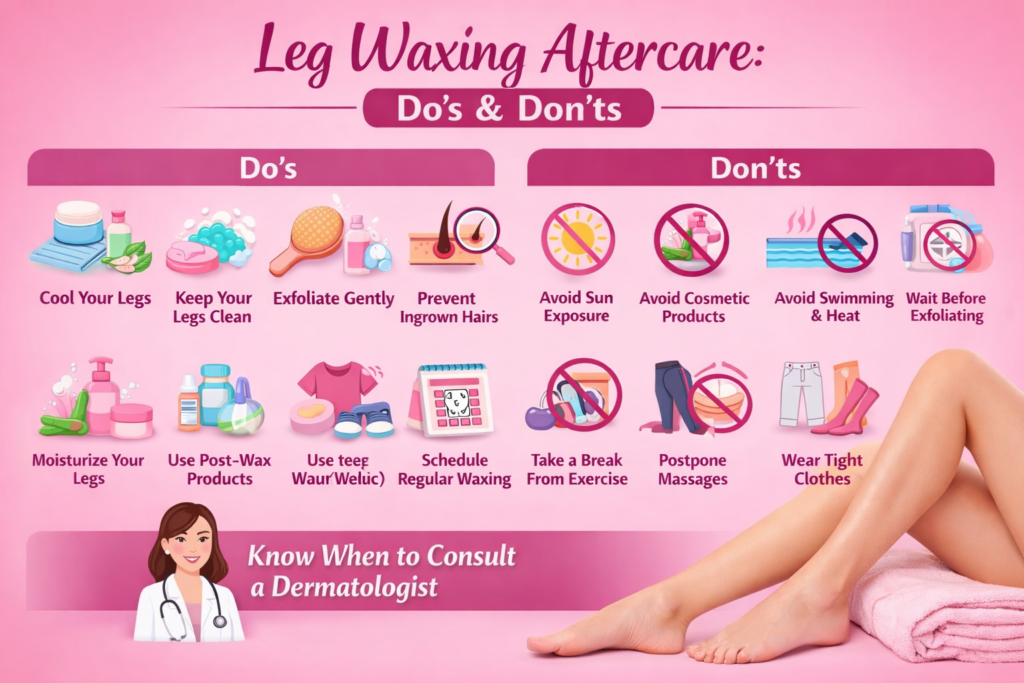
1. Cool Your Legs After Waxing
Right after leg waxing, your skin might feel warm, flushed, or a little overstimulated—and honestly, that’s your body’s natural response to what it’s just been through. Waxing creates tiny amounts of trauma on the surface of the skin, which makes nerve endings more sensitive and can lead to redness or mild swelling. It can feel uncomfortable, but the good news is that cooling helps fast.
One of the easiest ways to calm things down is to apply a cool, damp cloth or a gel ice pack wrapped in a soft towel to your legs for about 10–15 minutes. That gentle chill signals your skin to relax. Research shows that cold temperatures constrict blood vessels, which helps reduce inflammation, swelling, and that lingering “stingy” feeling.
If you want to take the soothing factor up a notch, try storing your post-wax products—like aloe vera gel or a lightweight moisturizer—in the fridge. Applying them cold feels incredibly comforting and gives your skin that extra “I’ve got you” support it needs right now.
This simple cooling step doesn’t just ease discomfort—it helps your legs recover more smoothly, leaving you feeling calm, cared for, and confident in your skin again.
2. Avoid Sun Exposure After Leg Waxing
After leg waxing, your skin is more delicate than it looks. The outer protective layer is temporarily thinner, and your pores are still open—making your freshly waxed legs far more sensitive to the sun than usual. It’s easy to underestimate this step, but sun protection matters a lot right now.
Because of this increased vulnerability, UV exposure can lead to sunburn, irritation, or even post-inflammatory hyperpigmentation if you head into the sun too soon. Skincare expert Adriana Mendez explains that waxing removes a light layer of skin cells, exposing fresh skin that reacts much more strongly to ultraviolet rays. That’s why sunbathing immediately after waxing is strongly discouraged.
Most professionals recommend avoiding direct sunlight and tanning beds for at least 24 to 48 hours after leg waxing. Giving your skin this recovery time allows the barrier to rebuild and reduces the risk of long-term issues like discoloration, sensitivity, or premature aging.
Think of it as protecting your results. A little patience now helps keep your legs smooth, even-toned, and confidently glowing long after the wax.
3. Keep Your Legs Clean After Waxing
After leg waxing, your skin can feel a little tender, maybe even slightly exposed—and that’s completely normal. Hair has been removed from the root, and your pores are temporarily open, which makes your legs more sensitive than usual. This is exactly why cleanliness matters so much right after a wax.
Research shows that waxing can briefly weaken the skin’s natural barrier, increasing the risk of irritation or infection if bacteria gets involved. Knowing this can feel a bit scary, but don’t worry—simple, mindful care goes a long way in keeping your skin calm and confident.
Start with the basics: always wash your hands before touching your legs, and try not to fuss over them too much for the first 24 to 48 hours. Even casual touching can transfer bacteria at a time when your skin is extra vulnerable.
When it’s time to cleanse, keep things gentle. Use a mild, fragrance-free cleanser and lukewarm water, then softly pat your legs dry instead of rubbing. This small act of kindness helps reduce redness, prevents bumps, and supports your skin as it settles back into balance.
Treat your freshly waxed legs with care—they’ve just been through a lot, and a little patience now means smoother, happier skin later. ✨
4. Prevent Ingrown Hairs After Leg Waxing
Ingrown hairs can be one of the most frustrating parts of leg waxing. You’re excited for smooth, glowing skin—and then those little bumps show up. It happens when new hair has trouble pushing through the surface and ends up growing sideways or curling back under the skin instead.
This is more likely when dead skin or buildup blocks the hair follicle. If your hair is naturally coarse or curly, the chances can feel even higher, since follicles may stay slightly inflamed after waxing and clog more easily. Annoying? Absolutely. Unavoidable? Not at all.
The key is timing. Give your skin a chance to calm down first. About 48 to 72 hours after waxing—once tenderness has faded—gentle exfoliation becomes your best friend. At this stage, exfoliating helps clear away dead skin cells that could trap new hair before it ever gets the chance to grow out.
Chemical exfoliants like glycolic acid and salicylic acid work especially well because they do the job without harsh scrubbing. Dermatologist Dr. Dendy Engelman explains that these acids dissolve the bonds holding old skin cells in place, allowing fresh, healthy skin to surface more easily.
When exfoliation becomes a regular part of your weekly routine, you’ll notice the difference. Fewer ingrowns, smoother regrowth, and legs that feel calm, confident, and beautifully cared for—just the way you wanted them to feel after waxing.
5. Exfoliate Your Legs Gently
Once the initial sensitivity from leg waxing fades—usually around 48 to 72 hours—it’s the perfect time to reintroduce exfoliation. This step helps sweep away dead skin cells, keeps hair follicles clear, and allows that smooth, just-waxed feeling to last longer. It’s one of those quiet habits that makes a big difference.
For most people, exfoliating two to three times a week works beautifully. A soft washcloth, exfoliating mitt, or body glove in the shower is often all you need. That said, your skin sets the rules. If your hair is coarse or you’re prone to ingrowns, slightly more frequent exfoliation can help. If your skin leans sensitive, slowing things down and exfoliating every third day may feel much kinder.
The intention here isn’t to scrub your skin into submission. Gentle, circular motions are enough to encourage natural skin renewal while keeping the skin barrier happy and intact. For extra support, a mild chemical exfoliant—such as one with glycolic or lactic acid—can be added to your routine without overwhelming your skin.
With consistency and care, exfoliation keeps your legs feeling fresh, smooth, and confident—and sets the stage for even better waxing results the next time around.
6. Use Post-Wax Products to Support Your Legs
Once your legs have had about 24 hours to calm down after waxing, this is where post-wax products can really shine. Cleansing and moisturizing are great basics, but targeted treatments go a step further—helping ease lingering redness, calm inflammation, and reduce the chances of bumps or ingrown hairs showing up later.
If your skin tends to be sensitive or reactive, adding a post-wax product can make a noticeable difference in how comfortable your legs feel. Many people swear by ingrown-hair serums, cooling gels, or lightweight anti-inflammatory creams to keep follicles clear and support smoother, happier regrowth.
Ingredients matter here. Natural soothing agents like tea tree oil, chamomile, and lavender help calm the skin while keeping it clear and balanced. If you notice stubborn irritation—like ongoing redness or itching—a mild 1% hydrocortisone cream used briefly can help bring your skin back to a more settled place.
Not everyone needs these extra steps, and that’s okay. But when used thoughtfully, post-wax products can reduce common after-effects and help your legs stay smoother, healthier, and more confident between waxing sessions.
7. Moisturize Your Legs After Waxing
After leg waxing, your skin can feel a little tight, dry, or extra sensitive—and that’s because waxing doesn’t just remove hair, it also takes some of your skin’s natural oils with it. Replacing that lost moisture isn’t just about comfort; it’s a key step in helping your skin recover smoothly.
Daily moisturizing helps rebalance hydration, keeps the skin flexible, and creates a softer surface for new hair to grow through without getting trapped. When your legs are well hydrated, they’re far less likely to feel irritated, rough, or uncomfortable—which makes this step especially important in the days following a wax.
Look for a fragrance-free, non-comedogenic moisturizer made for sensitive or post-wax skin. Ingredients like aloe vera, chamomile, and glycerin are especially soothing. Research shows that glycerin draws moisture into the deeper layers of the skin, strengthening the skin barrier and supporting overall skin health—exactly what your legs need right now.
Dermatologists often recommend applying moisturizer while your skin is still slightly damp, so hydration gets sealed in more effectively. Turning this into a daily ritual—especially during the first week after waxing—helps your legs heal faster and leaves them feeling soft, smooth, and confidently cared for.
8. Wear Loose, Breathable Clothing After Leg Waxing
After leg waxing, your skin needs a little space to breathe. It’s sensitive, slightly reactive, and still settling—so what you wear matters more than you might think. Loose clothing made from breathable fabrics like cotton or bamboo helps improve airflow, manage moisture, and prevent unnecessary friction against freshly waxed skin.
These soft, natural materials create a cooler, drier environment, which is exactly what your legs need during those first few hours. Dermatology experts often point out that tight clothing can trap heat and sweat, increasing irritation just when the skin is trying to heal.
For the first 24 to 48 hours, reach for relaxed pants, flowy skirts, or anything that doesn’t cling tightly to your legs. When you’re at home, giving your skin a break from constant contact—especially anything snug—can feel incredibly relieving and helps reduce friction even more.
Choosing comfort right after waxing isn’t just about feeling good in the moment. It supports faster healing, keeps irritation at bay, and helps your legs stay smooth, calm, and confident as they recover.
9. Know When to Consult a Dermatologist
Most post-wax reactions on the legs—like mild redness or sensitivity—fade on their own within a day or two. That’s normal. But sometimes, your skin tries to tell you that something more is going on, and it’s important to listen.
If discomfort lasts longer than 48 hours, or you start noticing swelling, pus, painful bumps, or persistent itching, these could be signs of folliculitis, an infection, or even an allergic reaction. At that point, waiting it out can do more harm than good. Getting professional advice early can save you a lot of discomfort later.
Dermatologists emphasize that timely evaluation helps prevent complications and ensures you get the right treatment—whether that’s a calming topical product or a prescription medication that’s safe for post-wax skin.
This step matters even more if you already deal with skin conditions like eczema, psoriasis, or keratosis pilaris, since your skin barrier is naturally more vulnerable. Reaching out to a dermatologist when symptoms don’t settle isn’t overreacting—it’s self-care. And it helps make sure your leg waxing aftercare supports healthy, confident skin in the long run.
10. Schedule Regular Leg Waxing Maintenance
Sticking to a consistent leg waxing routine can completely change how your skin responds over time—in the best way. When waxing is done regularly, hair tends to grow back finer and less dense, which makes each session feel easier and helps reduce common frustrations like ingrown hairs, irritation, or post-wax bumps.
Most estheticians recommend scheduling leg waxing every four to six weeks, though the exact timing depends on your natural hair growth cycle. Many people also prefer professional home service waxing in Dubai for convenience and dependable results without the hassle of travel.
Waxing too soon can leave your skin feeling overworked and may not remove hair fully from the root. Waiting too long, on the other hand, allows hair to thicken again, which can make the next session feel more uncomfortable. Staying within the ideal window helps ensure hair is in the anagen phase—the stage where it’s most effectively removed.
Skincare professionals consistently note that maintaining a regular schedule leads to smoother skin, slower regrowth, and a calmer, more confident waxing experience every time.
11. Avoid Excessive Heat and Sweating After Leg Waxing
Right after leg waxing, your skin needs calm—not heat. For the first 24 to 48 hours, it’s best to avoid anything that raises your body temperature or makes you sweat heavily. That means skipping hot showers, steam rooms, saunas, hot yoga, and intense workouts for a short while.
During this early recovery window, your legs are still slightly inflamed and the hair follicles remain open. This makes the skin more sensitive and far more vulnerable to irritation or bacteria. Heat and sweat might seem harmless, but together they can slow healing and trigger issues you definitely don’t want.
Experts point out that high temperatures can worsen post-wax inflammation and create the perfect environment for bacteria to thrive. Since the skin barrier is temporarily weakened, this can lead to breakouts, folliculitis, or redness that lingers longer than expected.
By keeping your body cool and your skin dry for those first couple of days, you give your legs the space they need to heal properly. It’s a small pause that pays off with smoother skin, less irritation, and a much more comfortable post-wax experience.
12. Avoid Cosmetic Products After Leg Waxing
The first 24 to 48 hours after leg waxing are all about letting your skin breathe and recover. This is not the time to layer on products or experiment. Freshly waxed skin is extra sensitive, and applying cosmetic products too soon can easily throw things off balance.
Because waxing removes a layer of dead skin and leaves hair follicles open, your legs absorb products more quickly than usual. That means scented lotions, oils, deodorants, toners, retinoids, or alpha hydroxy acids can feel harsh—sometimes causing burning, redness, clogged follicles, or even allergic reactions.
Dermatologists consistently advise keeping things simple during this window. Stick to fragrance-free, non-comedogenic moisturizers until your skin has fully calmed down. Medical News Today also stresses avoiding strong actives like retinol or glycolic acid right after waxing, as freshly treated skin is far more reactive.
Giving your legs time to settle before returning to your regular skincare routine protects the skin barrier, prevents unnecessary irritation, and helps ensure a smoother, safer recovery overall. Sometimes, doing less really is the best kind of care.
13. Avoid Swimming After Leg Waxing
As tempting as it may be, swimming right after leg waxing isn’t a great idea. Whether it’s a pool, hot tub, or the ocean, soaking your skin too soon can increase irritation and raise the risk of infection. Waxing removes hair from the root and lifts part of the skin’s natural protective layer, leaving your legs more sensitive and less equipped to handle outside stressors.
Chlorine, while meant to keep pools clean, is still a harsh chemical. On freshly waxed skin, it can cause dryness, redness, and itching. Specialists also warn that public pools and hot tubs pose an extra risk, since bacteria in shared water can easily enter open follicles and trigger folliculitis.
Even natural options like seawater or mineral baths aren’t as gentle as they seem during this window. Salt and minerals can sting and worsen sensitivity when your skin is still healing.
To keep things calm and complication-free, stick to short, lukewarm showers and avoid soaking your legs in any kind of water for at least 48 hours. Giving your skin this time allows follicles to close properly and helps ensure smoother, healthier results without unnecessary setbacks.
14. Postpone Massages for a Few Days After Leg Waxing
As relaxing as a massage sounds, it’s best to hold off for at least 24 to 48 hours after leg waxing. During this time, your skin is at its most sensitive. Waxing temporarily weakens the skin barrier and leaves hair follicles open, which makes freshly waxed legs more reactive to pressure, friction, and products.
Massage oils, creams, and lotions can easily clog open follicles or trap bacteria while the skin is still healing. Even light pressure or gentle rubbing can stir up inflammation, cause redness, or interfere with the smooth results you were hoping to enjoy.
Giving your skin a couple of days before booking a massage allows everything to calm down and the follicles to close properly. This small pause helps reduce the risk of irritation or infection and ensures your legs stay smooth, healthy, and comfortable long after the wax.
15. Take a Short Break From Exercise After Leg Waxing
Staying active is great—but right after leg waxing, your skin needs a little downtime. For the first 24 to 48 hours, it’s best to skip workouts and intense movement. Freshly waxed legs are sensitive, and exercise brings heat, sweat, and friction—all things that can irritate open follicles.
When sweat and rubbing mix on newly waxed skin, the risk of ingrown hairs, folliculitis, or acne-like bumps goes up, especially in areas where the skin moves and touches itself more. Waxing professionals often caution that working out too soon exposes healing skin to bacteria that can easily enter open pores.
Giving your body a short pause allows inflammation to calm, follicles to close, and the skin barrier to begin repairing itself. If you really need to move, keep it gentle—think low-sweat, low-friction activities that won’t stress your skin.
A brief break now helps protect your results and keeps your legs smooth, comfortable, and confident as they recover.
16. Wait Before Exfoliating Your Legs
It can be tempting to exfoliate right away after leg waxing—especially when smooth skin is the goal—but doing it too soon can actually work against you. Waxing already removes hair from the root and lifts away a layer of dead skin, leaving your legs more exposed and sensitive than usual. With follicles still open, the skin is far more reactive to scrubs, exfoliating acids, or rough tools.
If you exfoliate within the first 48 to 72 hours, you may notice burning, redness, tiny surface tears, or even breakouts forming on freshly waxed skin. That discomfort isn’t your imagination—it’s your skin asking for a little more time.
The American Academy of Dermatology points out that exfoliating inflamed skin increases the risk of irritation and can lead to longer-term issues. For those with dry skin, acne-prone skin, or deeper skin tones, exfoliating too early may also trigger post-inflammatory hyperpigmentation, which can take time to fade.
The safest approach is patience. Wait two to three days before reintroducing exfoliation, and when you do, keep it gentle. Always follow up with a fragrance-free moisturizer to restore comfort and help your legs stay calm, balanced, and beautifully smooth.
Pre Leg Waxing Preparation Matters same as Aftercare
Leg waxing aftercare is important—but leg waxing preparation matters just as much. What you do before your leg wax sets the tone for how smooth, comfortable, and effective the entire experience will be. Prepping your legs properly helps the wax grip hair better, reduces pain, and lowers the chances of irritation or ingrown hairs afterward.
Skipping this step can make even a professional wax feel tougher than it needs to be. If you want better results and happier skin, preparation shouldn’t be overlooked. We’ve covered this in detail for you—check out our article on how to prepare legs for waxing to make sure your skin is ready, calm, and set up for the best possible waxing experience.
Enjoy the Benefits of Leg Waxing
You’ve just had your leg waxing done—and now you might be wondering, what benefits can you actually expect? One of the first things most people notice is slower hair regrowth, with hair coming back finer over time. Then there’s the obvious bonus: smooth, soft skin that stays that way much longer than shaving.
With regular waxing and proper care, many people also experience fewer ingrown hairs and less irritation in the long run. These benefits go beyond just appearance and make waxing a preferred choice for many. To explore these advantages in detail, be sure to read our separate article on the benefits of waxing leg.
Conclusion
Leg waxing doesn’t end when the wax is removed—aftercare is what truly protects your results. By following the right steps and avoiding common mistakes, you give your skin the chance to heal, breathe, and stay irritation-free.
Small habits like keeping the skin clean, avoiding heat, moisturizing regularly, and knowing when to pause activities can make a noticeable difference in how your legs look and feel. Every skin type is different, so listening to your body is key.
With patience, consistency, and mindful care, leg waxing can remain a smooth, comfortable, and confidence-boosting part of your self-care routine.