

Published On: 25 Nov 2025
In this article, we begin by explaining what exfoliation actually is and what exfoliants are, so you clearly understand how they work on the skin. We then discuss the two main methods of exfoliation—chemical and physical—along with the types of exfoliants used in each method.
After that, we highlight the essential things you need to know before exfoliating your bikini area to keep your skin safe and irritation-free. You’ll also find a complete step-by-step guide on how to exfoliate before and after a bikini wax using both chemical and physical exfoliants.
Finally, we cover how often you should exfoliate so you can maintain smooth, healthy skin without over-exfoliating. This detailed guide will help you prepare and care for your bikini line confidently and correctly.
What is Exfoliation

According to a research article, exfoliation is the process of removing dead skin cells from the stratum corneum, the outermost layer of the epidermis, to reveal smoother, softer, and healthier-looking skin. Exfoliation occurs in two ways—naturally through the skin’s own renewal process, and cosmetically through external skincare methods.
In natural exfoliation, also called desquamation, corneocytes, which are the dead, flattened, and hardened cells forming the stratum corneum, gradually shed as new cells rise from the basal layer. These fresh cells move upward through the stratum spinosum, located between the stratum basale and stratum granulosum, and then through the stratum granulosum, which sits just below the stratum corneum. This cycle usually takes about four weeks, but it can slow down due to aging or certain skin conditions.
Natural exfoliation is gentle and maintains the skin barrier, but its drawback is that it may become inefficient, leading to dullness and rough texture.
Cosmetic exfoliation is used when the natural process becomes sluggish. It helps clear dead skin buildup, unclog pores, and enhance the penetration of moisturizers or active ingredients. Cosmetic exfoliation occurs with the help of cosmetic products ( exfoliants ) that either physically remove dead skin cells or chemically dissolve them.
While cosmetic exfoliation improves radiance and promotes healthier cell turnover, it may also cause irritation or sensitivity if overused or chosen incorrectly for a person’s skin type. Exfoliation is an important step for bikini wax preparation.
What is Exfoliant
An exfoliant is a substance or product designed to remove dead skin cells from the surface of the skin, helping it appear smoother and healthier. Exfoliants are mainly used in cosmetic exfoliation when the skin’s natural shedding process becomes slow or ineffective.
They work by either manually lifting away dead cells or dissolving the bonds that hold them in place. There are two main types of exfoliants: physical exfoliants, which use particles or tools to scrub the skin, and chemical exfoliants, which use acids or enzymes to gently loosen dead cells.
What Are The Methods to Exfoliate Your Skin Before & After Bikini Wax ( Chemical & Physical )
There are two main methods to exfoliate your skin before and after a bikini wax, starting with chemical exfoliation. Chemical exfoliation is recommended for sensitive areas such as the bikini line or face because it works gently without creating friction.
In Chemical exfoliation the chemical exfoliants are used. These chemical exfoliants contain ingredients like Alpha hydroxy acids ( AHAs ), beta hydroxy acids ( BHAs ), fr uit enzymes, or mild acids to penetrate the skin and dissolve the bonds that hold dead skin cells together. Research states that these deeper-working acids not only benefit skin texture, but also unclog pores and remove acne- causing sebum.
In contrast, physical exfoliation relies on physical exfoliants such as scrubs, grainy particles, or tools such as brushes and sponges to manually remove dead skin cells. This method is better suited for less sensitive areas like the legs, arms, and other thicker-skinned regions. Physical exfoliation helps loosen the outer layer of the stratum corneum and keeps the skin polished, but it should be avoided on delicate areas where friction may cause irritation or redness.
Things to Know Before Exfoliating Your Bikini Area
1. Avoid Heavy Exfoliation
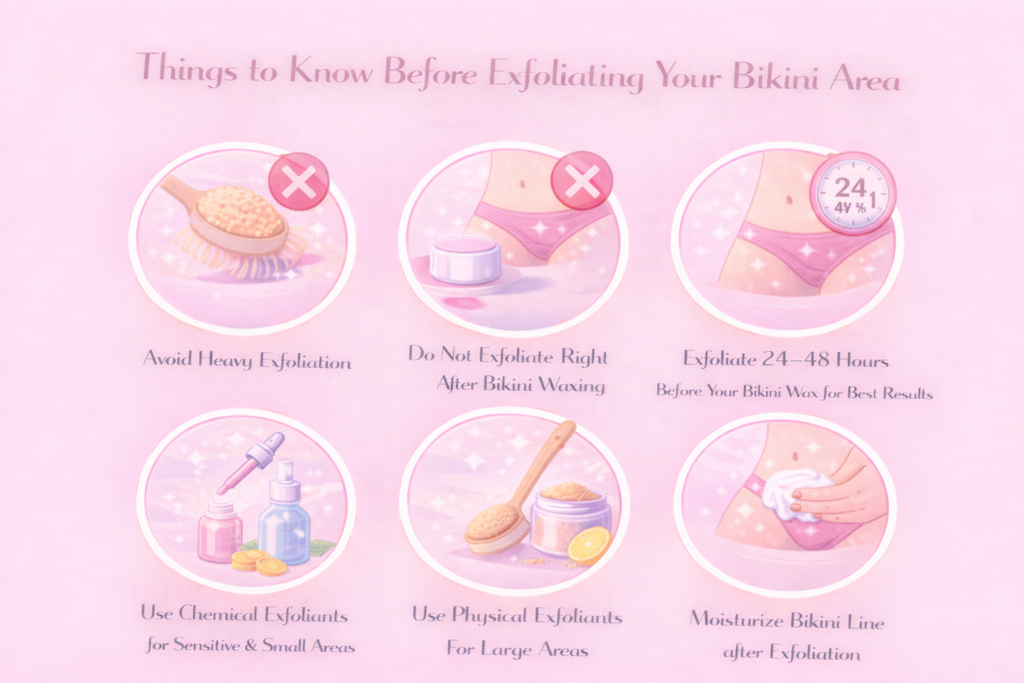
Exfoliating your bikini area is helpful for preventing ingrown hairs and creating a smoother waxing experience, but it must be done correctly. Avoid heavy exfoliation in the 24 hours before your wax, as strong scrubs, peels, or acids can disrupt the skin barrier and make the area overly sensitive.
When the protective layer is weakened, the skin becomes more prone to irritation, inflammation, and redness during waxing. Skincare experts explain that harsh exfoliation can also increase moisture loss and UV sensitivity, making the skin reactive at the worst time.
The key is moderation—use gentle exfoliation one or two days before your appointment and then allow the skin to rest. This helps keep the bikini area balanced, calm, and better prepared for a smooth, comfortable waxing session.
2. Do Not Exfoliate Right After Bikini Waxing
Exfoliating immediately after a bikini wax can interfere with the skin’s natural healing process and lead to unnecessary irritation. Waxing already removes the surface layer of dead skin cells and opens the hair follicles, which makes the area more sensitive to scrubs, acids, or exfoliating tools.
If you exfoliate within the first 48 to 72 hours, you may experience redness, burning, microtears, or clogged pores as the delicate skin reacts to added friction or acids.
Dermatology experts explain that exfoliating skin that is still inflamed increases the risk of long-term irritation and damage. For those with dry, acne-prone, or deeper skin tones, the chances of developing post-inflammatory hyperpigmentation are even higher.
To keep your skin protected, wait two to three days before exfoliating again, and always use a gentle, fragrance-free moisturizer to soothe and rebalance the area.
3. Exfoliate 24–48 Hours Before Your Bikini Wax for Best Results
If you skip exfoliating 24 to 48 hours before your bikini wax, you may end up with uneven results. Proper exfoliation removes dead skin cells, clears clogged pores, and lifts trapped hairs so the wax can adhere smoothly and effectively. This simple step helps prevent missed hairs, reduces patchiness, and minimizes the risk of ingrown hairs after your session.
Many people assume a patchy wax is the technician’s fault, when the real issue is poor skin prep. Use a soft washcloth, a mild scrub, or a gentle chemical exfoliant suited to your skin type. The goal is to loosen buildup—not to scrub your skin raw.
Research shows that pre-wax exfoliation reduces excess oil, buildup, and dead cells that interfere with wax adhesion. If you want a smoother bikini wax and a more comfortable recovery, exfoliating a day or two beforehand is essential.
4. Use Chemical Exfoliants for Sensitive & Small Areas
Chemical exfoliants are the best choice for sensitive and smaller areas, such as the bikini line, because they work without friction or harsh scrubbing. Ingredients like AHAs and BHAs gently dissolve the bonds between dead skin cells, unclog pores, and smooth the skin without irritating delicate tissue.
AHAs exfoliate the surface, while BHAs penetrate deeper to clean inside the pores, making them effective yet gentle. They are also cost-effective, easily accessible, and safer for sensitive skin than abrasive physical exfoliants.
5. Use Physical Exfoliants For Large Areas
Physical exfoliants are ideal for larger, less-sensitive areas such as the legs, arms, or buttocks because they rely on gentle friction to buff away dead skin. Tools like soft washcloths, exfoliating mitts, or fine sugar scrubs can effectively smooth thicker skin without causing irritation.
These methods help loosen flaky buildup and keep pores clear, making waxing easier and reducing the risk of ingrown hairs. However, physical exfoliation should always be gentle, as harsh scrubbing or rough particles can damage the skin and disrupt its natural barrier.
6. Moisturize Bikini Line after Exfoliation
Moisturizing after exfoliation is essential because exfoliation removes dead skin cells and exposes a fresh, more vulnerable layer that needs hydration and protection. After exfoliating, gently pat your skin dry and apply a fragrance-free, hydrating moisturizer while the skin is still slightly damp.
This helps lock in moisture, strengthen the skin barrier, and prevent dryness or irritation. Research shows that moisturizers containing endogenous lipids significantly reduce redness, indicating they not only prevent irritation but also offer anti-inflammatory benefits.
Using ingredients like hyaluronic acid, ceramides, or aloe further soothes the skin and keeps it soft, balanced, and healthy after exfoliation.
How to Exfoliate Before & After Bikini Wax Using Chemical Exfoliant
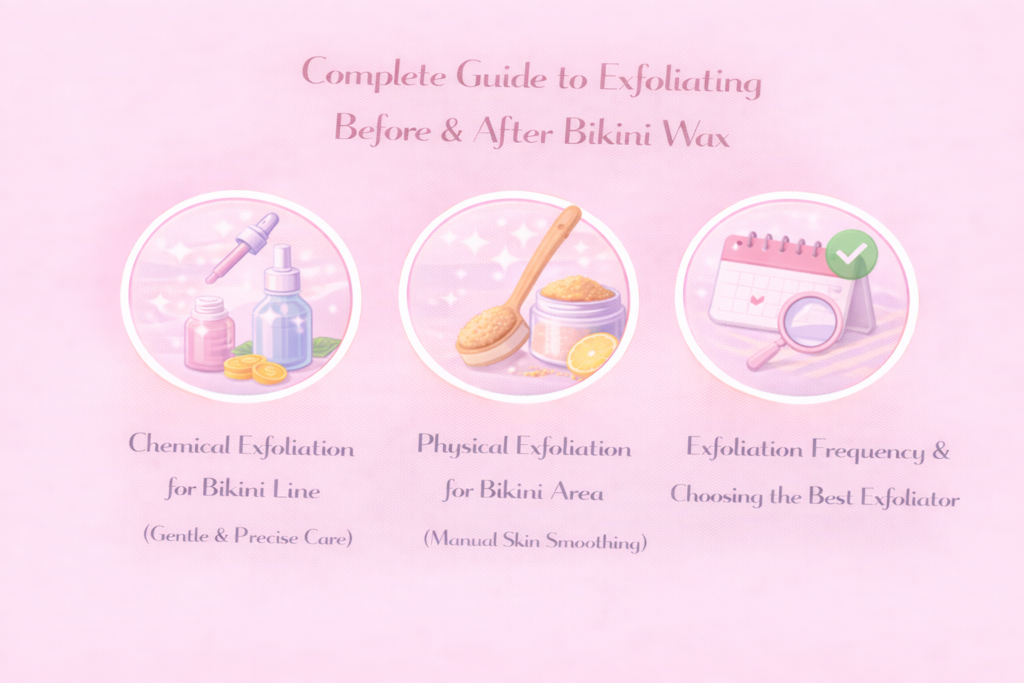
By following these steps, you can perform chemical exfoliation before and after a bikini wax using a chemical exfoliant.
Gently wash your bikini area with a mild, fragrance-free cleanser and lukewarm water, then pat dry with a clean towel.
Choose the right chemical exfoliant for your skin. For normal or oily, ingrown-prone skin: choose a salicylic acid (BHA) product. For Dry skin: choose a lactic acid (AHA) product. For Sensitive skin: choose a mandelic acid (AHA) product.
Use clean hands or disposable gloves so the exfoliant does not sit on your fingers for too long, especially if it is a strong acid.
Put a small amount of exfoliant on your fingertips, then gently apply it along the bikini line and the areas you want to exfoliate in light, smooth circular motions, staying on external skin only and avoiding broken skin or mucous membranes.
Follow the directions on the label, because chemical exfoliants come in two forms: rinse-off and leave-on.
Rinse-off exfoliants are meant to stay on the skin only for a few minutes so the acids can loosen dead cells, and then you must wash them off with lukewarm water and gently pat dry.
Leave-on exfoliants, such as lotions or serums, are designed to stay on the skin, so apply a thin, even layer and allow it to fully absorb without rinsing.
Research says that chemical exfoliation removes dead skin cells by using ingredients such as AHAs, BHAs, or enzymes that dissolve the “glue-like” bonds holding old corneocytes together. These acids gently penetrate the upper layers of the skin and break down the connections between dead cells, allowing them to shed naturally without friction. This controlled chemical action helps smooth the skin, clear pores, and prepare the bikini area for waxing with minimal irritation.
After exfoliation, apply a light, non-comedogenic, fragrance-free moisturizer to keep the skin barrier comfortable and hydrated.
After exfoliating, use a soothing, fragrance-free moisturizer and avoid tight clothing, hot baths, and perfumed products in the area for a while to reduce the risk of irritation and ingrown hairs.
How to Exfoliate Before & After Bikini Wax Using Physical Exfoliant
By following these steps, you can perform physical exfoliation before and after a bikini wax using a physical exfoliant:
Wash your bikini area with a gentle, fragrance-free cleanser and lukewarm water, then pat the skin dry.
Choose the suitable physical exfoliants.
Select a mild scrub with small exfoliating grainy particles such as pulverized walnut shells, apricot pits, pistachio shells, almond shells, salt crystals or a tool appropriate for the bikini area. Soft options include fine sugar scrubs, soft washcloths, microfiber cloths, or very gentle exfoliating mitts. Avoid harsh particles like crushed shells, salt, or rough brushes, because they can damage delicate skin.
Take a small amount of the scrub or use your tool, and massage it over the bikini line using light, circular motions. Do not apply heavy pressure because the skin in this area is thin and sensitive.
Research says that physical exfoliation works by using gentle friction to loosen and remove the buildup of dead skin cells from the surface of the stratum corneum. As the scrub particles or soft tools glide over the skin in circular motions, they manually lift away old cells, smooth rough texture, and help keep the pores around the bikini line clear. This controlled mechanical action supports healthy skin turnover without penetrating into deeper layers.
After exfoliating for about 30–60 seconds, rinse with lukewarm water to remove all residue and prevent irritation.
Don’t exfoliate at the same spot again and again.
Apply a fragrance-free, soothing moisturizer to help maintain the skin barrier and keep the area soft before waxing.
How Often Should You Exfoliate?
You should exfoliate two to three times per week, but the ideal frequency depends on your skin type and the strength of the exfoliant. Sensitive or dry skin should exfoliate only one to two times weekly, while normal or combination skin can exfoliate two to three times weekly.
Oily or acne-prone skin may exfoliate three times weekly if the product is gentle. Strong chemical exfoliants and gritty physical scrubs should be used less often, while mild acids or enzyme exfoliants can be used more regularly.
What Are The Best Exfoliator For Bikini Wax
There are different types of exfoliators, and each skin type requires a specific kind to maintain comfort and prevent irritation. Some people benefit more from gentle chemical exfoliants, while others may prefer mild physical exfoliation for larger areas.
However, choosing the right exfoliator depends entirely on your skin’s sensitivity, texture, and personal needs. We have discussed the best exfoliators for bikini wax in a separate detailed article. You can read that guide for in-depth information and select the most suitable exfoliator based on your skin type and goals.
Pink Beauty Salon Offers One of the Best Waxing Services in Dubai and Sharjah
Pink Beauty Salon is a popular salon in Dubai that provides high-quality home waxing services in Dubai and home waxing services in Sharjah. They are known for delivering some of the best at-home waxing treatments, making the process comfortable and convenient for clients.
If you ever need any type of waxing service or guidance related to waxing, you can easily contact Pink Beauty Salon. Their highly experienced and dedicated staff will guide you through every step in detail and help you with any concerns. They also offer free consultations, and you only pay for the service you choose.
Conclusion
Exfoliating before and after a bikini wax is a small step that creates big improvements in smoothness, comfort, and overall skin health. By choosing the right exfoliant for your skin type and following gentle, consistent practices, you can prevent ingrown hairs, reduce irritation, and make every waxing session more effective.
Whether you prefer chemical or physical exfoliation, the key is balance—prepare your skin, protect it afterward, and avoid overdoing it. With the right routine, your bikini area stays healthy, soft, and beautifully maintained.