

Published On: 04 Dec 2025
Bikini wax ingrown hairs are frustrating, painful, and often show up at the worst possible time—right when you expect smooth, flawless skin. The sudden bumps, redness, and irritation can ruin your confidence and make you dread your next waxing session.
If you’ve ever wondered why these stubborn ingrowns keep happening or felt confused about how to finally get rid of them, you’re not alone.
The good news? Bikini Wax Ingrown hairs are completely manageable—and often preventable—once you understand what causes them and how to treat them properly. With the right techniques, soothing care, and a few smart habits, you can enjoy smoother skin and far more comfortable bikini waxes. This guide walks you through everything you need to know, step by step.
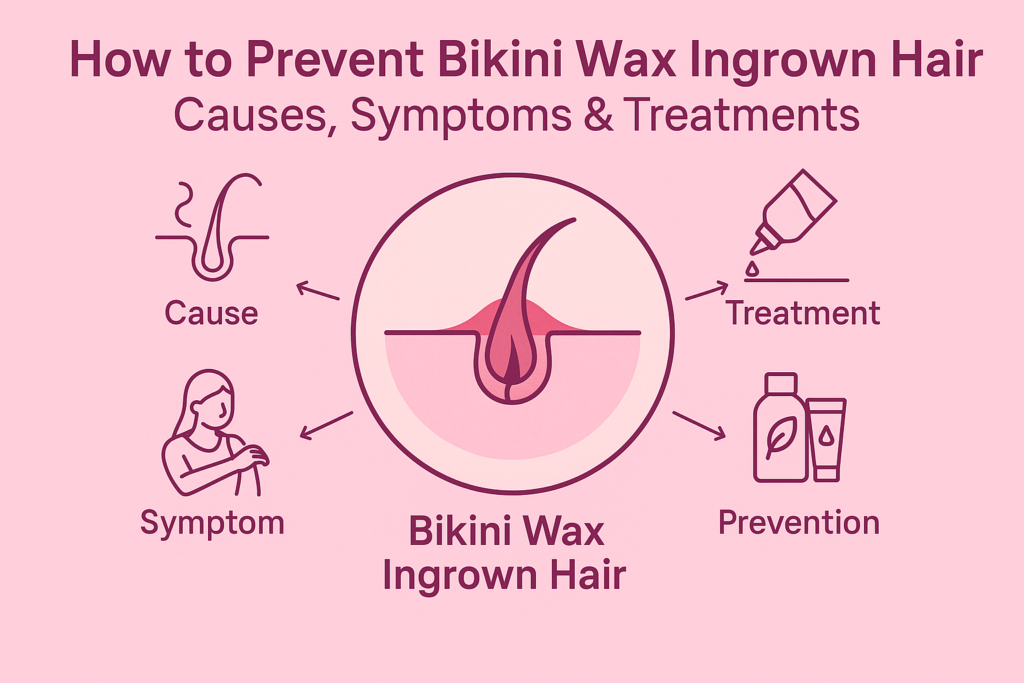
What Are Bikini Wax Ingrown Hair
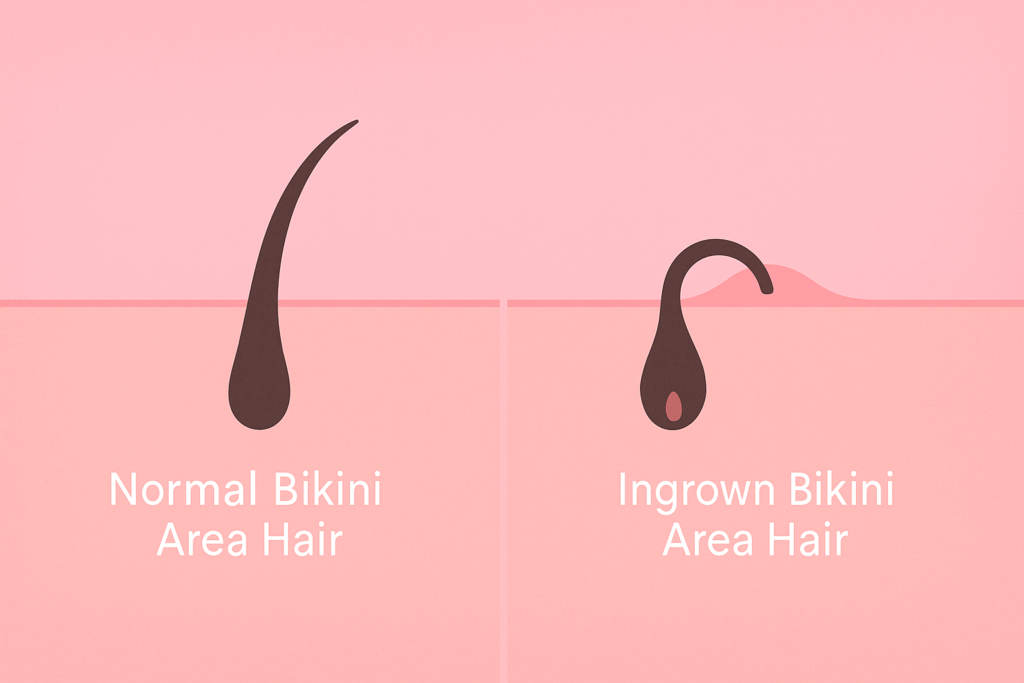
An ingrown hair occurs when a hair strand grows back into the skin instead of rising to the surface, often causing redness, itching, or painful bumps. While they can appear on any hair-bearing area, they are especially common after shaving, tweezing, or waxing because the hair is removed or cut in a way that makes re-entry into the skin easier.
Research shows that 9–70% of women experience complications after hair-removal procedures, with ingrown hairs being one of the most frequent concerns.
In the context of bikini line waxing, ingrown hairs develop when newly growing pubic hair—often coarse or curly—fails to break through the skin or curls back inward after being removed from the follicle. This makes bikini-area ingrowns particularly common and sometimes more uncomfortable than in other body areas.
Can Bikini Wax Ingrown Hairs Hurt
Yes—bikini wax ingrown hairs can hurt, especially when the trapped hair triggers inflammation beneath the skin. Ingrown hairs occur when newly growing strands curl inward or fail to break through the surface, creating painful, raised bumps that may feel tender, itchy, or warm.
Medical literature describes a rare but more serious form, known as ingrowing hair, where the hair burrows inside the dermis and causes persistent swelling, redness, and folliculitis. While this severe version is uncommon, it highlights how deeply embedded hairs can lead to significant discomfort.
In the bikini area—where hair is coarse and curls easily—the risk of irritation is naturally higher, making wax-related ingrown hairs more painful than those in other regions.
What Are The Causes of Bikini Wax Ingrown Hair
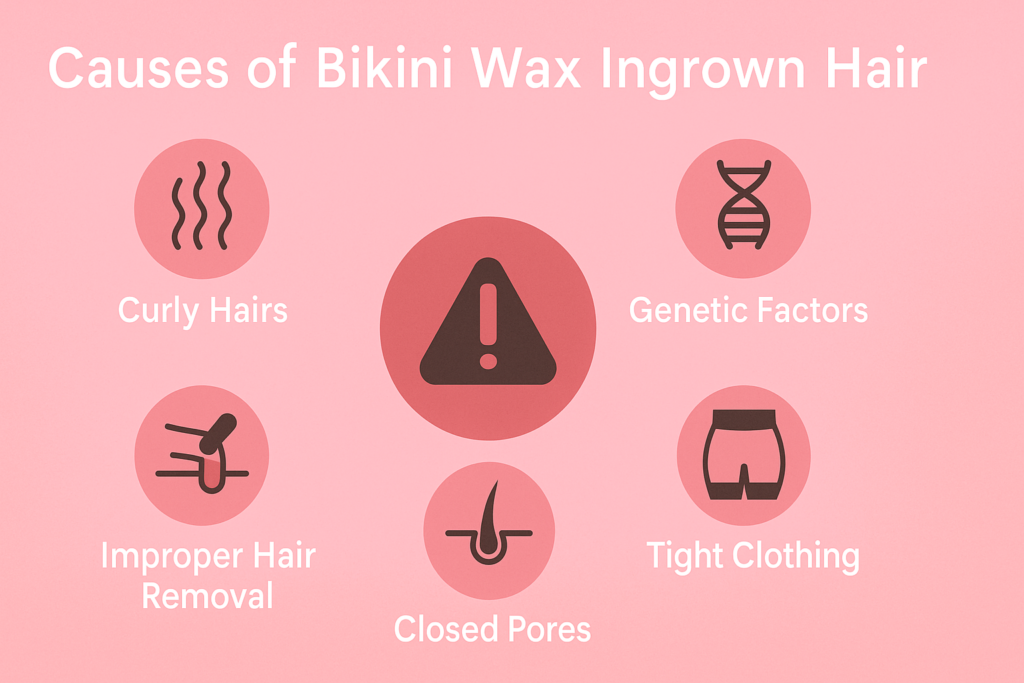
1. Curly Hairs Are Naturally Prone to Bikini Wax Ingrown Hairs
Hair texture plays a significant role in how easily ingrown hairs develop. Straight hair tends to grow outward with minimal resistance, while wavy or curly hair naturally bends as it emerges from the follicle. The tighter the curl pattern, the more likely the strand is to curve back toward the skin. This is why people with coarse, curly, or tightly coiled hair experience ingrowns more frequently.
According to the University of Rochester Medical Center, ingrown hairs are especially common among individuals with very curly hair because the natural curl encourages the hair to re-enter the skin rather than grow straight out.
When this inward growth occurs, the trapped hair triggers inflammation, discomfort, and bumps, making curly hair types the most prone to recurrent ingrown hairs.
2. Genetic Factors Increase Bikini Wax Ingrown Hair Risk
Genetics play a measurable role in determining who is more likely to develop ingrown hairs. Certain inherited traits—such as naturally coarse, curly hair and curved hair follicles—increase the chance that growing strands will bend back toward the skin rather than grow outward.
Research on pseudofolliculitis barbae shows that individuals with a specific single-nucleotide substitution in the K6hf gene have a six-fold higher risk of developing ingrown hairs because this gene affects the structure and resilience of the follicle’s companion layer. When this layer is weaker, the emerging hair tip can more easily penetrate the surrounding skin, triggering inflammation.
Together, these genetic factors create a biological environment where hairs are more likely to become trapped, making recurrent ingrowns significantly more common in affected individuals.
3. Improper Hair Removal Techniques Cause Bikini Wax Ingrown Hairs
Improper hair-removal techniques are one of the leading causes of bikini-area ingrown hairs because they disrupt the natural growth path of the hair. Shaving too closely, shaving without lubrication, or pulling the skin tight can create sharp, angled tips that easily pierce back into the skin as they regrow.
Waxing mistakes—such as removing hair against the wrong direction or using low-quality wax—can cause the hair to break at the surface instead of being removed from the root. These broken strands sit just beneath the skin and curl inward as they grow, becoming trapped and inflamed.
Tweezing against the grain and plucking only part of the hair can produce the same effect. When these improper techniques occur in the bikini area, where hair is naturally coarse and curly, ingrowns develop even more easily and more painfully.
4. Tight Clothing Can Trigger Bikini Wax Ingrown Hairs
Tight clothing can easily trigger bikini-area ingrown hairs because constant pressure and friction irritate freshly waxed skin and disrupt the path of new hair growth. Fabrics like tight jeans, leggings, or synthetic underwear trap heat and moisture, creating an environment where pores clog and follicles become inflamed.
This irritation makes it harder for new hairs to break through the skin, increasing the chance they curl inward instead. In some cases, the trapped heat and friction can even lead to folliculitis, a mild infection of the hair follicles.
5. Dirty Skin Condition Also Leads to Bikini Wax Ingrown Hairs
Dirty skin refers to skin that hasn’t been properly cleansed and has a buildup of oil, sweat, dirt, and dead skin cells sitting on the surface. When this buildup accumulates, it blocks the pores and tightens the follicle opening, making it difficult for new hairs to grow outward after a bikini wax.
Instead of breaking through the surface, the hair becomes trapped underneath the clogged layer and curls inward, leading to painful ingrown hairs. In the bikini area—where sweat and friction are common—dirty skin increases this risk even more.
What Are The Symptoms of Bikini Wax Ingrown Hair
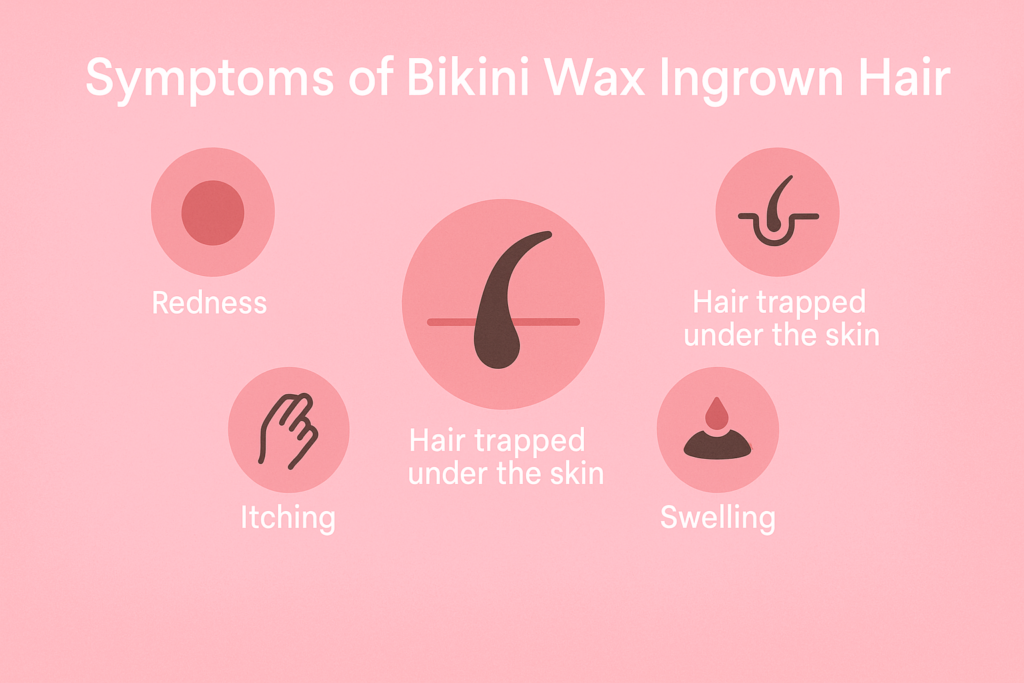
Ingrown hairs in the bikini area can appear mild or become more uncomfortable as the trapped hair irritates the surrounding skin. In rare cases, an ingrown hair may grow deeper inside the skin, creating more persistent symptoms. Recognizing these signs early helps prevent infection and scarring.
Common symptoms include:
- Redness or small raised bumps
- Pain, tenderness, or itching around the follicle
- A visible hair trapped under the skin
- Pus-filled bumps or pustules
- Folliculitis (inflamed hair follicles)
- Swelling or warm skin around the area
- Post-inflammatory hyperpigmentation (dark spots after healing)
- In rare ingrowing-hair cases: long, linear black lesions beneath the skin, persistent inflammation, or recurrent bumps
If symptoms worsen or resemble cysts or boils, medical evaluation is recommended.
How to Treat Bikini Wax Ingrown Hair
Step 1: Stop Picking or Squeezing Immediately
Do not pick, squeeze, or dig into the ingrown hair. This can push the hair deeper, cause infection, or lead to scarring. Leave the area untouched until it is softened and ready for treatment.
Step 2: Apply a Warm Compress
Place a warm, damp cloth on the ingrown hair for 5–10 minutes. Gently move it in circles. Warmth softens the skin, reduces inflammation, and encourages the trapped hair to rise toward the surface.
Step 3: Gently Exfoliate After the Skin Softens
Use a washcloth, soft brush, or gentle exfoliating wipe in small circular motions. This removes dead skin cells blocking the follicle and may help release the trapped hair. Avoid harsh scrubbing.
Step 4: Use a Targeted Treatment if the Area Is Red or Irritated
If the ingrown becomes red or sensitive, switch to a benzoyl peroxide wash or a glycolic acid toner to reduce bacteria and inflammation. Research also states the ability of a benzoyl peroxide cleanser/wash formulation to reduce pre-existent antibiotic-resistant. You may also apply a product with salicylic acid (1–2%) to dissolve buildup around the follicle.
Step 5: Try an Ingrown Hair Serum or Soothing Ingredients
Apply an ingrown-hair serum to clear debris and gently exfoliate beneath the skin’s surface. For irritation, use calming ingredients such as aloe vera, tea tree oil (diluted), green tea extract, or colloidal oatmeal to reduce redness and swelling.
Step 6: Attempt Removal Only If the Hair Is Clearly Exposed
If the hair naturally rises above the skin surface after warm compressing and exfoliation, gently pull it out with the grain using sterile tweezers. If it forms a loop, lift it gently with a sterile needle or pin. Disinfect the surrounding skin with rubbing alcohol beforehand.
Step 7: If the Hair Does Not Come Out Easily, Leave It Alone
Do not force removal. Continue warm compresses and light exfoliation daily until the hair rises on its own. Forcing it early can cause deeper inflammation or infection.
Step 8: Moisturize the Area Daily
Use a gentle moisturizer or hydrating oil such as jojoba to soften the skin and support healing. Soft, hydrated skin makes future regrowth easier and reduces irritation.
Step 9: Seek Professional or Medical Help if Needed
If the bump becomes large, painful, cyst-like, or persistent, see a waxing professional or dermatologist. A doctor may safely dislodge the hair or prescribe antibiotics, retinoids, or steroid creams if infection or severe inflammation is present.
Step 10: Consider Long-Term Solutions for Recurrent Ingrowns
If ingrown hairs keep returning despite proper care, discuss long-term methods with your dermatologist. Laser hair removal is especially effective because it weakens the follicle and reduces regrowth. Electrolysis is another option for targeted permanent removal.
How to Prevent Bikini Wax Ingrown Hair
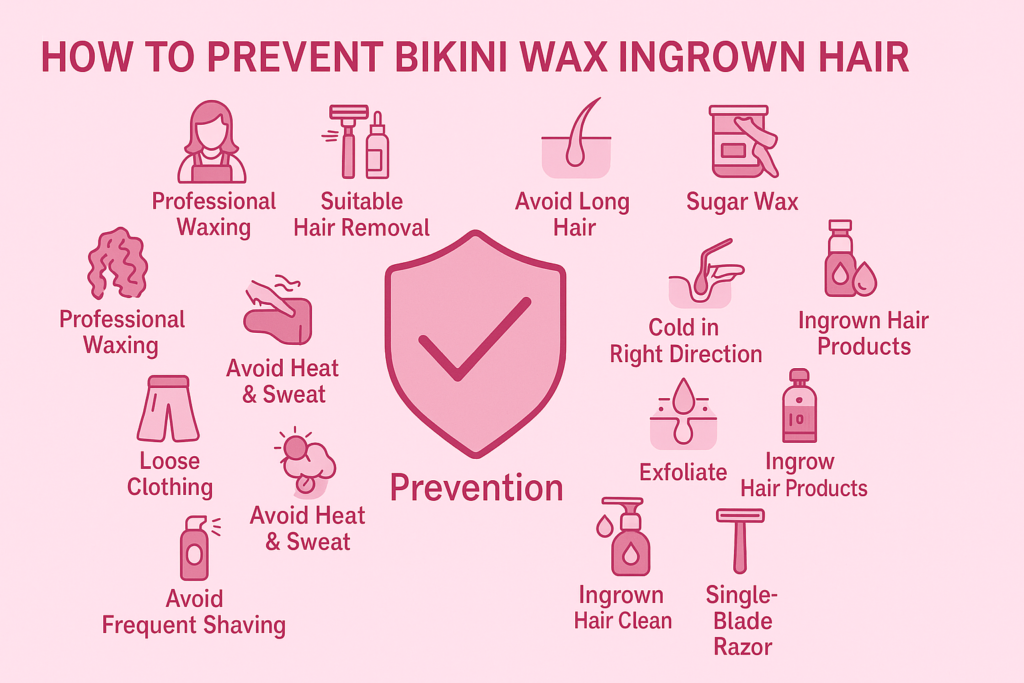
1. Choose Professional Waxing Over At-Home Methods
Choosing professional waxing over at-home methods is one of the most effective ways to reduce bikini-area ingrown hairs.
When waxing is done without proper training, the hair is often pulled in the wrong direction or removed at the wrong angle, causing it to snap at the surface instead of being lifted cleanly from the root. These broken strands sit just beneath the skin and frequently curl inward as they regrow, leading to painful ingrown hairs.
Untrained application can also use wax that is too hot, too cold, or applied unevenly, increasing irritation and inflammation.
To prevent these issues, it’s best to rely on skilled, experienced technicians who understand correct technique and hygiene. High-quality, professional services—such as home waxing in Dubai or home waxing in Sharjah offered by Pink Beauty Salon—ensure cleaner removal, less trauma, and fewer Bikini Wax ingrown hairs.
2. Choose Suitable Hair Removal Option
Choosing the right hair-removal method plays a major role in preventing bikini-area ingrown hairs. Shaving often cuts the hair at a sharp angle, making it easier for the tip to curl back into the skin. Bikini Waxing can also lead to ingrowns when the hair breaks instead of being removed completely from the root.
Alternative methods like laser hair removal greatly reduce ingrowns because the follicle is weakened over time, causing the hair to grow back finer and straighter or stop growing altogether.
Trimming is another low-risk option for both men and women, and one of the major benefits of trimming pubic hair is that the hair is cut at a safe distance from the skin. This leaves each strand at a suitable length, preventing the tip from becoming sharp or short enough to penetrate the skin, which makes trimming highly effective for avoiding pubic-area ingrown hairs.
Since trimming and lasers do not create broken or sharply cut hairs, they produce far fewer chances of bikini-area ingrown hairs compared to shaving or waxing.
3. Avoid Letting Hair Get Too Long
Avoid letting pubic hair grow too long before a bikini wax, as overly long strands prevent the wax from gripping the hair properly at the root. When the wax cannot attach securely, the hair often breaks close to the skin instead of being removed from the follicle.
These short, broken hairs are far more likely to curl inward during regrowth, leading to bikini-area ingrown hairs.
According to the American Academy of Dermatology, keeping the hair at an ideal length helps wax adhere correctly and reduces the risk of irritation or uneven results.
Trimming the hair to a suitable length using a bikini wax trimmer ensures cleaner root removal and significantly lowers the chances of ingrown hairs forming after waxing.
4. Use The Sugar Wax
Sugar wax is one of the types of wax for bikini waxing that is made from sugar, lemon, and water, and it removes hair in a way that can significantly reduce bikini-area ingrown hairs. Unlike traditional wax, sugar wax is applied against the direction of hair growth and then pulled off in the same direction the hair naturally grows.
This technique removes the hair more cleanly from the root with fewer chances of breakage, which is one of the main causes of ingrown hairs. Research also shows that sugar waxing causes less irritation and pain than traditional waxing, meaning the skin experiences less inflammation and heals more easily.
With smoother removal and reduced irritation, sugar wax lowers the likelihood of new hairs becoming trapped beneath the skin after a bikini wax.
5. Pull In the Right Direction
Pulling hair in the right direction is essential for preventing bikini-area ingrown hairs. Whether you are waxing, tweezing, or plucking, removing the hair in the same direction it naturally grows helps lift it cleanly from the root. Even research says that the most common cause of ingrown hairs is an improper shaving technique.
When hair is pulled against the wrong direction, it often snaps at the surface instead of being fully removed, leaving a short, sharp tip beneath the skin. These broken hairs are far more likely to curl inward as they regrow, leading to painful ingrowns.
Using correct technique ensures smoother removal, reduces irritation, and allows new hairs to grow outward without obstruction.
6. Apply a Cold Compress
A cold compress is a clean cloth or ice pack wrapped in a soft towel and applied gently to the skin to reduce heat and swelling. To use it after a bikini wax, place the cold compress on the freshly waxed area for a few minutes at a time, allowing the skin to calm without pressing too hard.
Cooling the skin immediately helps tighten the pores, soothe inflammation, and reduce the redness that often follows waxing. This early reduction in swelling keeps the follicle opening clear, making it easier for new hairs to grow outward instead of getting trapped beneath irritated skin.
By calming the tissue and minimizing post-wax inflammation, a cold compress effectively lowers the chances of developing painful bikini-area ingrown hairs.
7. Use Ingrown Hair Treatment Products
Using targeted ingrown-hair treatment products is an effective way to prevent bikini-area ingrown hairs because these formulas are designed to keep the follicles clear and reduce inflammation.
Many of these products contain ingredients like salicylic acid, glycolic acid, or lactic acid, which gently dissolve dead skin cells and excess oil around the follicle. Research shows that salicylic acid helps unclog pores and open the follicle, preventing the buildup that causes new hairs to become trapped beneath the skin.
Other treatments include soothing agents such as aloe vera, niacinamide, and tea tree oil, which calm irritation and reduce redness after waxing. By keeping the bikini line exfoliated, clear, and soothed, these ingrown-hair products create an environment where new hairs can grow outward smoothly instead of curling inward.
8. Keep the Bikini Area Clean
Keeping the bikini area clean is essential for preventing ingrown hairs because dirt, sweat, and oil can block the follicle opening and trap new hairs beneath the skin. When the skin is not properly cleansed, this buildup creates a barrier that makes it difficult for regrowing hairs to emerge, increasing the chance they curl inward.
Clean skin also allows the wax to grip each hair more effectively, which means the hair is removed cleanly from the root instead of snapping at the surface—reducing the chance of breakage and ingrown hairs.
According to the American Academy of Dermatology, washing and thoroughly drying the area before waxing improves adhesion, ensuring the hair is removed cleanly from the root rather than breaking at the surface.
Removing hair completely reduces the likelihood of short, broken strands becoming trapped and developing into painful ingrown hairs along the bikini line.
9. Exfoliate The Area Before & After Bikini Waxing
Exfoliation before and after bikini wax helps prevent bikini wax ingrown hairs because it addresses the two main reasons hairs get trapped.
First, it removes the buildup of dead skin cells that clogs the follicle opening, allowing new hairs to break through the surface instead of curling beneath it. This creates a clear, smooth path for regrowth after waxing.
Second, exfoliating ingredients commonly used in exfoliator for bikini wax—such as glycolic acid—help reduce natural hair curvature. Research shows that glycolic acid works by weakening sulfhydryl bonds in the hair shaft, making the strand straighter and less likely to bend back into the skin.
By clearing surface blockages and lowering the chance of inward growth, exfoliation significantly reduces the risk of painful bikini-area ingrown hairs.
10. Wear Loose-Fitting Clothing After Bikini Waxing
Wearing loose-fitting clothing after a bikini wax helps prevent ingrown hairs because freshly waxed skin is highly sensitive and needs space to heal. Tight clothing restricts airflow, traps heat, and creates friction against the delicate bikini line, which can slow the skin’s recovery.
More importantly, tight garments press directly on the follicle openings. When this pressure occurs during the early regrowth phase, the new hair may struggle to rise through the surface and instead become trapped beneath the skin. This makes inward curling and ingrown hairs much more likely.
Loose, breathable fabrics allow the skin to stay cool, reduce irritation, and give each follicle the room it needs for normal, outward hair growth.
Dermatology experts state that choosing relaxed pants, cotton underwear, loose dresses, or even going without underwear at home keeps the area cool and calm, supporting proper healing and reducing the chance of bumps or trapped hairs forming.
11. Avoid Sweating & Heat
Avoiding sweating and heat after a bikini wax is essential because freshly waxed skin is inflamed and the follicles remain open, making the area extremely vulnerable. When you expose the bikini line to hot showers, saunas, steam rooms, or intense workouts, the rise in temperature increases inflammation and causes sweat to collect around the open follicles.
This moisture traps bacteria and debris on the skin, creating the perfect conditions for irritation, folliculitis, and clogged pores. According to Healthline, If bacteria, fungi, or other pathogens enter the skin, an infection can develop, known as folliculitis. When pores clog during the early regrowth phase, new hairs struggle to break through the surface and are more likely to curl inward, leading to ingrown hairs.
Keeping the area cool and dry for the first 24 to 48 hours allows the skin to heal properly and greatly reduces the risk of bikini-area ingrowns.
12. Follow Proper Bikini Wax Aftercare
Following proper bikini wax aftercare is essential for preventing ingrown hairs because the skin and follicles are most vulnerable immediately after waxing. Keeping the area clean, avoiding heat and sweating, and wearing loose clothing help the skin heal without irritation. Gentle exfoliation after the first 48 hours clears dead skin so new hairs can grow outward without obstruction.
Using soothing or exfoliating ingrown-hair treatments keeps the follicles open and reduces inflammation. By supporting the skin during this recovery period, proper aftercare ensures smoother regrowth and significantly lowers the chances of painful bikini wax ingrown hairs.
13. Avoid Shaving Too Frequently
If you experience pubic-area ingrown hairs after shaving instead of bikini waxing, shaving too frequently may be the cause. Constant shaving cuts the hair repeatedly at a very short length, creating sharp tips that can easily curl back into the skin as they regrow.
Frequent shaving also keeps the skin in a constant state of irritation, which makes the follicles swell and narrow, increasing the chances of hairs becoming trapped.
By reducing how often you shave, you give both the skin and follicles time to recover, allowing new hairs to grow outward more naturally. This simple change can significantly lower the risk of bikini-area ingrown hairs.
14. Use a Single-Blade Razor
Using a single-blade razor can help prevent bikini wax ingrown hairs because it cuts the hair cleanly without tugging it below the skin’s surface. Multi-blade razors often lift the hair and slice it too close, creating a very sharp, shortened tip that easily curls back into the skin as it regrows.
This close cut also increases irritation and swelling around the follicle, narrowing the opening and making it harder for new hairs to emerge.
A single-blade razor glides more gently, trims the hair at a safer length, and reduces the chance of creating razor-sharp ends. When the hair grows out naturally instead of being pulled and snapped, the risk of bikini-area ingrown hairs decreases significantly.
Conclusion
Bikini wax ingrown hairs are common, but they don’t have to be a recurring problem. By understanding their causes, recognizing early symptoms, and following proper treatment and prevention steps, you can greatly reduce discomfort and enjoy smoother, healthier skin.
The key is consistency—gentle exfoliation, clean skin habits, the right hair-removal methods, and mindful aftercare all work together to keep ingrowns away. And if they do appear, treating them calmly and correctly prevents further irritation or scarring.
With the right approach, you can maintain a confident, comfortable bikini area and make every waxing session a far better experience.