

Published On: 01 Nov 2025
Bikini waxing is one of the most popular hair removal methods for achieving smooth, clean skin around the pubic and bikini area. This complete guide explains everything you need to know—from what the bikini line is, to how bikini waxing is done, and the different types of waxes and bikini waxing styles available.
It also covers important aspects like preparation, aftercare, and managing common issues such as bumps or ingrown hairs. Whether you’re new to waxing or just want to improve your routine, this article provides a clear and practical overview of the process, benefits, and best practices for both beginners and regular clients.
What is The Bikini Line?

Broadly, bikini line refers to the portion of the bikini area—skin around the pubic region that remains visible in a standard bikini or underwear—where pubic hair can show.
It includes hair along the sides of a bikini bottom, the section above the waistband across the top of the pubic bone and sometimes a narrow line below the navel (often called a “happy trail”), and the upper inner thighs where the legs meet the torso.
It does not include hair fully covered by a typical bikini bottom, nor does it include removal from the labia, anus, or buttocks, which are considered part of a Brazilian wax rather than a basic bikini service. In short, the bikini line marks the visible perimeter of pubic hair that may appear around common swimwear or underwear.
What is a Bikini Wax
A bikini wax is a method of pubic hair removal in which hot or cold wax adheres to hairs and is quickly removed—usually with a cloth strip—to pull the hairs out from the root. While often associated with women, it is also chosen by men.
A basic bikini wax targets hair that would otherwise be visible around a standard bikini or underwear: the sides of the bikini bottom, the top edge over the pubic bone (including a narrow line below the navel), and the upper inner thighs. It typically excludes hair fully covered by the garment and does not include removal from the labia, anus, or buttocks, which are considered part of Brazilian services.
A research article also states that “Bikini wax, as the name suggests, removes any hair that can be seen while wearing a bikini or a swimsuit.” Overall, a bikini wax provides a clean, groomed outline along the edges of typical swimwear without extending into more comprehensive Brazilian treatments.
What is a Bikini Wax for Women
A women’s bikini wax is a hair-removal treatment that eliminates unwanted pubic hair from the edges of the bikini area using hot or cold wax that pulls the hair out from the root. The goal is to create a clean and well-defined outline so that no hair is visible while wearing a bikini or underwear.
Depending on preference, it can range from a simple tidy-up of the sides and top of the bikini line to a more thorough removal, such as a Brazilian wax that eliminates nearly all hair from the pubic region. It has become a common part of personal grooming and hygiene routines for many women.
According to research, “Findings reveal that the majority of U.S. women have removed their pubic hair at some point in their lifetime, and almost half have done so within the past month.”
Overall, bikini waxing for women reflects a widespread grooming trend focused on cleanliness, comfort, and aesthetic appeal.
What is a Male Bikini Wax
A male bikini wax—often called a “Manzilian”—is a grooming procedure that removes hair from the male pubic region using wax that pulls the hair out from the root. The level of hair removal can vary, ranging from cleaning up the visible bikini line to achieving a completely smooth finish across the pubic area, including the scrotum, anus, and the space between the buttocks.
Although once considered uncommon, it is no longer unusual for men to seek this service; male waxing has become an increasingly popular and fast-growing grooming practice. According to research, “Pubic hair grooming is common among men aged 18 to 65 years in the United States. Younger ages are associated with greater rates of pubic hair grooming.”
Overall, a male bikini wax represents a modern approach to personal hygiene and aesthetic grooming among men, reflecting evolving attitudes toward body care and appearance.
Why Do Some People Remove Hair From the Bikini Line Area?
Many individuals engage in pubic hair removal for reasons related to aesthetics, personal grooming, hygiene, cultural or religious norms, fashion trends, or to enhance comfort and confidence during sexual activity.
The motivations can vary widely, but the practice is often linked to perceptions of cleanliness, attractiveness, and self-care. Research indicates that “95% of the subjects removed their pubic hair at least once every 4 weeks; women were more likely to report their status as completely depilated, and men were more likely to prefer sexual partners with completely depilated genitalia.”
Another study found notable differences across demographics, reporting that “White women (prevalence = 80.2%, P < 0.001) remove pubic hair more frequently compared to Black women (prevalence = 12.2%, P < 0.001).”
Overall, the decision to remove bikini line hair is influenced by a combination of personal preference, social expectations, and cultural diversity in grooming habits.
How Popular is Bikini Wax?
Bikini waxing is widely popular and firmly mainstream. Offered at most salons and spas, it sees steady, year‑round demand with noticeable peaks before summer, vacations, and weddings. Many women choose routine touch‑ups to keep hair from showing outside swimwear, and an increasing number of men request similar services for a clean outline.
Convenience, smooth results that last longer than shaving, and social norms around grooming all contribute to its popularity. Options range from a basic tidy to Brazilian styles, letting clients match preference and comfort.
Overall, bikini waxing remains a common, accessible grooming choice across ages, body types, and cultures.
What is The Process of a Bikini Wax
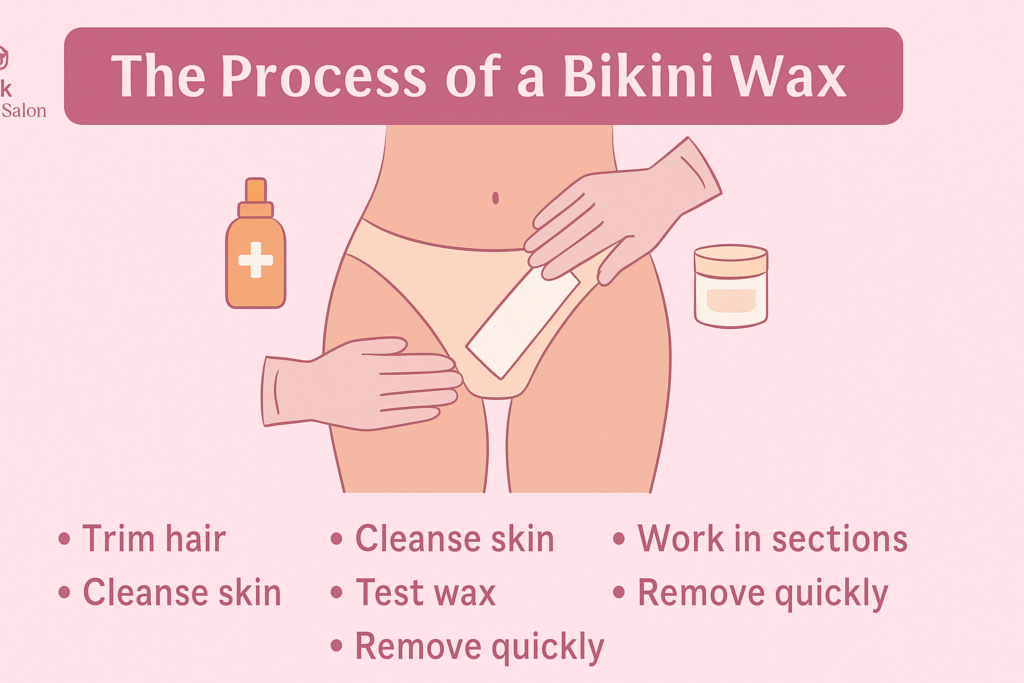
We trim hair to about a quarter‑inch so the wax can grip. Cleanse the skin, dust a bit of powder, and do a patch test first. Your tech (gloves on, no double‑dipping) spreads small sections in the direction of hair growth—hard wax for sensitive edges, strip wax for bigger patches—then removes them quickly against hair growth while holding the skin taut and pressing after to blunt the sting.
We work in sections, tweeze stray hairs, then soothe with a gel. For the next 24–48 hours, skip hot showers and tight clothes; after two days, begin gentle exfoliation and moisturize to help prevent ingrowns.
Breathe out on the pull, avoid caffeine, and—if it’s safe for you—take an anti‑inflammatory beforehand. With regular visits every four to six weeks, regrowth gets finer and people find each session easier. For home kits, follow directions carefully.
What is a Bikini Wax Area
Think of the “bikini wax area” as the zone that gets cleaned up when you remove hair visible around a typical bikini or underwear. It’s basically the skin just outside the main pubic region—where hair might peek out from the sides or top of a bikini bottom.
That includes the sides of the groin (where the leg meets the torso), the line across the top of the pubic bone, and sometimes a little just below the belly button. Some people also tidy the upper inner thighs to make everything look smooth.
Anything that stays completely covered by the bikini—like the labia or between the buttocks—usually isn’t part of a basic bikini wax. That deeper area belongs to a Brazilian wax instead.
So, in short, the bikini wax area focuses on keeping what’s visible in swimwear neat, while leaving the more private parts untouched unless requested.
Does Bikini Wax Include Private Parts?
No, a standard bikini wax does not include private parts. It only removes hair that would be visible outside a regular bikini or underwear, such as the sides of the groin, the top of the pubic bone, and sometimes the upper inner thighs.
Hair on the labia, anus, or between the buttocks is not touched in a basic bikini wax. If someone wants those areas completely hair-free, that service is called a Brazilian wax, not a standard one.
Does Bikini Wax Include Inner Lips?
No, a standard bikini wax does not include the inner lips. It only removes hair visible outside a regular bikini or underwear — mainly along the sides of the groin, the top of the pubic bone, and sometimes the upper inner thighs.
The inner lips (labia) are considered part of a Brazilian wax, which targets more intimate areas for complete hair removal. So, unless specifically requested as part of a Brazilian, the inner lips are not included in a basic bikini wax.
What Are The Other Common Methods for Removing Pubic Hair?
People use several common methods to remove pubic hair, depending on their comfort, budget, and desired results. Shaving is the quickest and most accessible option, but hair grows back within a few days and can cause irritation or razor bumps.
Sugaring uses a sticky paste of sugar, lemon, and water that pulls hair from the root, similar to waxing but gentler on sensitive skin. Electrolysis and laser hair removal offer long-term or permanent results by targeting hair follicles, though they require multiple sessions and are more expensive.
Chemical depilatory creams dissolve hair just below the surface but can irritate delicate skin. Despite these options, many people prefer bikini waxing because it provides smoother, longer-lasting results with manageable discomfort and moderate cost.
Can Pubic Hair Waxing be Done at Home, or Only by Professionals?
Pubic hair waxing can be done both at home and by professionals, but each option has clear pros and cons. Professional waxing is generally safer and more precise because trained aestheticians know how to handle sensitive skin, maintain hygiene, and use the right wax temperature and technique.
In contrast, DIY waxing at home can be risky if you lack experience or use improper products. Incorrect technique or overheating the wax can cause burns, irritation, or infection.
Research shows that this practice “may result in adverse health consequences, including genital burns from waxing, severe skin irritation leading to post-inflammatory hyperpigmentation, vulvar and vaginal irritation and infection, and the spread or transmission of sexually transmitted infections (STI). Less serious complications may include epidermal abrasion, ingrown hairs, folliculitis, vulvitis, or contact dermatitis.”
For this reason, professional waxing is generally recommended for safety and better results. Pink Beauty Salon also offers high quality home services for waxing in Dubai, waxing in Sharjah. Book now and experience one of the best waxing experiences of your life.
What Should First‑Time or Long‑Interval Clients Do Before Bikini Waxing?
For a first-time or long-interval bikini wax, let your hair grow to about a quarter inch, roughly the length of a grain of rice, so the wax can grip properly. Gently exfoliate the area one to two days beforehand to remove dead skin cells, but avoid doing so on the day of your appointment.
Shower and clean the area, skip lotions, oils, caffeine, or alcohol, as they can increase sensitivity. If you’re worried about pain, take an over-the-counter pain reliever 20–30 minutes before your session.
Wear loose, comfortable clothing to reduce irritation afterward, and use the restroom before your appointment. After waxing, keep the area clean, avoid heat, tight clothes, or workouts for 24 hours, and start gentle exfoliation after two days to prevent ingrown hairs.
What is a Patch Test for Bikini Waxing, and Where is it Done?
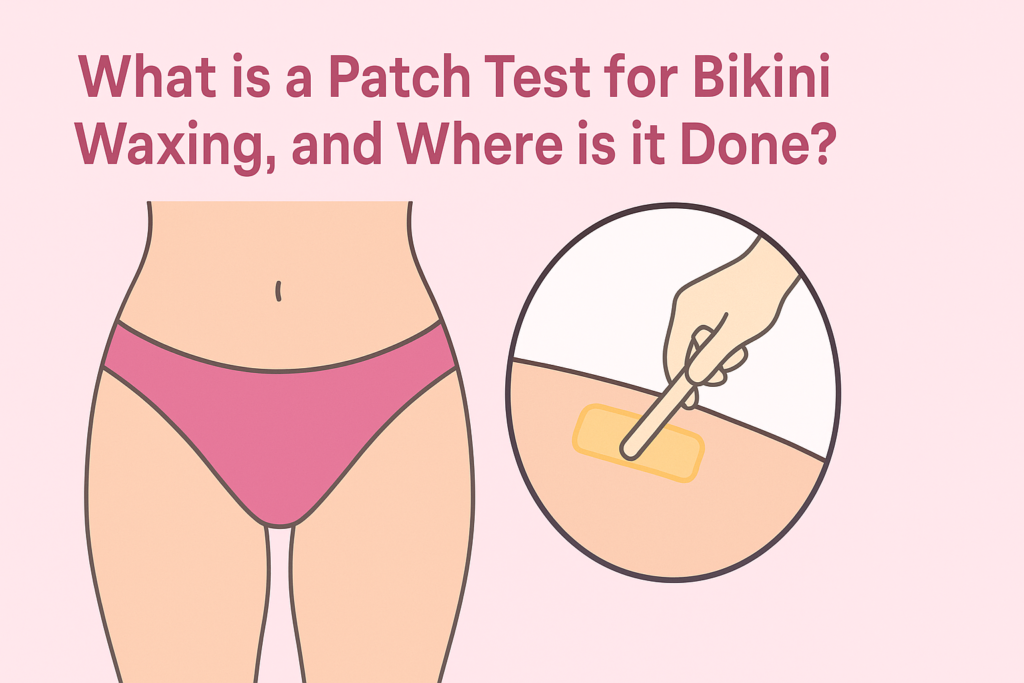
A patch test for bikini waxing is a small safety step done before the actual session to check how your skin reacts to the wax. It helps identify any allergies or sensitivities to wax ingredients that could cause redness, itching, or more serious irritation.
This precaution matters because a 2021 study found that personal care products caused irritant contact dermatitis in 28.8% of males and 39.5% of females, showing how common skin reactions can be. To prevent such issues, professionals perform a patch test before the full waxing procedure.
According to Medical News Today, a patch test refers to a diagnostic exam used to determine whether specific products result in skin irritation or an allergic reaction.
It’s usually done on a small, less sensitive area—like the upper thigh, inner arm, or side of the bikini line—about 24 hours before your appointment. A thin layer of wax is applied and removed normally, and the skin is then observed for signs of burning, itching, swelling, or rash. If no reaction appears, it’s safe to proceed with the complete bikini wax.
What is the Typical Size of a Wax Strip for the Pubic Area?
The typical wax strip for the pubic area is about 2 to 3 inches wide and 4 to 6 inches long, a size that gives good control and grip on small, sensitive areas. The strip size is important because it directly affects precision, comfort, and effectiveness. If the strip is too small, it may not grip enough hair, requiring multiple passes that can irritate the skin and increase pain.
On the other hand, if the strip is too large, it can pull unevenly, cause skin lifting, or make it hard to maintain tension—especially on curved areas like the bikini line. The ideal strip size allows smooth, quick removal while minimizing discomfort and reducing the risk of redness or ingrown hairs.
Is a Bikini Wax During Pregnancy Typically More Painful?
Yes, a bikini wax during pregnancy is usually more painful. This happens because your body produces extra blood and fluids to support the baby, which makes the skin—especially around the bikini area—more sensitive and tender. The increased circulation can also cause mild swelling, so waxing pulls feel stronger than usual.
To make it less painful, schedule the appointment in the second trimester, when sensitivity is often lower. Choose an experienced esthetician who has worked with pregnant clients, and use hard wax instead of strip wax, since it’s gentler on delicate skin. Taking a mild, doctor-approved pain reliever 30 minutes beforehand, avoiding caffeine, and applying a soothing gel afterward can also help reduce discomfort and irritation.
What Are The Benefits of Bikini Wax
A bikini wax offers several practical and cosmetic benefits that make it a popular grooming choice. It removes hair directly from the root, leading to smoother skin and slower regrowth compared to shaving.
Regular waxing also helps reduce hair thickness over time and minimizes the risk of stubble or frequent irritation. Many people find it enhances cleanliness and comfort, especially during warm weather or while wearing swimsuits.
It can also help boost body confidence by creating a neat, well-maintained look. For a detailed breakdown of these advantages, explore the full Benefits of Bikini Wax section.
What Are The Types of Bikini Wax
There are several types of bikini wax, each offering a different level of hair removal to suit personal preferences and comfort. The most basic option focuses only on cleaning up the edges of the bikini line, removing hair that might show outside underwear or swimwear.
A full bikini wax goes a little deeper, shaping the area more neatly, while a Brazilian wax removes nearly all or all hair from the pubic region, including the labia and buttocks. Some people also choose customized styles depending on how much hair they want to leave. To explore these variations in detail, see the full article on Types of Bikini Wax.
What Are The types of Wax for Bikini Waxing
Different types of wax for bikini waxing are used depending on skin sensitivity, hair texture, and personal preference. The two main kinds are hard wax and soft wax. Hard wax is applied thickly and allowed to cool before being removed without a strip, making it gentler on delicate skin and ideal for sensitive areas like the bikini line.
Soft wax, on the other hand, is spread thinly and removed with a cloth or paper strip, which works well for larger areas but can be slightly harsher. Some salons also use sugar wax or fruit wax, which contain natural ingredients and are suitable for sensitive skin.
To learn more about each option, visit the full Types of Wax for Bikini Waxing section.
How Do You Prepare For a Bikini Wax
Proper preparation helps make a bikini wax smoother, less painful, and more effective. Before your appointment, let your hair grow to at least a quarter inch—about the length of a grain of rice—so the wax can grip properly.
Gently exfoliate the area one to two days before waxing to remove dead skin and reduce ingrown hairs. On the day of your wax, shower and clean the area, but avoid lotions, oils, caffeine, and alcohol, as they can make skin more sensitive.
Wear loose, comfortable clothing to prevent irritation afterward, and consider taking an over-the-counter pain reliever 30 minutes beforehand if you’re worried about discomfort. To explore this topic in depth, visit How Do You Prepare for a Bikini Wax.
How to Wax Bikini Line
Waxing the bikini line can be done at home or by a professional, but the technique matters for safety and results. Start by letting your hair grow to about a quarter inch so the wax can grip well. Clean the area and apply a light dusting of powder to keep it dry.
Warm the wax, then spread a thin layer in the direction of hair growth, pressing a strip over it. Hold the skin taut and pull the strip quickly against the hair growth in one motion.
Apply gentle pressure afterward to ease the sting. Finish with a soothing gel or aloe to calm the skin. For step-by-step guidance and safety tips, check How to Wax Bikini Line.
How to Do Bikini Wax With Hard Wax
Using hard wax for a bikini wax is one of the gentlest and most effective methods for removing coarse hair from sensitive areas. To begin, let the hair grow to about a quarter inch and cleanse the skin to remove oil or lotion.
Warm the hard wax until it has a thick, honey-like consistency, then apply a small layer in the direction of hair growth using a spatula. Allow it to cool and harden slightly, then lift one edge and pull it off quickly against the direction of hair growth while keeping the skin taut.
Hard wax doesn’t require strips and adheres only to hair, not skin, reducing pain and irritation. Apply a soothing lotion or aloe afterward to calm the area. For a full guide, visit Bikini Wax with Hard Wax.
How Long Does a Bikini Wax Last
A bikini wax typically lasts between three to four weeks, depending on your hair growth rate, skin type, and how consistently you wax. Because waxing removes hair from the root, it takes longer for it to grow back compared to shaving, which only cuts hair at the surface.
Over time, regular waxing can make hair grow back finer and slower, helping results last even longer. Factors like hormones, genetics, and aftercare also affect regrowth speed.
To maintain smooth results, most people schedule touch-ups every four to five weeks. For detailed insights into timing and maintenance, explore How Long Does a Bikini Wax Last.
What Are the Bikini Wax Aftercare
Proper bikini wax aftercare helps your skin heal faster and prevents irritation or ingrown hairs. After waxing, the skin is sensitive and needs gentle care. Avoid hot showers, tight clothing, heavy exercise, or sun exposure for at least 24 hours to prevent redness or bumps.
Keep the area clean and apply a soothing gel, aloe vera, or fragrance-free moisturizer to calm the skin. Exfoliate gently after two to three days to stop ingrown hairs from forming.
Avoid scratching or touching the area unnecessarily, and wear breathable cotton underwear to allow airflow. Consistent aftercare keeps your skin smooth and reduces irritation between sessions. For a complete guide, see Bikini Wax Aftercare.
How to Exfoliate Before & After Bikini Wax
Exfoliating before and after a bikini wax is key to smoother results and healthier skin. Before waxing, gently exfoliate the area 24–48 hours beforehand using a mild scrub, exfoliating glove, or chemical exfoliant with ingredients like lactic or glycolic acid.
This helps remove dead skin cells, allowing the wax to grip hair better and reducing the chance of ingrown hairs. Avoid exfoliating on the same day as your wax to prevent irritation.
After waxing, wait at least two to three days before exfoliating again. Use a gentle exfoliant two to three times a week to keep pores clear and encourage smooth regrowth. Always follow exfoliation with a soothing moisturizer, best exfoliator for bikini wax or aloe vera to calm the skin. For a detailed guide, visit Bikini Wax Exfoliate.
What is The Use of Bikini Wax Trimmer
A Bikini Wax Trimmer is a small grooming device designed to trim pubic hair to an ideal length before waxing or for general maintenance between waxes. One of the key benefits of trimming pubic hair is that it shortens long hairs to about a quarter of an inch, which is the ideal length for waxing.
Trimmers are especially useful for shaping the bikini line neatly without direct skin contact, minimizing the risk of cuts or irritation that shaving can cause. They’re also great for touch-ups, keeping the area tidy between appointments. Learn more in Bikini Wax Trimmer.
Bikini vs Brazilian Wax
A bikini wax and a Brazilian wax differ mainly in how much hair they remove and the level of exposure involved. A bikini wax focuses on the visible area outside a standard bikini bottom, removing hair from the sides of the groin, the top of the pubic bone, and sometimes the upper inner thighs. It’s ideal for a tidy, natural look with minimal discomfort.
A Brazilian wax, on the other hand, removes almost all pubic hair—including from the labia, anus, and between the buttocks—leaving the area completely smooth or shaped as desired. It provides a longer-lasting result but is more intimate and slightly more painful.
Choosing between them depends on comfort level, maintenance preferences, and desired style. To explore this comparison in depth, visit Bikini vs Brazilian Wax.
How to Avoid Ingrown Hairs After Bikini Wax
Ingrown hairs are one of the most common issues after a bikini wax, but they can be easily prevented with the right care routine. Start by gently exfoliating the area two to three days after waxing to remove dead skin cells and keep hair follicles clear.
Continue exfoliating a few times a week using a mild scrub or exfoliating mitt. Keep the area clean and moisturized with a light, fragrance-free lotion or aloe vera gel to maintain soft, healthy skin.
Avoid wearing tight clothing for at least 24–48 hours, as friction can trap new hair under the skin. Refrain from touching or scratching the area to prevent irritation or infection. Using a dedicated ingrown hair serum with soothing ingredients like salicylic acid or tea tree oil can also help reduce bumps and redness. For more detailed prevention tips, see Bikini Wax Ingrown Hair.
How to Avoid Post Bikini Wax Bumps
Post-wax bumps can happen when the skin becomes irritated after hair removal, but they’re easy to prevent with proper care. Immediately after a bikini wax, apply a soothing gel or aloe vera to calm redness and reduce inflammation.
Avoid hot showers, tight clothing, or exercise for 24 hours to let pores close naturally. Keep the area clean, and start gentle exfoliation after two days to prevent clogged follicles.
Moisturize daily with a fragrance-free lotion, and use an antibacterial or tea tree–based serum if bumps appear. For complete guidance, visit Post Bikini Wax Bumps.
Does Bikini Wax Hurt
Yes, a bikini wax can be uncomfortable, especially for first-timers, because hair is pulled out from the root. The pain level depends on personal tolerance, hair thickness, and skin sensitivity. It usually feels like a quick sting that fades fast.
Regular waxing makes it easier over time as hair grows back finer. Taking a mild pain reliever and avoiding caffeine beforehand can help reduce discomfort. For complete guidance, visit Does Bikini Wax Hurt.
How Much is a Bikini Wax
The cost of a bikini wax varies depending on the salon, location, and type of service. On average, a standard bikini wax costs between $25 and $50, while a Brazilian wax can range from $50 to $100. Prices may be higher at upscale spas or for specialized techniques. Some salons offer packages or memberships that reduce the per-session cost for regular clients.
Conclusion
In summary, a bikini wax is more than just a grooming choice—it’s a routine that combines hygiene, comfort, and confidence. Understanding the bikini area, choosing the right type of wax, and following proper pre- and post-care are essential for safe and smooth results.
With consistent care, waxing becomes easier, less painful, and more effective over time. Whether done at home or by professionals, it’s important to prioritize cleanliness, correct technique, and aftercare for healthy, irritation-free skin.
This guide gives you all the essential knowledge to make your bikini waxing experience safe, comfortable, and long-lasting.