
Published On: 25 August 2026
Cluster lashes can maintain their fresh, defined appearance when they are cleaned and cared for correctly. But without proper cleaning, makeup residue, oils, dirt, and daily buildup can affect how your lashes look and feel.
In this complete guide, you will learn how to clean cluster lashes safely, whether you can clean them while wearing them, and the tools needed for effective maintenance.
We cover the step-by-step cleaning process for both worn and removed cluster lashes, common mistakes to avoid, signs that your lashes need cleaning or replacement, and helpful maintenance tips to keep your clusters in better condition.
Keep reading to understand the right way to care for your cluster lashes and maintain a cleaner, polished lash look.
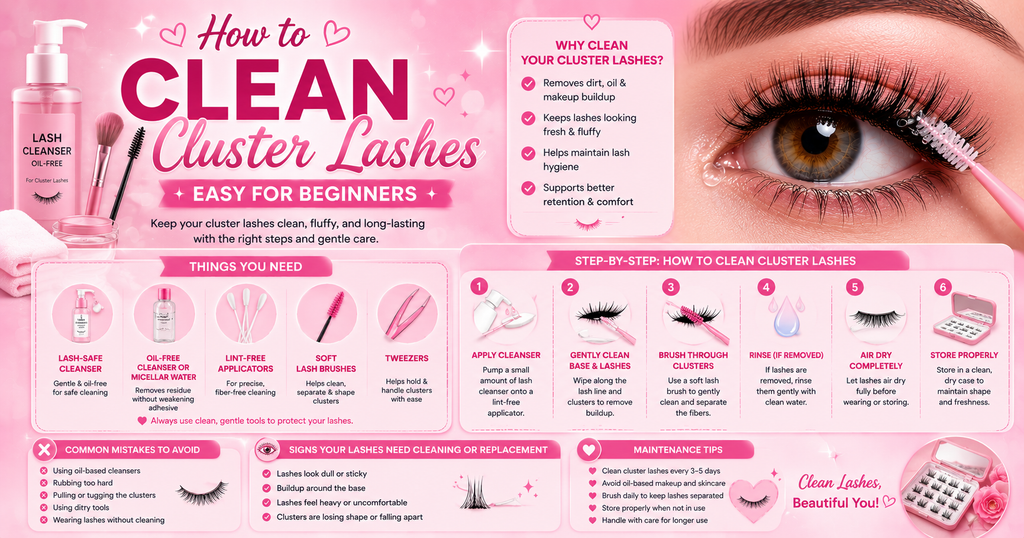
Why Do You Have to Clean Lash Clusters
Cleaning lash clusters regularly is important because buildup from makeup, oils, dirt, and daily residue can affect their appearance, comfort, and overall condition. Without proper cleaning, these impurities can collect around the lash fibers and base, making the clusters look less fresh and reducing their defined, fluffy appearance.
Removing buildup, oil, makeup residue, and debris helps keep lash clusters cleaner and maintains better lash hygiene during wear. Regular cleaning also helps protect the appearance of the clusters by preventing them from becoming heavy, sticky, or less separated.
Proper lash maintenance allows cluster lashes to maintain their original look and feel more comfortable when worn. By keeping the clusters clean and free from unnecessary residue, you can support better retention and enjoy a more polished lash appearance.
Things You Need to Clean Lash Clusters
Lash-Safe Cleanser
A lash-safe cleanser is a specially formulated cleaning product designed to remove oil, makeup residue, dirt, and daily buildup from cluster lashes without being too harsh on the lash fibers or adhesive.
Unlike regular facial cleansers, lash-safe formulas are usually gentle and oil-free, making them more suitable for maintaining cluster lashes.
Using a lash-safe cleanser is important because buildup around the lash line can make clusters look less fluffy, feel heavier, and affect their overall appearance. A gentle cleanser helps remove impurities while allowing you to clean the lashes without unnecessary rubbing or damaging the lash placement.
When cleaning cluster lashes, choose a cleanser that is oil-free and specifically designed for lash extensions or cluster lashes, as oil-based products may interfere with lash adhesive performance. A proper lash cleanser helps keep your clusters clean, comfortable, and looking fresh for longer.
Oil-Free Lash Cleanser or Micellar Water
An oil-free lash cleanser or micellar water is a gentle cleaning solution used to remove makeup residue, excess oil, dirt, and daily buildup from cluster lashes without affecting the lash adhesive.
Unlike oil-based cleansers, oil-free formulas are less likely to interfere with the bond that keeps lash clusters in place, making them a safer option for lash maintenance.
Using an oil-free cleanser is important because oils from skincare products, makeup, or regular cleansers can weaken lash bonds and reduce the lifespan of cluster lashes. Micellar water can help lift impurities from the lash surface while keeping the lashes clean and refreshed when used gently.
When cleaning cluster lashes, always choose an oil-free formula and avoid harsh rubbing. A gentle application helps remove buildup while protecting the lash fibers, maintaining the cluster shape, and keeping your lash look neat and comfortable.
Lint-Free Applicators
Lint-free applicators are soft, fiber-free tools used to clean cluster lashes, apply lash cleanser, and remove buildup without leaving small fibers behind. Unlike regular cotton products that may shed particles, lint-free applicators provide a cleaner and safer way to handle lash clusters during maintenance.
Using lint-free applicators is important because loose fibers can stick to the lash clusters, affect their appearance, and make the cleaning process less effective. They help you gently remove oil, makeup residue, and dirt from the lash line and cluster surface without pulling or disturbing the lash placement.
When cleaning cluster lashes, lint-free applicators allow more precise control, especially around the lash base and smaller areas where buildup can collect. They help maintain a cleaner lash finish while reducing the risk of damaging the lash shape or adhesive area.
Soft Lash Brushes
Soft lash brushes are small, gentle brushes with fine bristles that are used to clean, separate, and maintain cluster lashes without damaging their shape.
These brushes help remove dust, makeup residue, and product buildup from the lash fibers while allowing you to handle the clusters more carefully.
Using a soft lash brush is important because cluster lashes require gentle cleaning to maintain their fluffy appearance and prevent the fibers from becoming tangled or compressed.
A harsh brush can disturb the lash structure, while a soft brush allows you to clean between the clusters without applying too much pressure.
When cleaning cluster lashes, a soft lash brush helps distribute cleanser evenly across the lash surface and reach areas where buildup can collect. It also helps reshape the lashes after cleaning, keeping them neat, separated, and ready for comfortable wear.
Saline Spray or Distilled Water
Saline spray or distilled water is a gentle liquid solution used during the cleaning process to rinse away remaining cleanser, dirt, and residue from cluster lashes.
Saline spray contains a mild salt solution, while distilled water is purified water that does not contain common minerals or impurities that may leave deposits on the lash fibers.
Using saline spray or distilled water is important because it helps remove leftover cleaning products without introducing unnecessary oils or harsh ingredients.
After applying a lash cleanser, a gentle rinse helps keep the clusters clean while maintaining their softness, shape, and overall appearance.
When cleaning cluster lashes, these solutions can be used carefully to avoid excessive moisture buildup.
A proper rinse followed by complete drying helps prevent residue from remaining on the lashes and keeps the clusters looking fresh, separated, and comfortable for wear.
Understood. I will keep the context first, then only list the names of the additional tools.
Additional Tools for Removed Cluster Lashes
Additional tools for removed cluster lashes are useful when cleaning reusable clusters because they help you handle the lashes safely, remove leftover residue, and prepare them for proper drying and storage.
These tools make the cleaning process more controlled and help maintain the original shape of the clusters.
- Small bowl or clean container
- Cotton swabs or pads
- Tweezers
- Soft lint-free cloth or tissue
- Rubbing alcohol (optional, if suitable for the lash product)
- Clean, dry surface for drying
Can You Clean Lash Clusters While Wearing Them
You can clean lash clusters while wearing them, but the method depends on the type of clusters and adhesive system you are using.
Some long-wear cluster lashes are designed to handle gentle cleansing, while certain pre-glued or temporary lash types may not be suitable for washing.
Cleaning worn cluster lashes requires a gentle approach because excessive rubbing, pressure, or harsh products can disturb the lash placement and affect the overall appearance.
Using a lash-safe cleanser and soft tools helps remove oil, makeup residue, and buildup while keeping the clusters in place.
Before cleaning, always check the care instructions for your specific lash product. Once you confirm that your clusters are suitable for cleaning while worn, follow the correct steps to maintain their cleanliness, comfort, and appearance.
How to Clean Cluster Lashes While Wearing Them
Wash Hands and Prepare Tools
Before cleaning cluster lashes while wearing them, start by washing your hands and preparing all necessary tools to maintain hygiene and avoid transferring dirt or oils to the lash area.
Clean hands help reduce the risk of buildup around the lash line, while having your cleanser, soft brush, and lint-free applicators ready makes the cleaning process easier and more controlled.
Step 1: Wash your hands thoroughly with soap and water before touching your lashes. This removes oils, makeup residue, and impurities that could affect the cleaning process.
Step 2: Prepare your cleaning tools by keeping your lash-safe cleanser, soft lash brush, or lint-free applicator nearby. Having everything ready before starting helps you clean gently without unnecessary handling or disturbing the lash placement.
Preparing properly creates a cleaner and safer first step for maintaining your cluster lashes while they are still applied.
Dampen Applicator With Lash Cleanser
After preparing your tools, the next step is to dampen your applicator with a suitable lash cleanser to gently remove buildup without disturbing the cluster lashes. Using the right amount of cleanser helps loosen oil, makeup residue, and dirt while keeping the cleaning process controlled and gentle.
Apply a small amount of lash-safe cleanser to a lint-free applicator or soft lash brush instead of soaking the lashes directly. A lightly damp applicator gives you better control and prevents excess moisture from affecting the lash placement or adhesive area.
Avoid using too much product because excessive liquid can make the cleaning process difficult and may affect how comfortably the lashes sit. A gentle, controlled application helps clean the lash surface while maintaining the shape, texture, and overall appearance of your cluster lashes.
Gently Clean the Lash Line and Clusters
Once the applicator is lightly dampened with lash cleanser, the next step is to gently clean the lash line and cluster lashes to remove oil, makeup residue, and daily buildup without disturbing the lash placement.
The cleaning process should always be done carefully because excessive pressure or rubbing can affect the position and shape of the clusters.
Use a soft lash brush or lint-free applicator to lightly clean along the lash line where buildup commonly collects. Then, gently move through the lash clusters to remove any residue from the lash fibers.
Focus on using light strokes rather than pulling or scrubbing, as this helps protect the lash structure and adhesive area.
Cleaning both the top and surrounding areas of the clusters helps maintain their appearance and keeps them looking fresh. A gentle technique allows you to remove impurities while preserving the softness, separation, and overall finish of your cluster lashes.
Rinse Carefully (When Required)
After cleaning the lash line and clusters, the next step is to rinse the lashes carefully when the cleaning product instructions require it. A gentle rinse helps remove any remaining cleanser, loosened residue, or buildup from the lash surface while keeping the cluster placement intact.
Use a small amount of suitable rinsing solution, such as saline spray or distilled water, if recommended for your lash product. Avoid applying excessive water pressure or rubbing the lashes during this step, as rough handling can affect the lash shape and adhesive area.
The goal is to remove leftover product without disturbing the clusters. A careful rinsing method helps keep the lashes clean, comfortable, and ready for the drying process.
Allow Lashes to Air Dry Completely
Once the cluster lashes have been cleaned and rinsed, allowing them to air dry completely is an important final step to maintain their shape and condition. Proper drying helps remove remaining moisture and prevents residue from staying on the lash fibers.
Let your lashes dry naturally in a clean area and avoid rubbing, brushing, or pressing the clusters while they are still wet.
Handling wet lashes roughly can affect their arrangement and make the fibers lose their original shape.
Make sure the lash clusters are fully dry before applying makeup, touching them frequently, or continuing with your normal routine.
Complete drying helps maintain a clean, separated, and polished lash appearance while supporting comfortable wear.
How to Clean Lash Clusters After Removing Them
Remove Cluster Lashes Gently
Start by removing the cluster lashes carefully to avoid pulling, bending, or damaging the lash fibers. Take your time during removal and avoid forcing any section that feels stuck. Gentle handling helps keep the clusters in better condition for cleaning and future use.
Remove Excess Glue From the Lash Band
After removing the clusters, the next step is to clear away leftover adhesive from the lash band. Use suitable tools such as tweezers to carefully remove softened glue residue without pulling on the lash fibers.
Removing old adhesive helps the clusters sit more comfortably and look cleaner during the next application.
Remove Makeup and Product Buildup
Once excess glue is removed, clean the lash fibers to remove makeup residue, oils, and other buildup collected during wear.
Use a gentle cleaning method to protect the lash shape while removing unwanted residue from the clusters. Keeping the fibers clean helps maintain their softness and overall appearance.
Disinfect Only When Suitable for the Lash Product
Disinfection should only be considered when it is suitable for your specific lash product and care instructions.
Some cluster lashes may require different maintenance methods, so avoid using sanitizing products without checking whether they are appropriate for the lash material. When supported by the product instructions, careful disinfection can be part of the cleaning routine.
Rinse When Required
After cleaning the clusters, rinse them only when the cleaning method requires removing leftover cleanser or residue.
A gentle rinse helps clear remaining products from the lash surface without unnecessary handling. Avoid aggressive water pressure or rubbing because this can affect the lash shape.
Dry Cluster Lashes Completely
The final step is allowing the cleaned cluster lashes to dry completely before storing or reusing them.
Place them on a clean, dry, lint-free surface and let excess moisture evaporate naturally. Proper drying helps maintain the lash structure and prevents residue or moisture from affecting the clusters during storage.
How to Clean Lash Clusters After Removing Them
Remove Cluster Lashes Gently
The first step after wearing cluster lashes is removing them carefully to protect the lash fibers and maintain their shape. Avoid pulling or forcing the clusters off because rough removal can bend the lash fibers or damage the band area.
Take your time while removing each cluster and handle them gently with clean hands or suitable tools. Careful removal creates a better starting point for cleaning because the clusters remain intact and easier to maintain.
Remove Excess Glue From the Lash Band
Once the cluster lashes are removed, the next step is clearing away leftover adhesive from the lash band to prepare them for cleaning and reuse. Glue residue can collect on the base of the clusters and may affect their appearance or make future application more difficult.
Use suitable tools such as tweezers to carefully remove softened adhesive without pulling on the lash fibers. Removing excess glue helps keep the lash band cleaner and allows the clusters to maintain a better shape.
Remove Makeup and Product Buildup
After removing adhesive residue, clean the lash fibers to remove makeup, oils, and other buildup collected during wear. These residues can make cluster lashes look less defined and may affect their softness over time.
Use a gentle cleaning method with a suitable lash cleanser or recommended cleaning solution. Focus on removing buildup without rubbing aggressively, as gentle handling helps preserve the texture, shape, and overall appearance of the clusters.
Disinfect Only When Suitable for the Lash Product
After cleaning the clusters, disinfection may be considered only when it is suitable for the specific lash material and product instructions. Not every cluster lash system requires or supports the same cleaning methods, so using unsuitable disinfecting products may affect the lash fibers.
If the product instructions allow it, follow the recommended method carefully. The goal is to maintain cleanliness without compromising the quality, shape, or usability of the cluster lashes.
Rinse When Required
After applying cleaning products, rinsing the cluster lashes helps remove remaining cleanser or loosened residue when the cleaning method requires it. A proper rinse ensures that unwanted product does not remain on the lash fibers.
Use a gentle rinsing method and avoid excessive water pressure or rough handling. Careful rinsing helps keep the clusters clean while maintaining their original structure and appearance.
Dry Cluster Lashes Completely
The final step after cleaning removed cluster lashes is allowing them to dry completely before storage or reuse. Proper drying helps protect the lash shape and prevents moisture from affecting the condition of the clusters.
Place the cleaned lashes on a clean, dry, lint-free surface and allow them to dry naturally. Avoid storing clusters while they are still damp because complete drying helps maintain their softness, separation, and overall quality.
Common Mistakes to Avoid When Cleaning Cluster Lashes
Don’t Use Harsh or Unapproved Chemicals
Using harsh or unsuitable cleaning products can damage cluster lash fibers or affect the adhesive area. Strong chemicals, alcohol-based products, or products that are not designed for lash care may cause the lashes to lose their softness or original shape.
Always choose products that are suitable for lash cleaning and follow the care instructions for your specific cluster lashes. A gentle cleanser helps remove buildup while protecting the quality of the clusters.
Don’t Rub or Scrub Lashes Vigorously
Rubbing cluster lashes too aggressively during cleaning can disturb the lash fibers and change their shape. Cluster lashes are delicate, and excessive pressure may cause them to become tangled, uneven, or less fluffy.
Instead of scrubbing, use gentle movements with a soft lash brush or lint-free applicator. Careful handling allows you to remove residue while keeping the clusters neat and well-shaped.
Don’t Soak Lashes Overnight
Leaving cluster lashes soaked for a long time can affect their structure and make the cleaning process less effective. Extended exposure to liquid may impact the lash fibers or weaken the overall condition of reusable clusters.
Use only the required amount of cleaning solution and follow proper drying steps afterward. Allowing lashes to dry completely helps maintain their shape and quality.
Don’t Apply Fresh Glue Over Dirty Lash Bands
Applying new adhesive over leftover glue, makeup, or buildup can affect how cluster lashes sit and perform. A dirty lash band may prevent proper attachment and create an uneven application.
Always clean the lash band and remove old residue before applying fresh glue. A cleaner base helps create a smoother and more secure lash application.
Don’t Share Used Cluster Lashes
Sharing used cluster lashes is not recommended because lashes can collect makeup residue, oils, and buildup from the previous wearer. Even after cleaning, cluster lashes are designed for personal use to maintain better hygiene.
Keeping your lash clusters for individual use helps maintain cleanliness and reduces the risk of transferring unwanted residue between users.
Signs Your Cluster Lashes Need Cleaning or Replacement
Visible Makeup or Oil Buildup
One of the clearest signs that your cluster lashes need cleaning is visible buildup on the lash fibers or base. Makeup particles, skincare oils, and daily residue can make the clusters appear less fresh and may affect their texture.
Cleaning them with a suitable lash-safe method can help remove surface buildup and restore a cleaner appearance.
Lashes Lose Their Fluffy Appearance
When cluster lashes start looking flat, clumped, or less defined, it may indicate that they need proper cleaning or care. Buildup can cause lash fibers to stick together and reduce the soft, separated effect you originally created.
Gentle cleaning and careful brushing can help maintain their shape and appearance.
Clusters Start Sticking Together
Cluster lashes that begin sticking together are often a sign of product buildup, excess adhesive, or improper maintenance. When individual fibers lose their separation, the overall lash style can look heavier and less natural.
Cleaning the clusters carefully can help remove residue and restore better separation.
Lash Band Has Excessive Adhesive Residue
A lash band with too much leftover glue is another sign that your cluster lashes need attention before reuse. Excess adhesive can affect how comfortably the clusters sit and may make future application more difficult.
Removing old glue carefully helps keep the lash base cleaner and easier to apply.
Lashes No Longer Maintain Their Original Shape
When cluster lashes lose their original curl, structure, or shape, it may be a sign that they have reached the end of their usable condition. Proper cleaning and storage can help maintain lash shape, but repeated wear can eventually affect their appearance.
Inspecting your clusters regularly helps you decide whether they need cleaning, reshaping, or replacement.
Tips for Maintaining Lash Clusters
Avoid Oil-Based Products
Avoiding oil-based products around your lash clusters helps protect their appearance and maintain better adhesive performance. Oils from skincare products, makeup removers, or cleansers can leave residue on the lash base and may affect how well the clusters stay in place.
Choose oil-free products when possible and apply skincare or makeup carefully around the lash area to reduce buildup.
Handle Clusters Carefully
Handling your lash clusters gently helps preserve their shape, softness, and overall condition. Pulling, pressing, or rubbing the clusters roughly can damage the lash fibers and make them lose their original appearance.
When cleaning, brushing, applying, or removing clusters, use gentle movements and avoid unnecessary pressure to keep them looking neat.
Inspect Lashes Regularly
Regularly inspecting your lash clusters helps you identify buildup, damage, or signs that they need cleaning or replacement. Checking the lash fibers, band area, and overall shape allows you to maintain better lash hygiene.
Look for issues such as visible residue, sticking fibers, or changes in the lash shape so you can take action before the clusters become difficult to maintain.
Store Them Properly After Cleaning
Proper storage after cleaning helps protect cluster lashes from dust, moisture, and damage when they are not being worn. After allowing the lashes to dry completely, place them in a clean and suitable container to help maintain their shape.
Keeping cleaned clusters stored safely prevents unnecessary exposure to outside elements and helps preserve their condition for future use.
Conclusion
Proper cleaning and maintenance play an important role in keeping cluster lashes looking fresh, comfortable, and well-shaped.
By using suitable cleaning tools, choosing gentle products, and following the correct steps, you can remove buildup while protecting the appearance of your lashes.
This guide explained how to clean cluster lashes while wearing them, how to clean removed clusters, common mistakes that can affect lash quality, and signs that your lashes may need cleaning or replacement.
Regular care, gentle handling, and proper storage can help maintain the condition of your cluster lashes and support a more polished lash appearance.
Taking the right approach allows you to enjoy cleaner, better-maintained lash clusters for longer.