
Published On: 24 Jan 2026
In this comprehensive guide, we cover everything you need to know about eyelash extensions, including all the common questions you might have before getting them. We start by explaining what eyelash extensions are and how they work, including the materials used and how they are applied lash by lash.
We also address common concerns such as whether lash extensions can ruin your natural lashes, if your lashes grow back after extensions, and whether the process is painful.
You will learn how long eyelash extensions last, what factors affect their lifespan, and how to make them last longer with proper care.
We also cover appointment timing and pricing, including how long a full set takes and how much it costs. If you want clear, honest answers, this article is your ultimate lash guide.
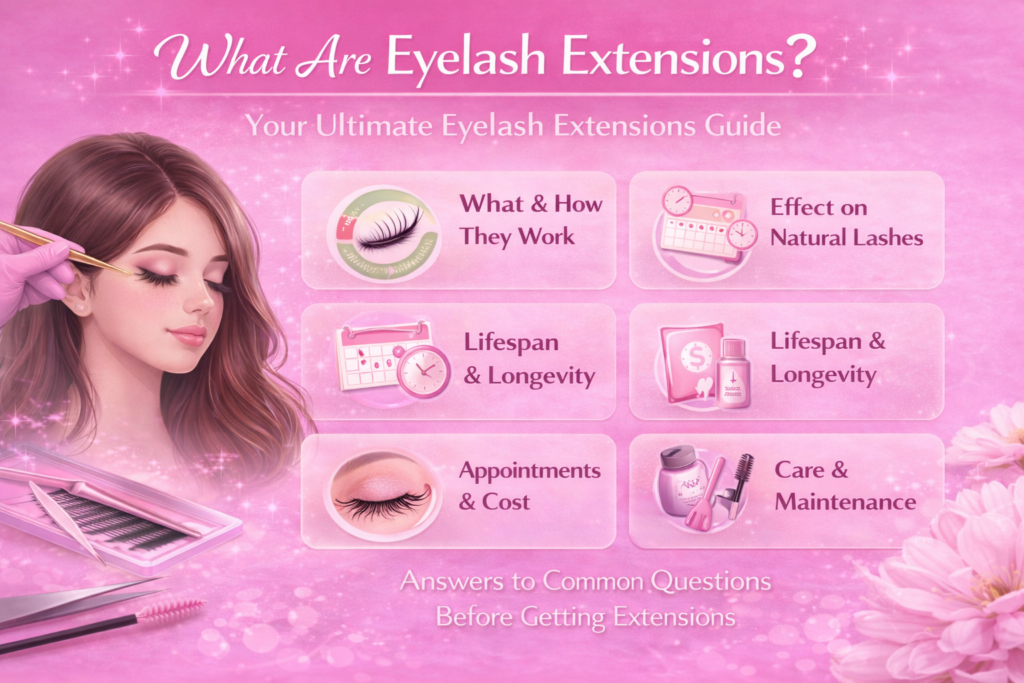
What Are Eyelash Extensions & How They Work
Eyelash extensions are semi-permanent fibers designed to look and feel like natural lashes. They are typically made from synthetic materials such as PBT (polybutylene terephthalate), faux mink, silk, or other refined lash fibers created for cosmetic use.
Each extension is carefully attached to your natural lashes, lash by lash, using a medical-grade adhesive that is free from formaldehyde and other toxic chemicals.
The purpose of eyelash extensions is to enhance the length, curl, and volume of your original lashes without the need for daily mascara. According to research, eyelash extensions have gained popularity as a non-invasive cosmetic procedure that enhances lash length and thickness.
In fact, research states that the global eyelash extension market is projected to grow by $615.4 million between 2024 and 2029, reflecting their rising demand and trust among beauty lovers worldwide.
Are Lash Extensions a Dying Trend
No, lash extensions are not a dying trend. In fact, the data clearly proves the opposite. The U.S. lash extension market was valued at USD 245.8 million in 2023 and is projected to grow at a strong CAGR of 6.6% from 2024 to 2032. That level of steady growth reflects rising demand, not decline.
Additionally, another market forecast shows the global lash extension industry is expected to expand at a 5.48% CAGR from 2025 to 2035, driven by increasing consumer interest and continuous product innovation. If lash extensions were truly “fading,” these growth rates simply would not exist.
Beauty trends that disappear do not generate multi-year expansion forecasts. Instead of slowing down, the industry is evolving with better materials, safer adhesives, and customized styles, keeping clients excited and fully engaged worldwide.
Do Makeup Artists Hate Lash Extensions
Not necessarily, but opinions can vary depending on the style and application quality. Many professional makeup artists appreciate well-applied lash extensions because they enhance the eyes and reduce the need for heavy mascara or strip lashes.
However, extremely dense, uneven, or poorly maintained extensions can limit creative flexibility when applying eyeshadow or eyeliner. Some artists prefer working on a natural lash base so they can customize the final look for photography or special events.
That said, beautifully balanced extensions that complement the eye shape are often welcomed and can simplify the makeup process. Ultimately, it is not about hate, but about how the extensions are applied and whether they align with the intended makeup style.
What Do Eye Doctors Think of Eyelash Extensions
According to Dr. Danielle Kalberer, OD, FAAO, Board Certified in Medical Optometry, lash extensions can pose ocular health concerns, particularly related to adhesive ingredients, hygiene, and removal techniques.
Research cited in optometric literature reports that up to 97.5% of women experienced at least one complication after extensions, including dry eye, burning, swelling, or irritation.
Dr. Kalberer emphasizes that formaldehyde-based adhesives and latex components may trigger allergic reactions and ocular surface disease.
Other eye care professionals have similarly noted risks such as blepharoconjunctivitis, corneal abrasions, and increased infection due to debris buildup around extended lashes.
Some ophthalmologists also explain that longer lashes may create a “funneling effect,” directing particles toward the eye and disrupting natural protection.
While doctors do not universally oppose lash extensions, many stress careful material selection, hygiene awareness, and understanding potential eye health risks before proceeding.
What Are Eyelash Extensions Made of
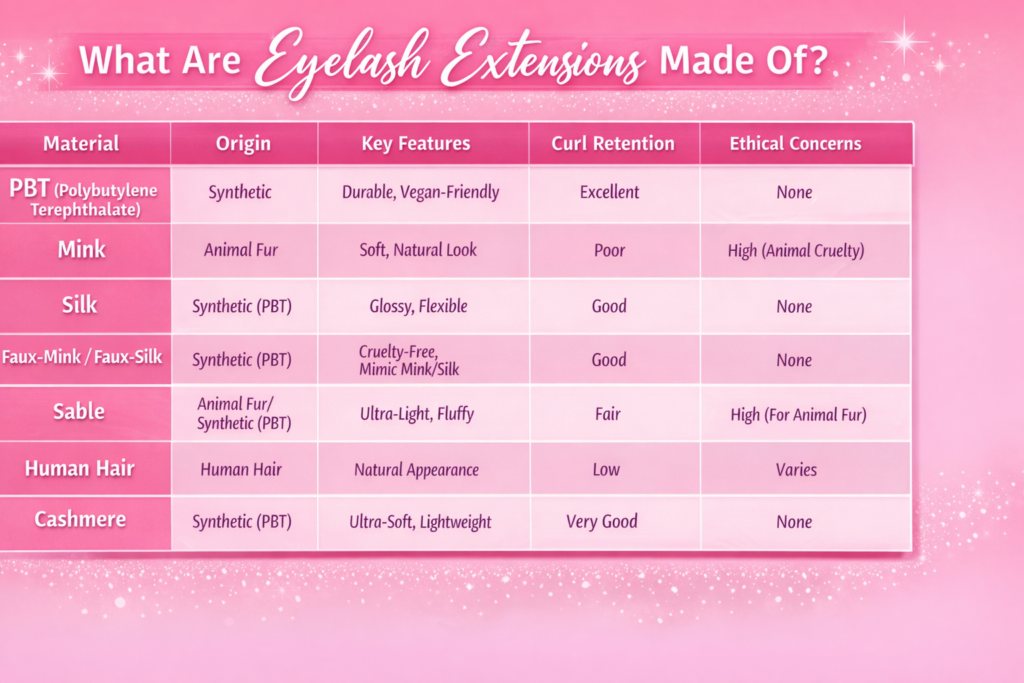
1. PBT (Polybutylene Terephthalate)
PBT, or polybutylene terephthalate, is the most common material used in modern eyelash extensions. It is a synthetic, vegan-friendly thermoplastic that is both durable and highly versatile.
Because PBT can be stretched and molded into different shapes, manufacturers can create lashes with precise curls, tapers, and finishes. This flexibility allows PBT extensions to beautifully mimic the look of natural silk or mink lashes without using animal-derived hair, which brings peace of mind to many clients.
The material is lightweight and comfortable, so you can enjoy fuller lashes without feeling weighed down. One of the reasons lash artists love PBT is its excellent curl retention, meaning the extensions keep their shape for weeks.
With no ethical concerns and reliable performance, it’s easy to see why PBT remains a favorite in the lash industry.
2. Mink
According to research, Mink material used in eyelash extensions traditionally refers to fine fur taken from the tail of minks, often Siberian or Chinese mink. Real mink fur is known for its softness, light weight, and natural matte finish, which creates a beautifully wispy and realistic look that many clients feel excited about.
Because of this luxurious appearance, mink lashes are often marketed as a high-end option. However, real mink fur is rarely used today due to ethical concerns and poor curl retention compared to synthetic materials.
Learning about how mink fur is sourced from fur farms can make some people feel uncomfortable or even saddened. For this reason, most “mink” lash extensions are now made from synthetic PBT fibers designed to mimic the softness of real mink without involving animals.
These faux mink lashes offer a similar natural look, better durability, and a cruelty-free alternative that aligns with modern beauty values.
3. Silk
Silk material used in eyelash extensions is commonly associated with a soft, flexible, and slightly glossy finish that adds a glamorous touch to the eyes. Traditionally, silk comes from the cocoons of silkworms and is often referred to as silk eyelash extensions.
However, most modern silk lashes are made from high-quality PBT, especially Korean PBT, a synthetic polyester designed to mimic the smoothness of real silk while offering greater durability.
According to research, silk lashes are considered midweight, finer, and more flexible than standard synthetic options, which can improve retention and comfort. Many clients feel excited by their subtle sheen that ranges from satin to a soft reflective gloss.
Silk lashes are also less likely to detach during cleaning, encouraging better lash hygiene. Because they are hypoallergenic and vegan-friendly, they are ideal for sensitive eyes. With proper care, silk lashes maintain their elegant shape and polished appearance beautifully.
4. Faux-Mink and Faux-Silk
Faux-mink and faux-silk materials used in eyelash extensions are modern, PBT-based alternatives designed to replicate the beauty of real mink or silk without ethical concerns.
Unlike traditional mink, which comes from animal fur and raises serious cruelty issues, faux-mink lashes are fully synthetic and cruelty-free. They are commonly used in both false lashes and professional extensions because they offer a soft, matte finish with reliable curl retention.
Faux-silk lashes, also made from PBT, provide a slightly glossier and more glamorous effect for those who love a bit of shine. Compared to real mink, which has poor curl retention and high ethical concerns, faux options deliver better durability and consistent performance.
Their growing popularity reflects a shift toward ethical beauty, where comfort, style, and compassion beautifully come together.
5. Sable
Sable material used in eyelash extensions, more formally known as Siberian sable, is admired for its extreme lightness, elasticity, and ultra-natural appearance. According to research, it is often described as even finer and fluffier than mink, making it one of the lightest materials available for lash extensions.
Because of this delicate texture, sable lashes are mainly recommended for clients with naturally thin or fine eyelashes who want enhancement without added weight. Although traditionally associated with animal fur, one of the most modern sable extensions is actually made from advanced PBT fiber, a synthesized polymer designed to replicate that luxurious softness.
This innovation offers consistency and improved performance. Due to their rarity and refined finish, sable lashes are typically one of the most expensive options in salons. Their premium status and featherlight comfort make them a true luxury choice in the lash industry.
6. Human Hair
Human hair is sometimes used in false lashes, but it is generally not recommended for professional eyelash extensions. Although human hair offers a very natural look and can blend beautifully with your own lashes, it lacks the precise tapered tip and consistent curl retention that synthetic materials like PBT provide.
This can make long-term durability and styling more challenging, which may feel disappointing for clients expecting lasting results. Human hair lashes are typically collected from salons or other sources, then cleaned, sorted, and dyed to match natural lash colors before being attached to a band.
They are often more expensive and are sometimes chosen for special occasions because of their soft, realistic appearance. Some people with sensitive eyes may appreciate their natural origin.
However, compared to modern synthetic options, human hair tends to have poorer curl retention and is less commonly used in professional lash extension applications today.
7. Cashmere
Cashmere material used in eyelash extensions is a high-end synthetic option designed for ultimate softness and comfort. Despite the name, cashmere lashes are not made from goat hair but from premium Korean PBT fiber engineered to mimic the luxurious feel of cashmere fabric.
Each lash is ultra-thin, typically measuring 0.03–0.05 mm in diameter, which allows for lightweight, voluminous sets without overwhelming natural lashes. They are often designed with a flat or elliptical base and a hollow core, making them up to 30% lighter than classic synthetic lashes.
Their matte, deep-black finish creates a soft, fluffy appearance without a glossy or plastic look. Cashmere lashes are also cruelty-free and vegan, which brings peace of mind to conscious beauty lovers.
Although slightly more expensive, their comfort, retention, and elegant finish make them a premium choice.
How Are Eyelash Extensions Made
The way eyelash extensions are made is truly fascinating, especially when you realize how much precision goes into every tiny fiber.
Most modern lash extensions are made from PBT, which begins as small pellets that are heated and stretched into ultra-fine, long fibers.
These fibers are carefully inspected to ensure they meet strict standards for thickness, color, and stability.
Once approved, they are molded into semi-finished shapes, trimmed to specific lengths, and tapered to create a natural-looking tip.
To form different curls, the lashes are rolled around tubes of varying diameters and heated to lock in the shape while also sterilizing them.
Afterward, they are placed neatly onto adhesive strips or paper cards for final inspection. Every batch undergoes rigorous quality checks before packaging.
Later, trained professionals apply these extensions lash by lash using safe, semi-permanent adhesive, creating beautiful results that can last for weeks.
How to Choose the Best Eyelash Extensions
Choosing the best eyelash extensions involves more than just selecting the right material, because the final look depends on several important design factors.
First, consider sheen versus matte finishes. Matte or demi-matte lashes, often labeled as faux mink, create a soft, fluffy, and natural appearance that many clients love for everyday wear. In contrast, lashes with a slight sheen, usually sold as faux silk or vegan silk, reflect light like mascara and deliver a more glamorous effect.
Next, think about taper and thickness. Longer tapers produce a feathery, delicate look, while shorter tapers appear fuller and more intense.
Eyelash extension curl type also plays a major role, with C, D, and DD curls offering a lifted, wide-eyed effect, while J, L, and M curls create angled, sultry styles. Length and lash distribution must complement your natural lashes for safe, balanced results.
Finally, choose one the types of eyelash extensions between classic, volume, or hybrid sets depending on how dramatic you want to go.
Will Eyelash Extensions Ruin Your Eyelashes : Mistakes That Can Ruin Your Lashes & Tips to Prevent Damage
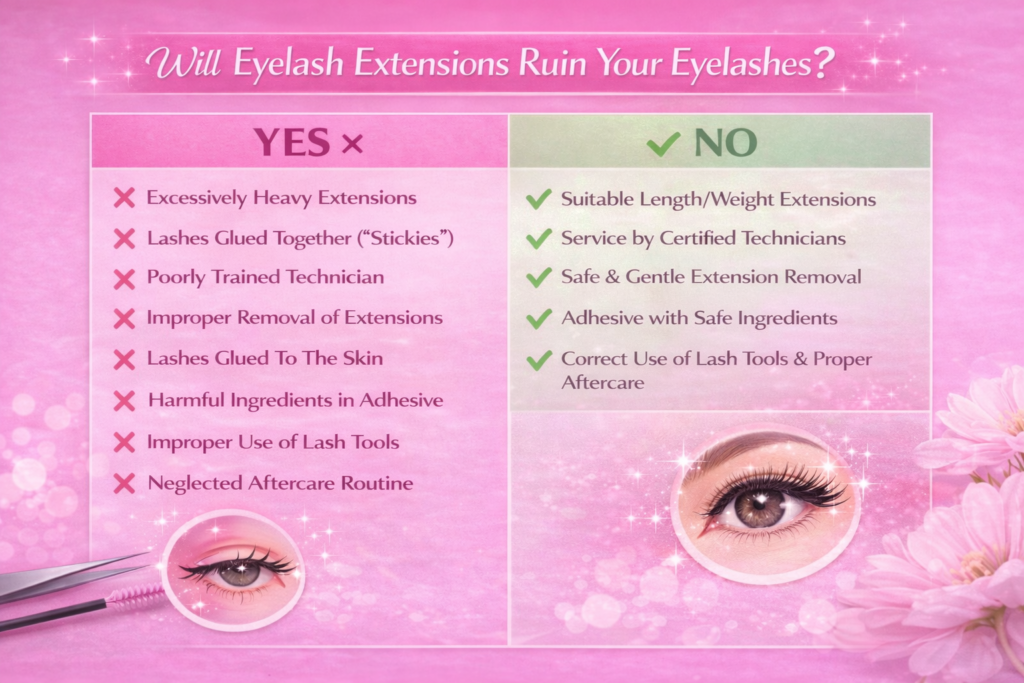
1. Eyelash Extensions Will Ruin Your Eyelashes If Extensions Are Too Heavy
Heavy lash extensions refer to extensions that are too thick, too long, or too dense for your natural lashes to safely support. Every person has a different natural lash thickness and growth cycle, so when extensions exceed that capacity, problems begin.
Excess weight places constant tension on the lash shaft, which can cause premature shedding and disrupt the natural growth cycle. Over time, this stress may lead to thinner regrowth or noticeable lash loss, which can feel frustrating and worrying.
If the extensions are significantly heavier than the natural lash, the shaft may even break, creating the appearance of short, uneven lashes. Improper removal can worsen this damage and increase breakage.
Research has also shown that up to 73% of women experienced ocular adverse effects after applying artificial eyelashes or extensions, highlighting how improper weight and application can negatively affect both lash health and eye comfort.
2. Eyelash Extensions Will Ruin Your Eyelashes If Lashes Are Glued Together
Eyelash extensions are designed to be applied one by one to each natural lash to maintain proper separation and a healthy growth cycle. Problems begin when multiple extensions are attached to a single natural lash or when one extension is glued to multiple natural lashes, creating what professionals call “stickies.”
This improper bonding pulls lashes together in an unnatural way and restricts their normal movement. According to research, not all lashes are in the same phase at the same time. Because natural lashes grow and shed at different times, a lash that is ready to fall out can end up pulling neighboring lashes with it if they are glued together.
This constant tension may damage the hair follicle and lead to premature shedding or thinner regrowth. Over time, the lashes can appear sparse or uneven, which understandably feels frustrating and disappointing. Stickies are a major reason some people believe lash extensions ruin natural lashes.
3. Eyelash Extensions Will Ruin Your Eyelashes If Applied by Poor Technician
Eyelash extensions can ruin your natural lashes when applied by a poor technician who lacks proper training and technique. A poorly trained lash artist may use excessive adhesive, place the glue too close to the eyelid, or fail to isolate each natural lash correctly.
When glue is applied incorrectly, it can cause stickies, irritation, and unnecessary tension at the lash root.
An inexperienced technician might also choose extensions that are too long or too heavy for your natural lashes to support, leading to breakage and premature shedding. In some cases, improper placement can twist or strain the natural lash, weakening the hair shaft over time.
4. Eyelash Extensions Will Ruin Your Eyelashes If Not Removed Properly
Eyelash extensions must be removed carefully and professionally to protect your natural lashes. When removal is done improperly, especially by an untrained technician or by attempting to remove them yourself, several negative consequences can occur.
Extensions are bonded with strong adhesive, so pulling or picking at them can forcibly remove natural lashes along with the extension. According to research, improper eyelash extension removal may irritate the eyelids, clog hair follicles, and lead to lash breakage. The constant tugging can weaken the lash root and disrupt the natural growth cycle, causing lashes to appear thinner or sparse.
In some cases, leftover adhesive can remain on the lash line, creating additional buildup and discomfort. Many people feel frustrated when they notice lash loss after removal, but the damage often results from poor technique rather than the extensions themselves. Careless removal significantly increases the risk of lash damage.
5. Eyelash Extensions Will Ruin Your Eyelashes If Lash Extensions Glued To The Skin
Eyelash extensions ruin your eyelashes if lash extensions glued to the skin. Eyelash extensions are meant to be applied one by one directly onto your natural lashes using a medical-grade adhesive, and neither the extension nor the glue should ever touch the skin.
When you accidentally bond extensions to the eyelid or lash line skin, problems can quickly develop. As natural lashes grow and shed, the glued area creates tension and pulling, which can damage the hair follicle and lead to premature lash loss.
In some cases, adhesive may transfer and cause upper and lower lashes to stick together, and separating them can result in lash breakage. If glue contacts the skin, it may trigger redness, irritation, or even skin breakdown, especially in individuals with conditions like blepharitis or eyelid dermatitis.
6. Eyelash Extensions Will Ruin Your Eyelashes If Lash Extensions Adhesive Contains Harmful Ingredients
Eyelash extensions can harm your natural lashes if the adhesive contains harmful ingredients that irritate the eyes and surrounding skin.
Certain chemicals, such as formaldehyde, act as strong irritants and known allergens that may trigger redness, swelling, itching, or even blurry vision after application.
Natural latex is another common allergen, especially for individuals with rubber sensitivities, while cyanoacrylate, though widely used in professional glues, can cause eye irritation and contact dermatitis in some people.
Additional stabilizers like polyisocyanate, N-Methyl-2-pyrrolidone (NMP), and phthalic anhydride are considered unsafe for cosmetic use near the eyes. When irritation occurs due to these harmful ingredients, inflammation around the lash follicle can weaken natural lashes and contribute to shedding.
Research also indicates that polyacrylate-based eyelash glue may suppress tear IL-6 levels, potentially increasing the risk of ocular infections, which can further compromise overall lash and eye health.
7. Eyelash Extensions Will Ruin Your Eyelashes If Lash Extensions Tools Are Used Improperly
Lash tools are specialized instruments used during the eyelash extension application process to ensure precision and safety. The most important tools include sharp isolation tweezers, volume tweezers, adhesive holders, lash brushes, and under-eye pads or tape.
Tweezers are used to isolate a single natural lash and carefully attach one extension at a time with professional adhesive. Because these tools are sharp and used very close to the eye, improper handling can cause serious problems.
A small slip of the tweezers may scratch the cornea, leading to a painful corneal abrasion that can take days to heal. Incorrect isolation can also result in stickies, uneven tension, and premature lash breakage.
If tools are not used with steady hands and proper technique, they can damage natural lashes, irritate the eye area, and negatively affect overall lash health and retention.
8. Eyelash Extensions Will Ruin Your Eyelashes If Proper Lash Extensions Aftercare Are Not Followed
Eyelash extensions can damage your natural lashes when proper aftercare is not followed consistently. Once extensions are applied, your lashes require gentle and mindful maintenance to stay healthy. Picking or tugging at extensions can pull out natural lashes prematurely and weaken the hair follicle over time.
Neglecting regular cleansing allows oil, makeup residue, and debris to accumulate along the lash line, which may irritate follicles and increase discomfort. On the other hand, cleaning too aggressively or rubbing with rough cotton pads can cause unnecessary friction and lash loss.
Failing to brush extensions can also lead to tangling, which places additional stress on natural lashes.
According to healthline, proper aftercare plays an important role in preventing eye infections, so ignoring maintenance can raise hygiene concerns. When care routines are inconsistent, lashes may appear thinner, uneven, or more fragile than expected.
How to Prevent Eyelash Extensions from Damaging Your Natural Lashes
1. Choose The Suitable Length & Normal Weight EyeLash Extensions
Choosing the suitable length and normal weight eyelash extensions is one of the most important steps in preventing damage to your natural lashes. The thickness of an extension directly affects how much weight your natural lash must carry.
If thick or heavy lashes are applied without considering lash strength, they can cause long-term strain and weakening. For example, 0.18 is generally the thickest recommended for most classic sets, while 0.15 offers a softer mascara effect.
Thinner options like 0.12 or 0.10 provide lighter density with less stress. Volume lashes such as 0.07, 0.06, or even 0.05 can safely create fuller fans because multiple fine lashes together can equal the weight of one thicker lash when calculated properly.
Length also matters, since overly long extensions increase leverage and tension. The key factor is always your natural lash condition, strength, and overall health.
2. Choose Reliable Service For Eyelash Extensions Application & Removal
Choosing a reliable service for eyelash extension application and removal is essential to protect your natural lashes and overall eye health. A reputable provider will have certified and trained technicians who understand proper isolation, weight selection, and safe adhesive usage.
They follow strict hygiene standards, use professional-grade tools, and conduct thorough consultations before beginning any procedure. A trustworthy lash specialist will assess your natural lash condition and recommend suitable lengths and thicknesses rather than applying a one-size-fits-all set.
Proper removal is just as important as application, because careless techniques can lead to breakage and irritation. When you select an experienced and reputable service, you reduce the risk of complications and ensure consistent, beautiful results.
For clients in the UAE, professional home lash extension service in Dubai by Pink Beauty Salon is reliable, delivering expert application and removal directly to your doorstep with comfort and convenience.
3. Choose the Lash Extensions Adhesive That is Unharmful
Choosing an unharmful lash extension adhesive is critical for protecting both your natural lashes and your eye health. The adhesive used during application sits very close to the delicate eyelid area, so its formulation truly matters.
High-quality professional adhesives are designed for cosmetic use near the eyes and are tested for safety and performance.
When the wrong adhesive is used, inflammation around the lash follicle can occur, potentially weakening natural lashes over time. The quality of the glue directly impacts retention, comfort, and overall lash health.
Understanding what type of adhesive is being used is an important factor in maintaining strong, healthy natural lashes.
4. Use the Lash Extensions Tools Very Carefully
Using lash extension tools properly ensures both safety and beautiful, long-lasting results. Professional tweezers should be handled with steady control to isolate one natural lash at a time, allowing precise and clean attachment of each extension.
Correct isolation prevents lashes from sticking together and supports a healthy natural growth cycle. Tools must be positioned carefully and at the proper angle to maintain comfort throughout the application process. Maintaining clean, sanitized instruments also promotes better hygiene and protects the delicate eye area. When lash tools are used with skill and accuracy, extensions bond securely, look seamless, and retain their shape longer.
Proper technique not only enhances the final appearance but also preserves the strength and integrity of your natural lashes.
5. Follow The Proper Eyelash Extensions Aftercare
Following proper aftercare for eyelash extension is essential to maintain both the beauty of your extensions and the health of your natural lashes. Gentle daily cleansing helps remove oil, dust, and makeup residue that can build up along the lash line.
Brushing your lashes softly keeps them aligned and prevents tangling, which supports better retention. Avoiding excessive rubbing or pulling protects the natural lash from unnecessary stress.
Sleeping carefully and minimizing friction around the eyes also helps preserve the extension bond. When aftercare is followed consistently, extensions last longer, look fuller, and maintain a clean, polished appearance while supporting healthy natural lash growth.
Will My Eyelashes Grow Back After Extensions
The answer depends on the type and severity of lash loss that has occurred.
If the shedding happened due to temporary stress, such as heavy extensions, stickies, improper removal, or poor aftercare, your lashes will usually grow back because the natural growth cycle remains intact. In these cases, the hair follicle is still healthy, and regrowth typically occurs over several weeks.
However, if permanent damage has occurred to the hair follicle due to repeated trauma, excessive tension, or chronic inflammation, regrowth may be limited. Permanent lash loss happens when the follicle becomes scarred or severely weakened.
If no significant follicle damage has occurred and the loss was part of the normal shedding cycle, your natural lashes will gradually return to their usual thickness and length over time.
How Long Does Lashes Take to Grow Back After Extensions
Understanding how long lashes take to grow back after extensions begins with the natural lash growth cycle. Like all body hair, eyelashes go through three main phases.
The first phase, called anagen, is the active growth stage when the lash is developing. The second phase, catagen, is a short transition period when growth slows down. The final phase, telogen, is the resting stage when the lash eventually sheds to make room for new growth.
According to research, the complete lash cycle lasts between four and eleven months.
However, not all lashes move through these stages at the same time, which is why losing one to five lashes per day is completely normal. Even if you notice several lashes shedding at once after extensions, this natural cycle should feel reassuring, because healthy follicles will continue producing new lashes over time.
Should You Give Your Natural Lashes a Break Between Extensions
Whether you should give your natural lashes a break between extensions depends on their overall condition and how they have responded to previous sets. Healthy lashes that have been properly applied, maintained, and removed often continue growing normally without requiring a mandatory break.
However, if your lashes appear thinner, weaker, or more fragile than usual, it may indicate that they have experienced stress during the extension process. Because lashes follow a natural growth cycle, they continuously shed and regenerate over several months.
If excessive shedding or breakage has occurred, it can feel concerning, and observing the condition of your natural lashes becomes important. Some individuals choose to pause extensions to monitor regrowth and thickness.
Ultimately, the need for a break is not universal, but rather based on the health, density, and resilience of your natural lashes over time.
Should I Get Eyelash Extensions
If you love the idea of waking up with fuller, longer lashes and reducing your daily makeup routine, eyelash extensions can be a great choice. They enhance your natural beauty, add definition to your eyes, and can boost confidence without needing mascara every morning.
However, they also require commitment, proper maintenance, and professional application to keep your natural lashes healthy.
Your decision should depend on your lifestyle, budget, and how comfortable you are with regular fills and aftercare. For a more informed decision, read our detailed guide on the pros and cons of lash extensions, then you can confidently decide whether they are the right option for you.
Is It Painful to Get Lash Extensions
In most cases, the lash extensions process should not be painful at all. When applied correctly by a trained technician, lash extensions are attached gently to your natural lashes while your eyes remain closed.
Many clients actually find the experience relaxing and even fall asleep during the appointment. However, discomfort can occur if the adhesive fumes are strong, if the under-eye pads are placed incorrectly, or if lashes are improperly isolated.
You may feel slight sensitivity if you have very sensitive eyes or underlying eyelid conditions. Sharp pain, burning, or stinging is not normal and may indicate improper technique.
Overall, when performed professionally, lash extension applications should feel comfortable and calm rather than painful.
Can You Do Eyelash Extensions on Yourself
Technically, DIY lash extensions are widely marketed and accessible, but they come with significant challenges.
Professional lash application requires precise isolation, correct adhesive control, and proper placement one lash at a time, which is extremely difficult to achieve on yourself with both eyes closed and limited visibility.
Without proper technique, risks such as stickies, uneven weight distribution, irritation, or premature lash loss can increase. That said, some at-home lash systems are designed to be more temporary and less complex than salon-applied extensions, offering a convenient option for short-term wear.
However, the margin for error remains higher compared to professional services. If you are considering doing lashes yourself, it is important to understand the process thoroughly. For a detailed, step-by-step breakdown, read our full guide on How to Apply Lash Extensions before deciding.
How Long Do Eyelash Extensions Last
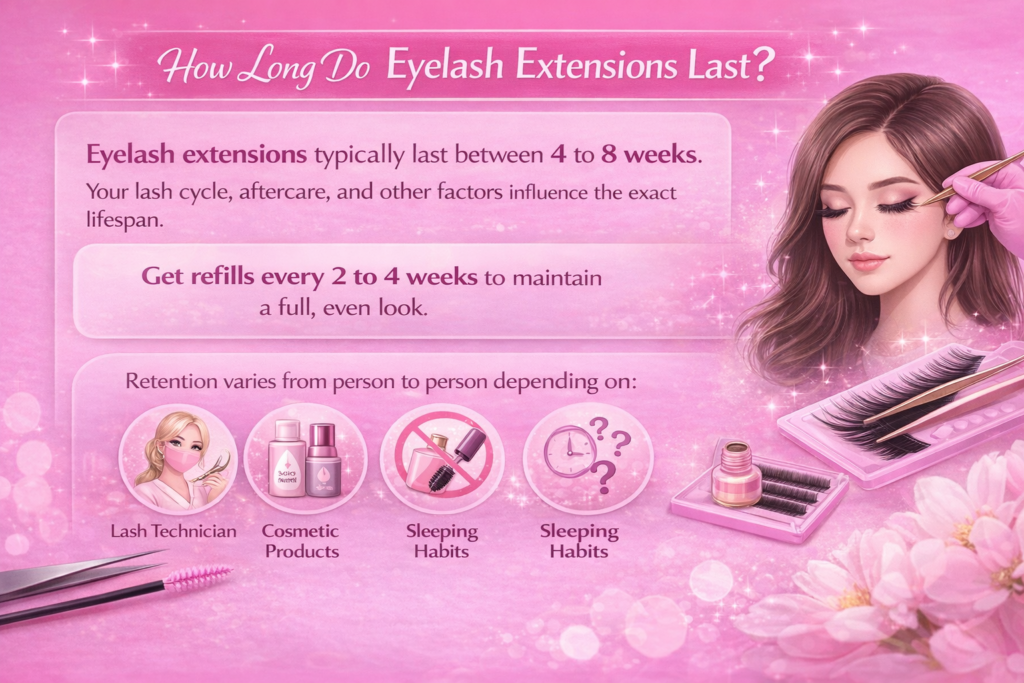
Eyelash extensions typically last between 4 to 8 weeks. However, this lifespan is not the same for everyone. The reason is that your natural lashes do not grow at the same time or at the same rate. Each lash is in a different phase of the growth cycle.
Some lashes are in the growing phase, while others are in the shedding phase. When a natural lash in the shedding phase falls out, the attached extension falls out with it. This naturally creates small gaps in your lash line over time. To maintain a full and even look, experts recommend getting refill services every 2 to 4 weeks.
The exact lifespan of your lash extensions also depends on several other factors, and based on these factors, retention can vary from person to person.
Factors That Affect the Lifespan of Your Lash Extensions
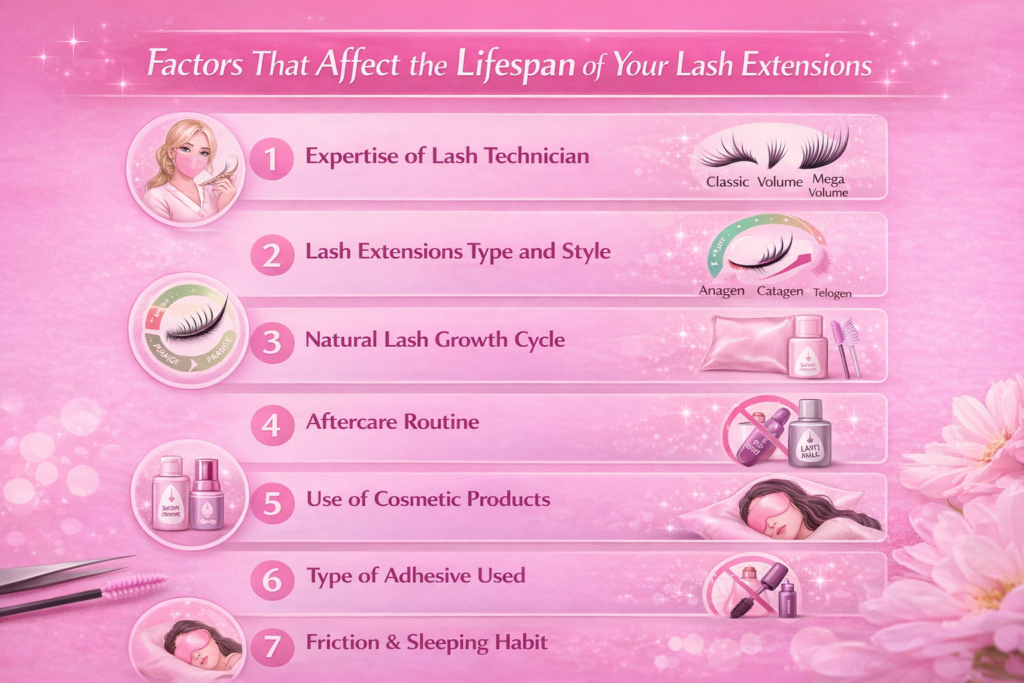
1. Expertise of Lash Technician
The expertise of your lash technician plays a major role in how long your eyelash extensions last. Retention is not just about the adhesive; it depends on precision, consistency, and correct technique.
A skilled lash specialist carefully selects the appropriate length, curl, and thickness based on the condition of your natural lashes. Proper isolation of each individual lash is essential to prevent stickies and uneven weight distribution.
Correct placement ensures the extension bonds securely without twisting or straining the natural lash. The adhesive dipping technique also matters, because picking up too much or too little glue can affect attachment strength.
Sloppy or rushed application often leads to clumping and premature shedding. When extensions are applied with steady hands and attention to detail, the bond is stronger, the finish looks seamless, and overall lash retention significantly improves.
2. Lash Extensions Type and Style
The type and eyelash extensions style you choose can significantly affect how long they last. Classic lashes, which involve attaching one extension to one natural lash, are generally lighter and may offer steadier retention for many individuals.
Volume or mega-volume styles use multiple fine extensions in a fan, creating a fuller look but requiring precise balance to maintain durability. Heavier, longer, or more dramatic styles may place additional stress on natural lashes, especially if they are fine or fragile.
Curl type also plays a role, as stronger curls can slightly reduce bonding surface. Choosing a style that complements your natural lash strength helps maintain better retention overall.
3. Natural Lash Growth Cycle
Your natural lash cycle is the main factor that determines how long eyelash extensions last. Every lash goes through three phases: anagen (active growth), catagen (transition), and telogen (resting and shedding). The anagen phase lasts about 1 to 2 months, while the telogen phase can last 4 to 9 months before shedding occurs.
Research shows that the full lash cycle lasts between 4 and 11 months, but not all lashes are in the same phase at the same time.
On average, people naturally lose 1 to 5 lashes per day. When you wear extensions, each shed’s natural lash takes its attached extension with it.
Because growth rates vary from person to person, some people notice faster thinning, while others enjoy longer retention. This natural variation explains why extensions never fall out all at once and why longevity differs individually.
4. Aftercare Routine
Your aftercare routine is one of the most important factors affecting how long eyelash extensions last. Research shows that proper aftercare can significantly extend the life of extensions. Gentle daily cleansing with oil-free products helps prevent buildup that can weaken the adhesive bond.
Brushing your lashes with a clean spoolie keeps them aligned and reduces tangling. Avoiding habits such as rubbing your eyes, sleeping face-down, or using oil-based skincare and waterproof mascara also protects retention. Even switching to a silk or satin pillowcase can reduce friction. Consistent care helps maintain both extension durability and natural lash health.
5. Use of Cosmetic Products
Cosmetic products applied near the eyes can significantly influence how long your eyelash extensions last. Waterproof mascara, while popular for its lifting effect, can create heavy buildup around the lash line.
According to industry experts, repeated use may cause retention issues and even contribute to dry eyes due to residue accumulating near the tear ducts.
Oil-based makeup removers, cleansers, and rich eye creams are especially problematic because oil breaks down the adhesive bond that holds extensions in place. When the adhesive weakens, extensions begin to fall out prematurely.
On the other hand, carefully selected, extension-safe products can support better retention. Some lightweight lash serums and oil-free formulas are designed to nourish natural lashes without interfering with the adhesive.
The type of products you use around your eyes directly impacts extension durability and overall lash health.
6. Type of Adhesive Used
The type of adhesive used during your lash extension application plays a crucial role in how long your extensions last. High-quality, medical-grade adhesives formulated specifically for eyelash use are designed to create a strong and flexible bond with the natural lash.
These professional adhesives are engineered to withstand daily exposure to humidity, natural oils, and gentle cleansing. In contrast, low-quality or improperly formulated glues may weaken quickly, leading to premature shedding and inconsistent retention.
Adhesive performance also depends on proper curing and correct application technique. When the bonding agent lacks durability, extensions may loosen earlier than expected, even if aftercare is followed correctly. The quality of the adhesive directly influences retention, comfort, and overall lash longevity.
7. Friction & Sleeping Habit
Friction and daily habits play a crucial role in how long your extensions last. Touching, rubbing, picking, or pulling at your lashes weakens the adhesive bond and places stress on your natural lashes.
Experts explain that picking can damage natural lashes and leave your set looking sparse. Moreover, pulling an extension can prematurely remove the natural lash it is attached to, and that area cannot be refilled until the lash regrows, which may take up to three months.
Even simple pressure from sleeping face-down can cause unnecessary tension on the lash line. Activities such as rubbing your eyes, aggressive makeup removal, or friction eyelash extensions during showering can also contribute to early fallout and reduced retention.
How to Make Lash Extensions Last Longer
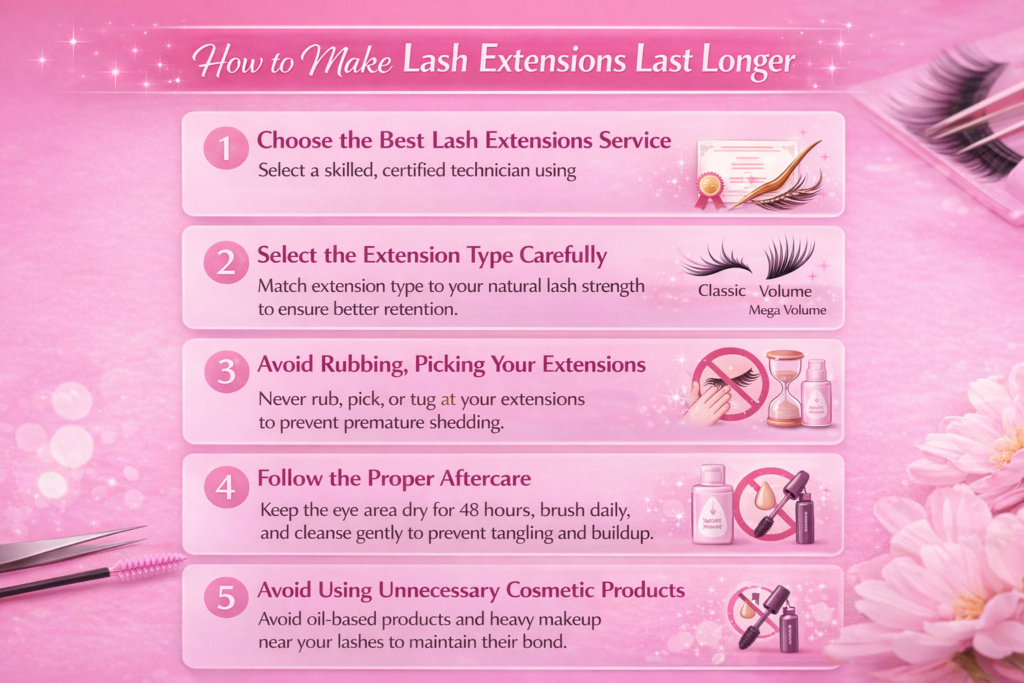
1. Choose the Best Lash Extensions Service
Choosing the best lash extensions service is one of the most important steps in making your extensions last longer. A skilled and certified lash technician understands proper isolation, correct adhesive usage, and accurate weight selection based on your natural lashes.
Precision during application ensures each extension bonds securely and evenly, which directly improves retention. High-quality salons also use professional-grade products that are formulated for durability and safety.
In addition, experienced technicians assess your natural lash condition before recommending a suitable style, length, and thickness. When extensions are applied correctly from the start, they shed naturally with your lash cycle instead of falling out prematurely.
The foundation of long-lasting lash extensions always begins with choosing a reliable, experienced professional.
2. Select the Extension Type Carefully
Selecting the right type of lash extension plays a key role in how long they last. Different styles, such as classic, volume, or mega volume, vary in weight and structure. Choosing extensions that match the strength and thickness of your natural lashes helps maintain better retention.
Heavier or overly dramatic styles may look appealing, but if they are not suited to your natural lash condition, they can shed more quickly. Curl type and thickness also influence bonding surface and durability. When the extension type is chosen thoughtfully, it supports both longer wear and healthier natural lashes over time.
3. Avoid Rubbing, Picking Your Extensions
Avoiding rubbing, picking, or tugging at your lash extensions is essential for long-lasting retention. Constant touching weakens the adhesive bond and increases the risk of premature shedding. When extensions are pulled, they may detach along with the natural lash, which can create sparse areas over time.
Treating your lashes gently helps maintain their structure and alignment. Instead of touching them frequently, keeping them neat with a soft spoolie brush supports proper separation and prevents tangling.
Being mindful during cleansing and makeup removal also protects the lash line from unnecessary friction.
Many lash specialists also recommend using a lash sealant every few days, as it can help reinforce the adhesive bond and shield extensions from environmental exposure. Careful handling significantly improves durability and preserves both your extensions and natural lashes.
4. Follow the Proper Aftercare
Proper aftercare is essential to maximize the lifespan of your lash extensions. Freshly applied extensions require time for the adhesive to cure fully, so early exposure to water, steam, saunas, or hot showers can weaken the bond and cause premature fallout.
Keeping the eye area dry for at least 48 hours supports stronger retention. Daily brushing with a clean spoolie helps prevent tangling and keeps extensions aligned. Brushing also distributes natural oils away from the base, preventing adhesive breakdown.
Sleeping on silk or satin pillowcases reduces friction compared to cotton, minimizing unnecessary tugging overnight. Daily cleansing with a lash-safe cleanser is equally important, as oil, skincare residue, and debris buildup can weaken the bond. Consistent aftercare preserves both lash hygiene and long-lasting results.
5. Avoid Using Unnecessary Cosmetic Products
Avoiding unnecessary cosmetic products around your eyes can significantly extend the lifespan of your lash extensions. Waterproof mascara and eyeliner often require aggressive rubbing during removal, which can weaken the adhesive bond and loosen extensions prematurely.
Even though mascara may seem harmless, frequent use can cause buildup and tugging that reduces retention.
Oil-based products are especially problematic because oil breaks down lash adhesive. Makeup removers, facial cleansers, eye creams, and heavy moisturizers containing oils can cause extensions to slip off faster than expected. The adhesive used for lash extensions is not designed to withstand constant oil exposure.
Choosing oil-free and water-based formulas helps maintain bond strength and prevents early fallout. Products labeled “lash extension safe” are generally formulated to support better retention. Being mindful of the cosmetics you apply near your lash line directly impacts durability and overall extension longevity.
How Long Does a Full Set of Eyelash Extensions Take
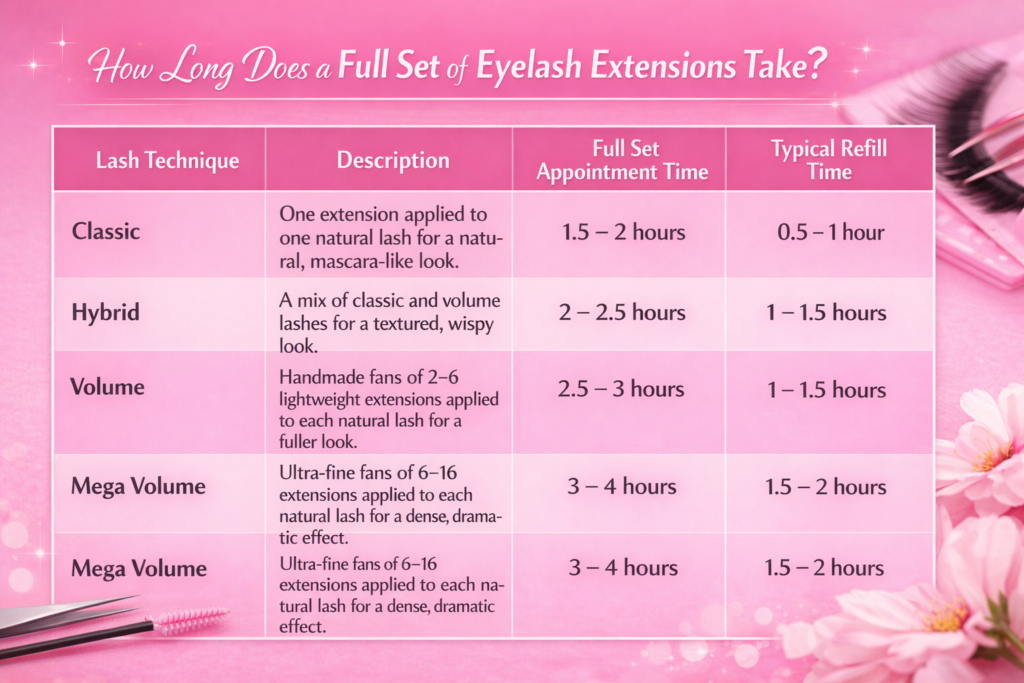
The time required for a full set of eyelash extensions depends on the technique you choose, as each style involves a different level of precision and artistry.
Classic lash extensions typically take about 1.5 to 2 hours for a full application and around 0.5 to 1 hour for a refill appointment. Hybrid lash extensions require 2 to 2.5 hours for a full set and approximately 1 to 1.5 hours for refills. Volume lash extensions take about 2.5 to 3 hours for a complete application, with refill sessions lasting 1 to 1.5 hours.
For those who prefer a bold look, mega volume lash extensions generally take 3 to 4 hours for a full set and around 1.5 to 2 hours for a refill. The more intricate the style, the more time is needed.
How Much is a Full Set of Eyelash Extensions
The cost of a full set of eyelash extensions depends on several factors, including the country, the city, the specific area, and the type of lash extensions you choose. Prices can vary significantly between regions due to differences in market demand, salon reputation, technician expertise, and product quality.
For example, premium services in metropolitan areas often cost more than standard services in smaller locations. The style you select also influences pricing, as advanced techniques typically require more skill and time.
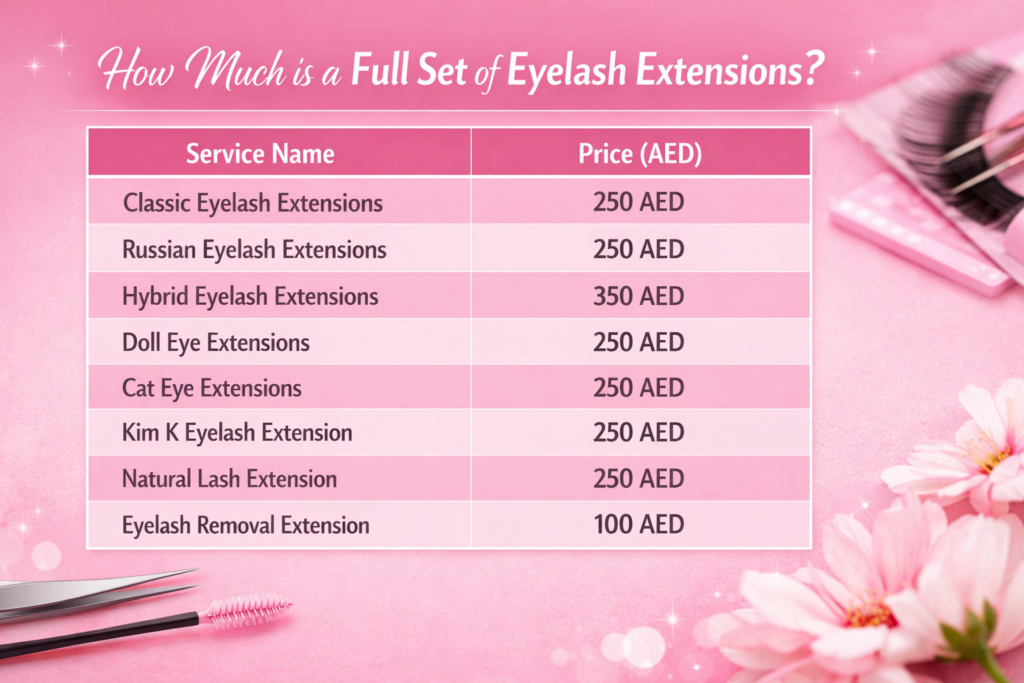
We operate in the UAE and proudly offer professional lash extension services in Dubai and Sharjah. Below are our current service prices:
Classic Eyelash Extensions in Dubai – 250 AED
Russian Eyelash Extensions in Dubai – 250 AED
Hybrid Eyelash Extensions in Dubai – 350 AED
Doll Eye Extensions in Dubai – 250 AED
Cat Eye Extensions in Dubai – 250 AED
Kim K Eyelash Extension in Dubai – 250 AED
Natural Lash Extension in Dubai – 250 AED
Eyelash Removal Extension in Dubai – 100 AED
Can You Get Eyelash Extensions While Pregnant
In most cases, yes, it is generally considered safe, but there are important factors to understand first. The primary concern is not the lashes themselves, but the adhesive fumes, as most lash glues contain cyanoacrylate, which can cause nausea, dizziness, or irritation, especially during the first trimester when sensitivity is heightened.
Pregnancy hormones can also affect lash growth, oil production, and retention, meaning your extensions may not last as long as usual. Some women experience increased sensitivity, redness, or mild allergic reactions that did not occur before pregnancy.
Body positioning is another consideration, particularly after 20 weeks, since lying flat on the back may cause discomfort.
While there is no strong evidence that lash adhesive harms the baby or affects breastfeeding, most professionals recommend consulting your doctor before booking an appointment to ensure personalized medical clearance.
What Can’t You Do With Lash Extensions
While lash extensions are designed to enhance your look, they do require certain lifestyle adjustments. You cannot rub, pull, or pick at your lashes, as this weakens the adhesive bond and may damage your natural lashes.
Oil-based makeup removers, heavy creams, and waterproof mascara are generally not recommended because oil breaks down the adhesive and shortens retention. Excessive exposure to steam, saunas, or very hot showers immediately after application can also compromise the bond.
Sleeping face-down or pressing your lashes into a pillow can create friction that leads to premature shedding. Aggressive cleansing or using cotton pads that snag the extensions may reduce their lifespan. Lash extensions are durable, but they are not indestructible, so being mindful of daily habits helps maintain their appearance and overall lash health.
Who Should Not Get Lash Extensions
Lash extensions are not suitable for everyone, and certain individuals should proceed with caution. People who have chronic eye conditions such as blepharitis, severe dry eye, eyelid dermatitis, or frequent eye infections may experience increased irritation with extensions.
Those who have known allergies to adhesive ingredients, including cyanoacrylate or latex, may also be at higher risk for adverse reactions. Individuals with very weak, brittle, or severely damaged natural lashes might not have enough strength to safely support extensions.
Clients who habitually rub their eyes or struggle to follow aftercare guidelines may also face retention issues and potential lash damage. Additionally, anyone undergoing certain medical treatments that affect hair growth should consult a healthcare provider first.
Understanding your eye health and natural lash condition is essential before deciding whether lash extensions are appropriate for you.
Conclusion
Eyelash extensions can completely transform your look, but understanding how they work and how to care for them is essential for the best results. Throughout this guide, we explored what eyelash extensions are, the materials used, how long they last, potential risks, and the factors that affect retention.
We also addressed common concerns about lash health, regrowth, safety, and maintenance. When applied correctly and maintained properly, lash extensions can be both beautiful and safe. The key is making informed decisions, choosing experienced professionals, and following proper aftercare. With the right knowledge, you can enjoy fuller, longer lashes with confidence.