
Published On: 10 Jan 2026
Soft waxing looks simple at first glance—but why does it sometimes feel painful, messy, or give uneven results even when you follow the basics? Many people struggle with common problems like wax not gripping hair properly, excessive pain, skin irritation, leftover residue, or choosing the wrong wax for sensitive areas.
These issues usually don’t happen because soft wax is ineffective, but because small yet critical steps are missed or misunderstood. From preparing your skin the right way and heating wax to the correct consistency, to knowing where soft wax works best and where it should be avoided, every detail matters.
This guide is designed to clear that confusion. Whether you are waxing at home for the first time or trying to improve your results, this article answers the most common questions and mistakes people make with soft wax. By the end, you’ll know exactly how to use soft wax safely, smoothly, and confidently—and why these steps make all the difference.
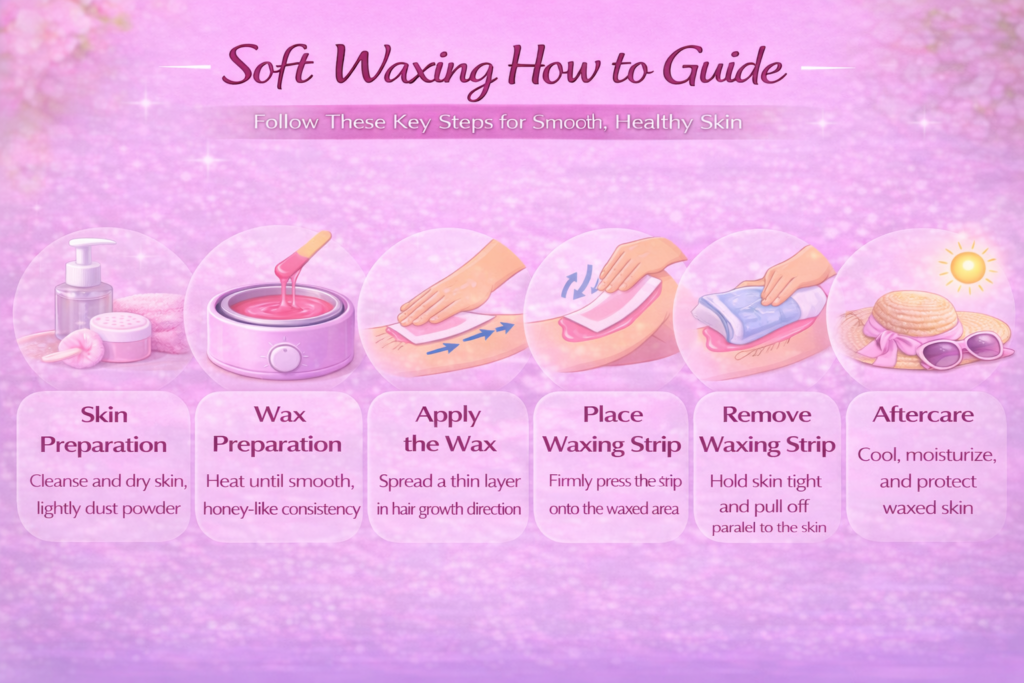
What is Soft Wax
Soft wax is a hair-removal wax that adheres to both the hair and the surface of the skin, making it effective for removing fine to medium hair over large areas. It is applied in a thin layer while warm and removed using waxing strips, which lift the wax and hair away together. Soft wax is commonly used on areas such as the legs, arms, and back, where the skin is less sensitive and speed is important.
Soft wax is typically made with resins and softening agents that allow it to spread easily and grip hair efficiently. Because it removes hair quickly and covers large sections at once, it is widely used in professional salons and at home.
For a deeper explanation of how soft wax works, its ingredients, benefits, and best uses, read our in-depth article on what soft wax is.
Steps to Use Soft Wax
1. Things You Need for Applying Soft Wax
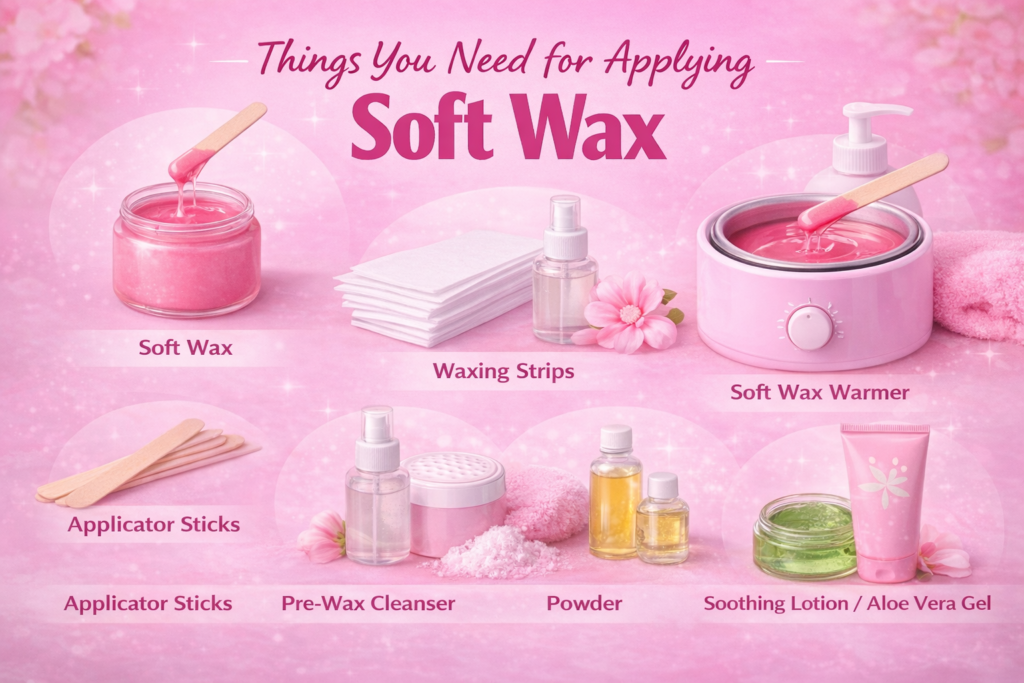
Soft Wax: The primary waxing product used to grip and remove hair from the root.
Soft Wax Warmer: Heats the wax evenly to the correct temperature and consistency for safe application.
Waxing Strips: Fabric or paper strips used to lift and pull the wax and hair off the skin.
Applicator Sticks or Spatulas: Used to spread a thin, even layer of soft wax in the direction of hair growth.
Pre-Wax Cleanser: Cleans the skin by removing oils, sweat, and residue to help wax adhere better.
Powder: Absorbs excess moisture on the skin to improve wax grip and reduce irritation.
Post-Wax Oil or Cleanser: Removes leftover wax residue while calming and nourishing the skin.
Soothing Lotion or Aloe Vera Gel: Helps calm redness, hydrate the skin, and reduce post-wax sensitivity.
2. Pre-Wax Skin Preparation Before Applying Soft Wax
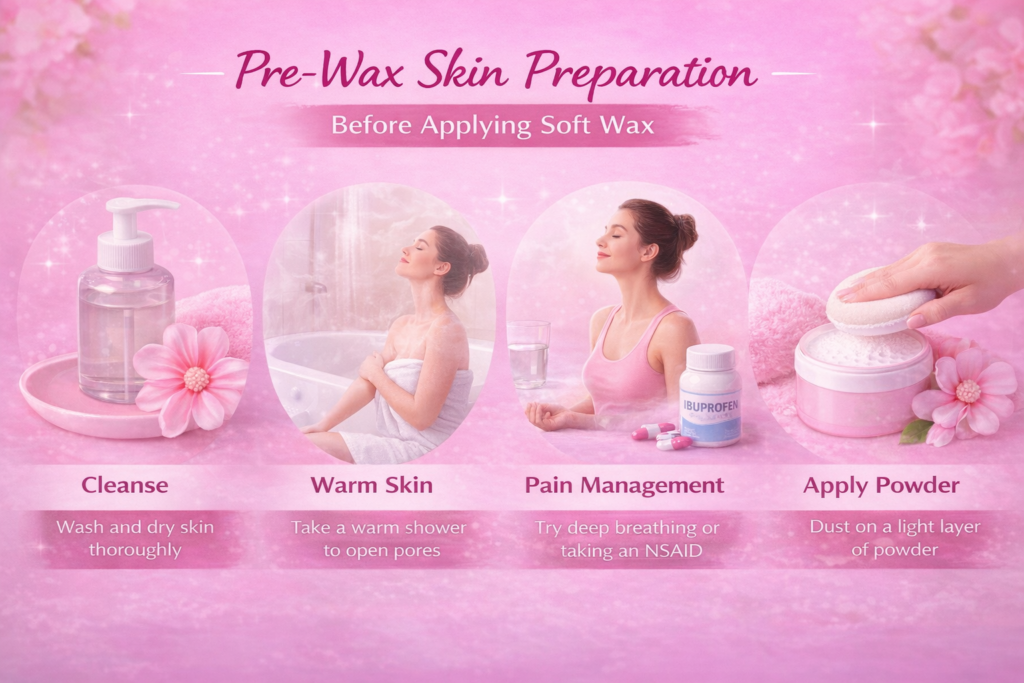
Before applying soft wax, proper skin preparation is essential to achieve clean results and minimize discomfort.
First cleanse the skin properly before applying the soft wax. Cleansing the skin removes oil, sweat, and product residue so the soft wax can grip hair evenly instead of slipping; the American Academy of Dermatology confirms that washing and thoroughly drying the skin before waxing improves wax adhesion and leads to smoother hair removal.
Next warm the skin muscles properly before applying the soft wax. Warming the skin and muscles—such as with a warm shower—softens the skin, opens pores, and relaxes hair follicles, which reduces resistance during hair removal and makes the soft waxing process more comfortable; professional brands like Biosoft recommend warm skin because it allows wax to grip hair effectively without pulling or tearing the skin.
Pain management is also important before using the soft wax. To manage pain, use breathing as a weapon as controlled belly breathing activates the parasympathetic nervous system, helping reduce the body’s pain response; a review of seven randomized trials found that slow, deep breathing significantly lowers acute pain perception. For additional relief, taking an NSAID like ibuprofen 30–60 minutes before waxing can reduce inflammation and dull pain receptors, a method widely supported in pain-management research.
Finally, applying a light layer of powder absorbs moisture and creates a protective barrier, ensuring the wax adheres to hair—not skin—for safer, more precise removal.
When Using Soft Wax When Is The Powder Applied
When using soft wax, powder is applied after cleansing and drying the skin but before starting the waxing process. This timing is important because the powder creates a thin, protective barrier between the skin and the soft wax, allowing the wax to grip the hair rather than sticking to moisture or skin.
Research shows that absorbent powders such as baby powder or cornstarch effectively soak up excess oil and moisture, improving wax adhesion so hair is removed more cleanly.
While many people use baby powder because it is affordable and accessible, professional pre-wax powders are often more effective. These formulas commonly contain ingredients like zinc oxide or vitamin E, which provide added skin protection and help minimize sensitivity, especially on delicate areas during the soft waxing process.
3. Prepare Soft Wax Properly
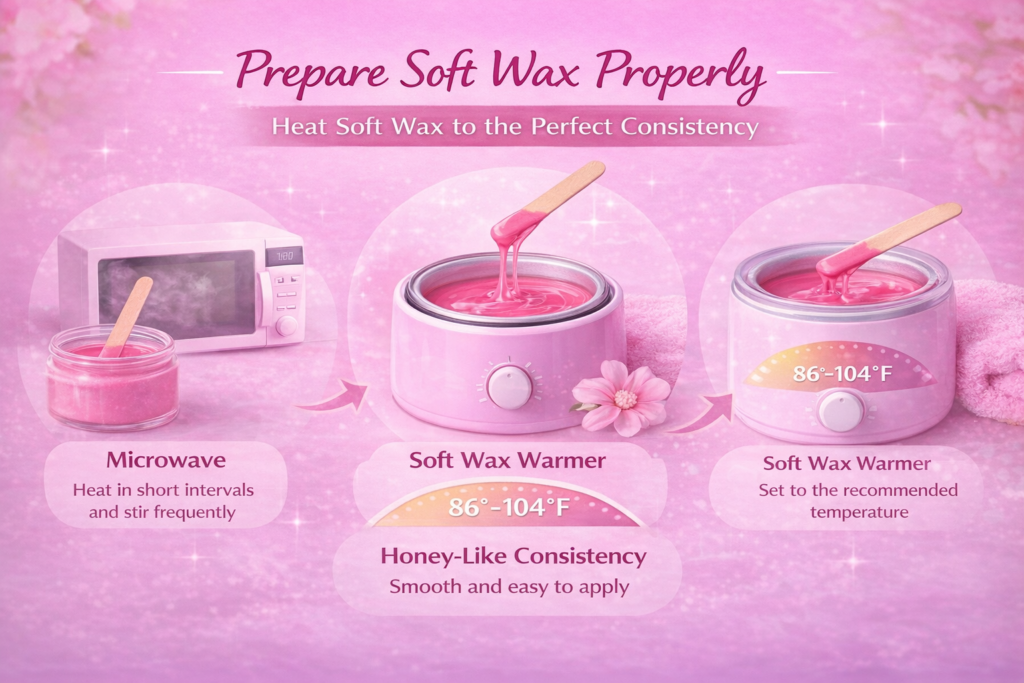
Before applying soft wax, it is prepared properly. Preparation means heating the wax to the optimal and required temperature and achieving the desired consistency, so the waxing process remains smooth and hair removal is effective and efficient.
You can heat the soft wax using a microwave or one of the best warmers for soft wax. If you use a microwave, heat the wax in short intervals and stir between each round to prevent overheating. Frequent stirring is essential because it distributes heat evenly and prevents dangerous hot spots.
However, studies show that microwave-heated wax can reach dangerously high temperatures and cause burns, so avoid relying on that method.
A Soft wax warmer is more precise and should be set to the recommended temperature listed on the soft wax container. Most soft waxes perform best when heated between 86 and 104 degrees Fahrenheit, and reaching this range typically takes about twenty minutes, depending on the heating method used.
Properly prepared and heated soft wax should have a honey-like consistency, which allows it to spread smoothly and grip hair effectively. Wax that is too runny increases the risk of skin burns, while wax that is too thick will not apply evenly or remove hair efficiently.
How to Heat Soft Wax
Soft wax can be heated safely using three common methods: a soft wax warmer, a microwave, or a double boiler, and each method requires careful temperature control.
A wax warmer is the most reliable option, as it heats the wax evenly and allows you to maintain a consistent temperature until the wax reaches a smooth, honey-like consistency.
The microwave method is faster and convenient for home use; place the soft wax in a microwave-safe glass or silicone container and heat it in short 10–15 second intervals, stirring well after each round to prevent hot spots. Continue until the wax is fully melted and smooth, then always test the temperature on your wrist before use.
The double boiler method offers gentle, controlled heating by placing the wax in a heat-resistant bowl over simmering water, allowing steam to melt the wax slowly while you stir regularly. With this method, it is important to prevent water from entering the wax, as moisture can affect performance.
Regardless of the method used, never overheat soft wax, as excessively hot wax can cause burns and skin irritation.
Can You Use Soft Wax In a Hard Wax Warmer
Yes, you can use soft wax in a hard wax warmer, but only if the warmer is designed to handle both types of wax. While there are separate warmers specifically made for hard wax and soft wax, many modern wax warmers are labeled for dual use, meaning they can safely heat both hard and soft wax.
If you plan to use a hard wax warmer for soft wax, always check the product description or manufacturer’s instructions to confirm that it supports soft wax heating. These dual-purpose warmers are common and widely available, and they provide adjustable temperature controls suitable for both wax types.
Using a compatible warmer ensures the soft wax reaches the correct temperature and consistency without overheating. If the warmer is not designed for soft wax, it may heat unevenly or too quickly, increasing the risk of burns or poor waxing results.
How to Heat Soft Wax Without Warmer
If you do not have a wax warmer, you can still heat soft wax safely using alternative methods such as a microwave or a double boiler.
For the microwave method, place the soft wax in a microwave-safe glass or silicone container and heat it in short 10 to 15-second intervals, stirring thoroughly after each round to distribute heat evenly and prevent hot spots. Continue until the wax reaches a smooth, honey-like consistency, then test a small amount on your wrist to ensure it is warm, not hot.
Another option is the double boiler method, where you place the wax in a heat-resistant bowl over a pot of gently simmering water. Stir regularly as the steam melts the wax slowly and evenly. With this method, make sure no water splashes into the wax, as moisture can affect its performance. Avoid overheating with either method to reduce the risk of burns and irritation.
4. Test Soft Wax Properly
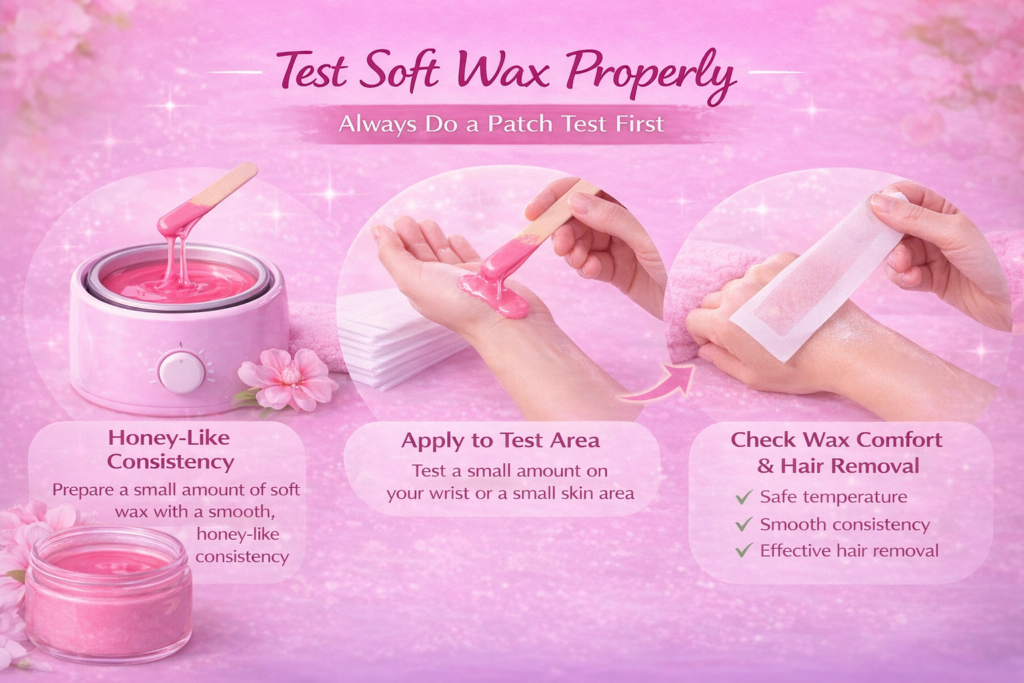
Testing soft wax properly is a critical safety and performance step and is commonly called a patch test. Before waxing a larger area, apply a small amount of prepared wax to the inside of your wrist or another small test area.
This allows you to check that the wax temperature is safe, ensuring it is neither too hot to cause burns nor too cool. Properly prepared soft wax should have a smooth, honey-like consistency that spreads easily without dripping.
During the test, observe whether the wax grips the hair well and removes it cleanly when pulled with a strip. If the wax feels uncomfortable, does not spread evenly, or fails to remove hair effectively, it needs adjustment.
Testing first helps prevent skin irritation, uneven results, and unnecessary discomfort during the full soft waxing process.
5. Apply Soft Wax Correctly
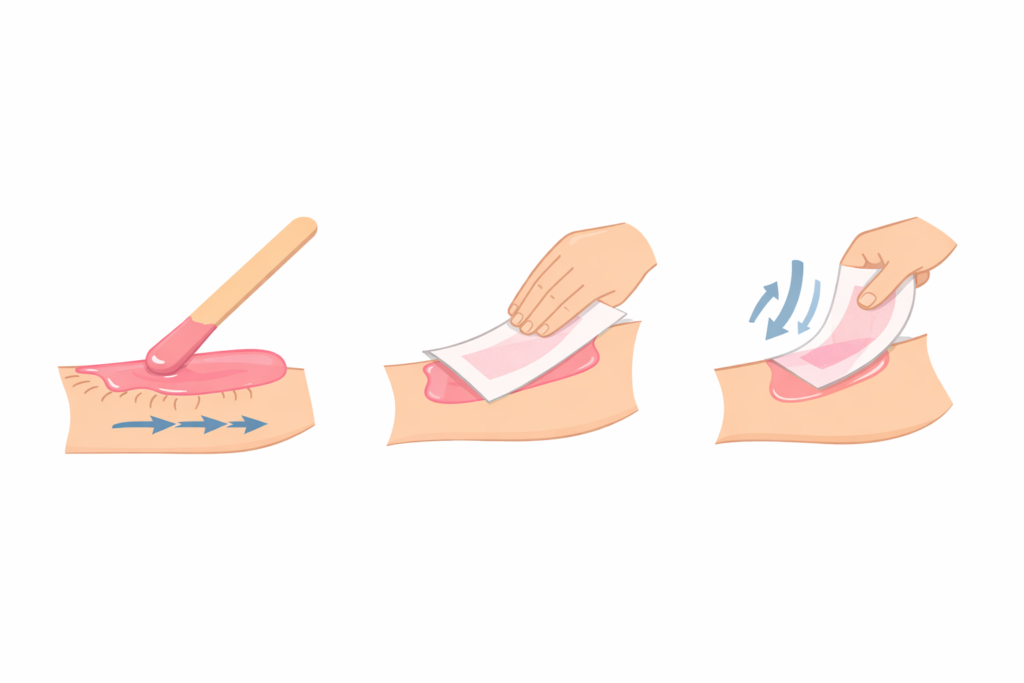
Now, wax is prepared and you have tested it also, so is the time to apply the soft wax. To apply soft wax properly follow the below given steps:
Use your applicator to move wax from the hotter edges of the container toward the cooler center, then stir until it feels uniform, because wax sitting near the sides of the container is usually hotter and can cause uneven application if you do not mix it.
Insert the tip of a clean applicator into the middle of the wax to pick up the soft wax, not the edges, so the wax you pick up is at a safer, more stable heat level and spreads more predictably on the skin.
Never double-dip an applicator that has touched skin back into the wax pot, because the wax is not hot enough to kill bacteria, and reusing sticks can contaminate the wax and increase the risk of irritation or infection.
Hold the applicator at about a 45-degree angle and use medium pressure to spread the soft wax into a paper-thin coat, because soft wax grips well and works best when it is not thick or clumpy.
While spreading soft wax with an applicator, pull the skin tight with your free hand so the surface stays flat, which helps the wax reach the hair at the root and reduces the chance of the strip tugging the skin instead of lifting hair.
Spread the wax smoothly in the same direction the hair naturally grows, because this improves grip and prepares the hair to be removed cleanly when you pull the strip in the opposite direction.
If you apply wax over an area you just waxed, you increase the risk of irritation and unnecessary pulling, so work in small sections and keep each application separate.
Lay a cloth or paper strip directly over the wax while it is still tacky, aligning it with the same direction you applied the wax so it bonds evenly to the wax layer.
Use your palm or fingers to press the strip down with steady pressure, smoothing it a few times so the strip fully adheres to the wax and captures the hair effectively.
Make sure there is a small section of strip at the end ( pull tab ) with no wax underneath so you can hold it securely later, which gives you better control and helps you remove the strip quickly and cleanly in the next step.
6. Remove Soft Wax Safely
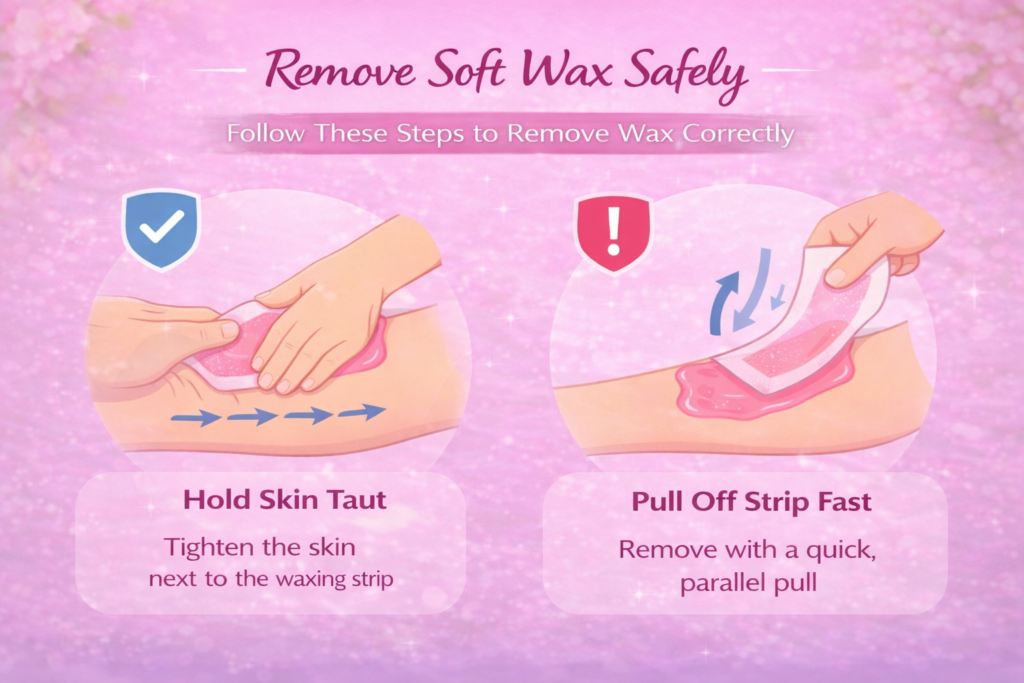
Great, by carefully following the steps above, you have applied the soft wax correctly. The same level of care, control, and calmness is required when removing the waxing strip to ensure effective hair removal. To remove the soft wax safely and efficiently, follow the steps below.
Use one hand to hold the surrounding skin taut and slightly away from the pull tab, because tight skin reduces pain, minimizes pulling on the skin, and allows hair to release more cleanly from the root.
With your other hand, grasp the pull tab and remove the strip in one fast motion, pulling parallel and close to the skin in the opposite direction of hair growth. Never pull upward, as this can cause bruising, tearing, or hair breakage instead of full bulb removal.
How to Get Soft Wax Off Skin: Removing Soft Wax Residue From Skin
After removing the hair with soft wax, soft wax residue remains on the skin, as stated by research. These soft wax residues should be removed gently to avoid irritation. The most effective method is using oil, because wax is oil-soluble and breaks down easily without pulling the skin.
Apply baby oil, mineral oil, olive oil, coconut oil, or a post-wax oil to a cotton pad, press it onto the residue for a few minutes, then wipe away gently. Petroleum jelly also works well when applied thickly and left for about five minutes before wiping off.
If oil is not available, a warm compress can soften the wax for easier removal. For small bits, ice can harden the wax so it flakes off. Finish by cleansing with a mild, soap-free cleanser. Avoid harsh scrubbing or chemicals, as freshly waxed skin is sensitive.
7. Post Soft Wax Aftercare
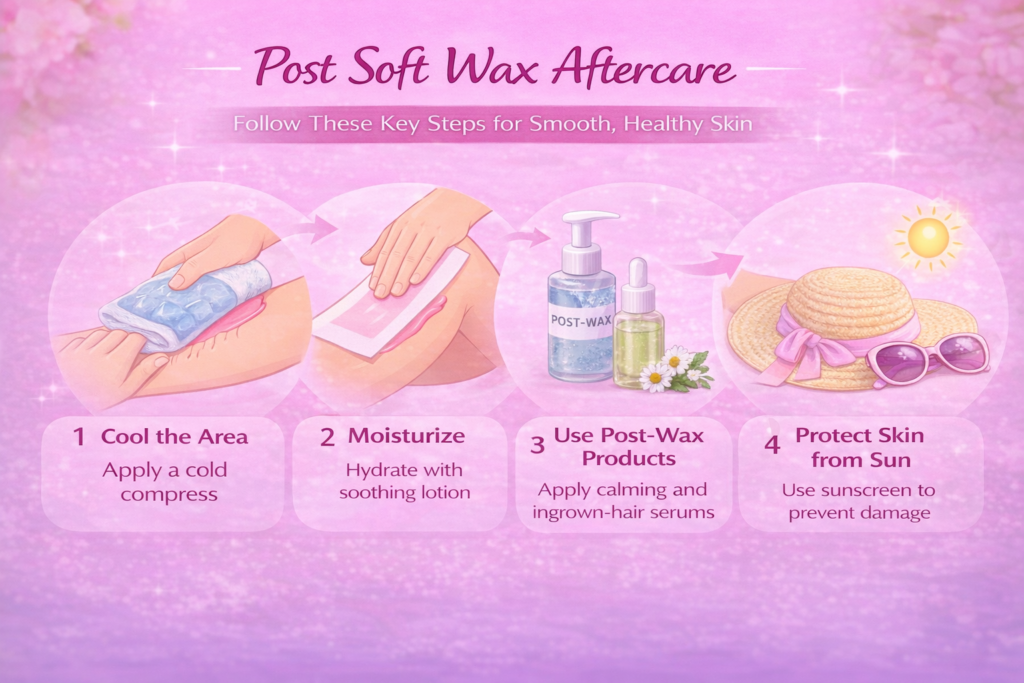
After completing soft waxing, post-wax aftercare is essential to help the skin recover, stay smooth, and prevent irritation.
The first and most important step is cooling the area, which can be done by applying a clean, damp cold cloth or a gel ice pack wrapped in a towel for 10–15 minutes. Cooling reduces inflammation, swelling, and discomfort, and research shows that cold temperatures constrict blood vessels, limiting blood flow to irritated tissue and easing pain.
Daily moisturizing is the next key step in post soft wax aftercare, as it restores the skin’s moisture balance, improves elasticity, and allows new hair to grow without becoming trapped. Studies show that ingredients like glycerin help retain moisture and strengthen the skin barrier, while aloe vera and chamomile soothe post-wax inflammation.
Using post-wax products such as cooling gels or ingrown-hair serums after the first 24 hours of soft waxing provides targeted care and reduces bumps.
Finally, protecting waxed skin from sun exposure is crucial, as experts note that freshly waxed skin is more vulnerable to UV damage, irritation, and pigmentation.
Can You Use Soft Wax on Armpits
Yes, you can use soft wax on armpits, but most experts recommend hard wax for armpits. Armpit skin is sensitive, and the hair is coarse and grows in multiple directions, which makes soft wax more uncomfortable. Soft wax adheres to both the hair and the skin, often causing more pain and irritation when used on sensitive areas like the underarms.
Hard wax, on the other hand, grips only the hair and lifts away once it hardens, making it less painful and gentler on delicate skin. For this reason, hard wax is commonly preferred for sensitive zones such as armpits, bikini areas, and the face.
Soft wax is better suited for larger, less sensitive areas like the legs, arms, and back. We have a detailed guide explaining the differences between soft and hard wax and which option works best for each body area.
How to Wax Armpits With Soft Wax
Even though experts recommend using hard wax for armpits, if you still want to remove underarm hair using soft wax, that is completely your choice and it can be done. To wax armpits with soft wax, start with proper skin preparation by cleansing the armpits thoroughly and ensuring the skin is completely dry, then apply a light layer of powder to absorb moisture and improve wax grip.
Prepare and test the soft wax to confirm a safe temperature and smooth, honey-like consistency, as overheated wax can irritate delicate underarm skin. When applying, stretch the skin tightly and spread a very thin layer of wax in the direction of hair growth, working in small sections since armpit hair grows in multiple directions.
Press the strip firmly and remove it quickly, parallel to the skin, in the opposite direction of hair growth. After waxing, soothe the area immediately with pressure or a cool compress and follow up with gentle aftercare to reduce redness and sensitivity.
Can I Use Soft Wax For Brazilian
Yes, you can use soft wax for a Brazilian, but most experts strongly recommend hard wax for this area due to its sensitivity. Brazilian skin is delicate, and the hair is coarse, which makes soft wax more likely to cause pain, irritation, or redness because it adheres to both the hair and the skin.
Hard wax is generally preferred because it grips the hair firmly while lifting away from the skin once it hardens, resulting in a more controlled and less painful removal. According to the BCIT Environmental Public Health Journal, hard wax is especially effective for sensitive and delicate skin because it removes hair without strongly sticking to the skin’s surface.
For this reason, hard wax is considered the safer and more comfortable option for Brazilian waxing, particularly for individuals with sensitive skin.
Can I Use Soft Wax on My Bikini Area
Yes, you can use soft wax on your bikini area, but it may cause pain and discomfort. Soft wax adheres to both the hair and the skin, which can increase pain and irritation, in sensitive areas like the bikini line, when the wax is removed. Because the bikini area has delicate skin and coarser hair, this pulling on the skin often makes the process more uncomfortable.
For this reason, experts usually recommend doing bikini wax with hard wax. Hard wax grips only the hair and releases from the skin as it hardens, which helps reduce pain and lowers the risk of redness or irritation. This makes hard wax a better and safer option for sensitive areas, including the bikini line.
If you choose to use soft wax, extra care, proper preparation, and gentle aftercare are essential to minimize discomfort.
How to Wax Bikini Line With Soft Wax
Even though experts usually recommend hard wax for the bikini area, if you still choose to remove bikini-line hair using soft wax, it can be done with proper care and technique. Begin with thorough skin preparation by cleansing the bikini area and making sure the skin is completely dry, then apply a light layer of powder to absorb moisture and help the wax grip the hair rather than the skin.
Next, prepare and test the soft wax to ensure it is at a safe temperature and has a smooth, honey-like consistency, as overheated wax can easily irritate sensitive bikini skin. When applying, stretch the skin taut and spread a very thin layer of wax in the direction of hair growth, working in small sections since bikini hair can grow in different directions.
Press the strip firmly, then remove it quickly and parallel to the skin in the opposite direction of hair growth. Finish by soothing the area immediately with gentle pressure or a cool compress and follow with calming aftercare to reduce redness and sensitivity.
Can You Use Soft Wax on Face
Yes, you can use soft wax on the face, but it often causes more discomfort compared to other waxing types. Soft wax adheres to both the hair and the skin, which increases the risk of pain, redness, and irritation—especially on the face because facial skin is naturally more sensitive and delicate than other areas of the body.
Studies show that the thinner skin and higher nerve density on the face make it more prone to irritation during hair removal. For this reason, experts generally recommend hard wax for facial waxing.
Hard wax grips the hair without strongly sticking to the skin, making it a safer and more suitable option for sensitive areas such as the face. If soft wax is used, it should be applied very carefully, in small sections, and followed by proper aftercare to minimize irritation and protect the skin.
How to Wax Eyebrows With Soft Wax
Even though experts usually recommend hard wax for facial areas, if you still choose to remove eyebrow hair using soft wax, it can be done with extra care and precise technique. Start with thorough skin preparation by gently cleansing the eyebrow area and ensuring the skin is completely dry, then apply a very light layer of powder to absorb moisture and help the wax grip the hair rather than the skin.
Next, prepare and test the soft wax to confirm it is at a safe temperature and has a smooth, honey-like consistency, as overheated wax can easily damage delicate facial skin. When applying, hold the skin taut and spread a very thin layer of wax in the direction of hair growth, working in extremely small, controlled sections to maintain eyebrow shape and symmetry.
Press the strip firmly, then remove it quickly and parallel to the skin in the opposite direction of hair growth. Finish by soothing the area immediately with gentle pressure or a cool compress and apply calming aftercare to reduce redness and sensitivity.
Can You Wax Your Nose With Soft Wax
No, you should not wax your nose with soft wax, because it may cause significant pain and irritation. Soft wax adheres to both the hair and the skin, which increases discomfort—especially because the inside and outer edges of the nose are extremely sensitive. Nose hair is also coarse and rooted deeply, so pulling soft wax can feel more intense and may irritate the delicate skin lining the nostrils.
For this reason, experts recommend hard wax for nose waxing. Hard wax grips only the hair and releases from the skin once it hardens, which helps reduce pain and lowers the risk of redness, tearing, or irritation.
This makes hard wax a safer and more controlled option for such a sensitive area. If you still choose to use soft wax, it should be done with extreme caution, proper preparation, and very gentle aftercare to protect the skin.
How to Wax Nose Hair With Soft Wax
Although hard wax is generally recommended for nose hair, soft wax can be used with extra caution and proper technique. Start by heating the soft wax to a smooth, honey-like consistency and testing the temperature to ensure it is safe.
Using a clean applicator stick, apply a very small amount of wax just inside the entrance of the nostril, covering only visible hairs and never inserting wax deep into the nose. Allow the wax to set completely for about one to two minutes.
Before removal, pinch the nose gently to stabilize the skin, then pull quickly and firmly to remove the wax and hair. Protect surrounding facial hair with a light layer of oil or tissue before waxing. Finish with gentle post-wax care, such as applying a light, fragrance-free moisturizer to soothe the skin.
How to Wax Upper Lip With Soft Wax
Even though experts usually recommend hard wax for facial areas, if you still choose to remove upper-lip hair using soft wax, it can be done with extra care and control. Begin with proper skin preparation by gently cleansing the upper lip and making sure the skin is completely dry, then apply a very light layer of powder to absorb moisture and help the wax grip the hair instead of the skin.
Next, prepare and test the soft wax to ensure it is at a safe temperature and has a smooth, honey-like consistency, as overheated wax can irritate delicate upper-lip skin. When applying, stretch the skin taut and spread a very thin layer of wax in the direction of hair growth, working in small, precise sections for accuracy.
Press the strip firmly, then remove it quickly and parallel to the skin in the opposite direction of hair growth. Finish by soothing the area immediately with gentle pressure or a cool compress and apply calming aftercare to reduce redness and sensitivity.
How to Use Soft Wax on Legs
To use soft wax on legs, start by cleansing the skin thoroughly and ensuring it is completely dry, then apply a light layer of powder to absorb moisture and help the wax grip the hair. Heat the soft wax in a wax warmer until it reaches a smooth, honey-like consistency, and always test the temperature before applying.
Using a clean applicator, spread a thin layer of wax in the direction of hair growth at about a 45-degree angle, working in small sections for even coverage. Place a waxing strip over the wax and press it firmly in the same direction. Hold the skin taut and remove the strip quickly and parallel to the skin in the opposite direction of hair growth.
Immediately apply firm pressure to soothe the area, then finish with calming aftercare to reduce redness and keep the skin smooth.
How to Use Gigi Soft Wax
To use GiGi soft wax, begin by heating the wax in a wax warmer until it reaches a thin, honey-like consistency. While the wax warms, cleanse the skin thoroughly, make sure it is completely dry, and apply a light layer of powder to absorb moisture and improve wax adhesion.
Using a clean applicator, spread a thin layer of wax in the direction of hair growth at a 45-degree angle. Place a waxing strip over the wax and press it firmly in the same direction. Hold the skin taut with one hand, then remove the strip quickly and parallel to the skin in the opposite direction of hair growth.
After removal, apply firm pressure to soothe the area and use GiGi Wax Off to remove residue and calm the skin.
Recommend the Best Waxing Service in Dubai
If you are looking for a reliable and professional waxing service in Dubai, Pink Beauty Salon’s waxing service in Dubai is a highly recommended choice. The salon offers a wide range of waxing services, so you do not need to visit multiple salons for different waxing needs. One of its biggest advantages is its home waxing service in Dubai, which provides comfort, privacy, and convenience without compromising on quality.
Pink Beauty Salon is also known for being a more affordable home service salon in Dubai, with pricing that is generally lower than many other home waxing services in Dubai. Despite the reasonable rates, the home salon Dubai uses high-quality waxing products, ensuring safe, hygienic, and effective hair removal.
Another standout feature is its extended service coverage, as Pink Beauty Salon is not limited to Dubai only but also offers waxing services in Sharjah. This combination of affordability, quality, and convenience makes it a preferred choice for many clients.
Is Waxing Home Service Dubai by Pink Beauty Salon Worth The Price
Yes, waxing home service in Dubai by Pink Beauty Salon is worth the price for many clients because it combines convenience, quality, and affordability. Instead of traveling to a salon, you can enjoy professional waxing in the comfort and privacy of your home, which saves time and effort—especially for busy schedules.
The salon uses high-quality products and follows hygiene standards that make the service both safe and effective. Compared to similar home waxing services in Dubai, Pink Beauty Salon typically offers more competitive pricing, making it a cost-effective option without compromising results.
Additionally, the service is available not only in Dubai but also in Sharjah, giving you greater flexibility. For those who value comfort, professional care, and reasonable pricing, this home waxing service provides good overall value for the cost.
Conclusion
Soft wax can be an effective hair-removal method when it is used correctly, with proper preparation, application, and aftercare. Understanding where soft wax works best, how to heat and test it safely, and how to apply and remove it correctly can significantly reduce pain, irritation, and uneven results.
This guide has covered every essential step, from skin preparation to post-wax care, while also explaining when soft wax is suitable and when hard wax may be the better option. By following these expert-backed techniques and precautions, you can achieve smoother skin, longer-lasting results, and a safer waxing experience whether you wax at home or choose professional services.