
Published On: 12 Dec 2025
Hard wax has become one of the most talked-about hair removal methods, especially among people looking for a gentler and more effective alternative to traditional waxing.
Whether you are a complete beginner, someone with sensitive skin, or a professional esthetician, understanding how hard wax works can make a big difference in your results and comfort.
From what hard wax is made of to how painful it really is, there are many questions people ask before using it. This guide breaks everything down in a clear, honest, and practical way.
We cover the pros, cons, expert-backed facts, and the most important FAQs so you can decide if hard wax is right for you and learn how to use it safely and effectively.
What Is Hard Wax
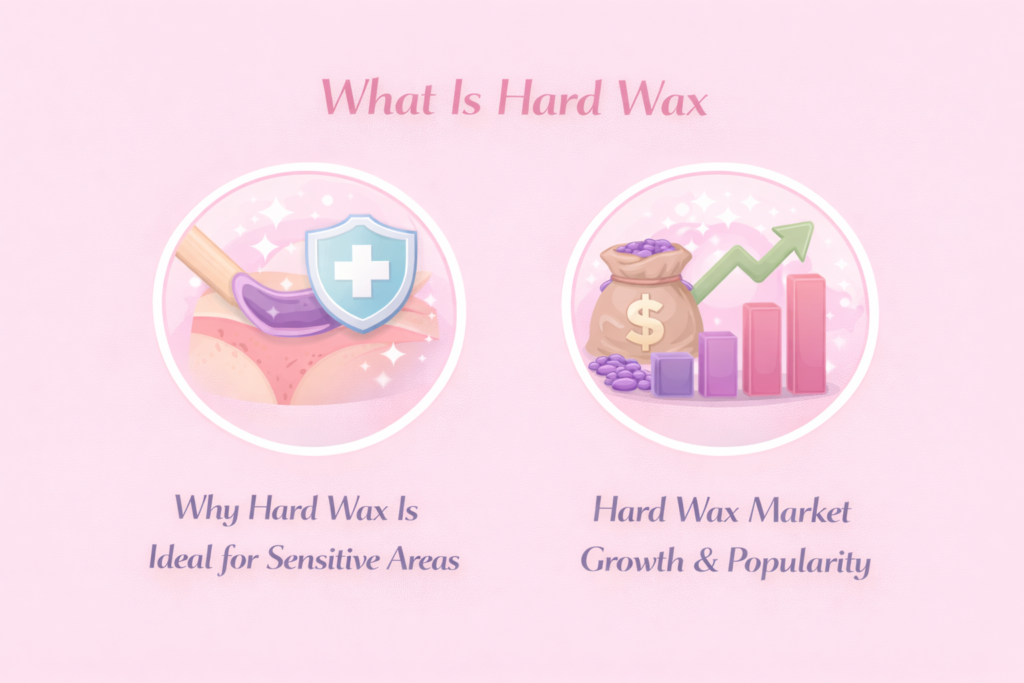
Hard wax is a type of wax that grips the hair instead of the skin. This quality helps reduce discomfort during the waxing process. Hard wax is applied warm and allowed to harden before removal. Once it sets, it can be taken off by hand without using any strips.
This makes it especially suitable for sensitive areas like the face, underarms, and bikini line. Many beginners appreciate it because it is easy to control and less likely to irritate the skin. Its reliability has increased its popularity among both professionals and home users.
Market studies highlight this growing demand. According to research, the global hard wax industry is expected to reach USD 1.5 billion by 2033, supported by a 6.2% CAGR from 2025 to 2033.
What is Hard Wax Made of | Hard Wax Ingredients
Hard wax is mainly made from beeswax and rosin, which work together to grip the hair without sticking too much to the skin. To make the formula smoother and more comfortable, brands often add oils, vitamins, and soothing agents that help protect the skin during waxing.
Research also shows that hard wax contains natural components such as saturated fatty alcohols (C24, C26, C30), saturated fatty acids (C22, C24, C26), and n-alkanes (C29, C31), which contribute to its firm texture and melt behavior.
Some professional blends include extra ingredients to enhance performance. For example, Cirepil Blue Hard Wax contains glyceryl rosinate, beeswax, rosin, ethylene/VA copolymer, lanolin, triethanolamine, hydroabietyl alcohol, and cosmetic colorants. These added components help the wax melt evenly, apply smoothly, and remove cleanly.
So overall, hard wax is a simple mix designed to grab hair effectively while keeping the skin as calm and comfortable as possible.
Is Hard Wax Good For Beginners
Yes, hard wax is generally good for beginners because it is easier to control and gentler on the skin. Many beginners struggle with pulling too early, applying wax too thick or too thin, or feeling scared about the pain.
Hard wax helps reduce these issues because it sticks to the hair instead of the skin, which usually makes the process less painful and more forgiving. Beginners also worry about making a mess or removing strips incorrectly, but hard wax does not require cloth strips, so it simplifies the technique.
However, if someone applies it too slowly or lets it get too cold before removing, it can break or become harder to pull off. With a little practice, though, hard wax becomes a beginner-friendly option.
Who Is the Ideal Client for Hard Wax
The ideal client for hard wax is anyone who wants a gentler and more forgiving waxing experience. Beginners benefit the most because hard wax is easier to control and does not require strips, which reduces common mistakes.
Hard wax is also great for clients with sensitive skin, since it grabs the hair without sticking strongly to the skin. According to the BCIT Environmental Public Health Journal, hard wax is especially suitable for delicate and fragile skin, making it a safer choice for those who irritate easily.
Hard wax is also helpful for clients with low pain tolerance because its lighter pull usually feels more comfortable. Hard wax is ideal for sensitive areas like the bikini line, underarms, and face, where the skin needs extra care and gentleness.
What is the Best Hard Wax for Professionals
Professionals usually look for hard wax that melts smoothly, removes hair cleanly, and stays gentle on the skin. Some of the most trusted options include Cirepil Blue Hard Wax, which is well-known for its consistent performance and ability to grip even short hairs.
Another great choice is Starpil Blue Film Wax, which spreads easily and works well on large and small areas. Many estheticians also like Berodin Blue Hard Wax because it stays flexible as it cools, making removal smoother and reducing breakage.
These formulas give professionals the control and reliability they need for fast, comfortable waxing sessions. We have covered each of these top-rated hard waxes in detail, so you can read our in-depth article on the best hard wax for a complete breakdown.
What Is the Best Hard Wax Brand
There is no single “best” hard wax brand for everyone, but some names are widely trusted by both professionals and home users. Brands like Cirepil, Starpil, and Berodin are often recommended because they consistently deliver smooth application and effective hair removal.
These brands make formulas that work well on sensitive skin and grip hair without pulling too hard on the skin. Many people prefer Cirepil for its reliable performance, while Starpil is known for easy handling and Berodin for flexibility.
Choosing the best brand also depends on your skin type and waxing needs, so it helps to try a few trusted options to see what works best for you.
How Bad Does Hard Wax Hurt
Hard wax does hurt, but most people find it less painful than soft wax. Pain during waxing mainly occurs when the wax adheres to both the hair and the skin. When the wax is removed, it does not only pull the hair from the root, but it also tugs on the top layer of the skin. This pulling action stresses the skin and irritates the nerve endings, which increases discomfort.
Hard wax helps reduce this pain because it sticks primarily to the hair rather than the skin. As a result, when the wax is pulled off, the skin stays mostly in place while the hair is removed. This is why hard wax generally feels less painful than waxes that strongly grip both hair and skin at the same time.
Is Hard Wax Less Painful
Yes, hard wax is generally less painful than soft wax because it grips the hair without sticking too firmly to the skin. The biggest source of pain during waxing is the pull on the skin, not just the removal of the hair itself.
Hard wax helps reduce this because it hardens around the hair, allowing it to lift the hair cleanly while minimizing skin tugging. This makes the removal feel gentler and more controlled, especially in sensitive areas like the bikini line or underarms.
While you will still feel a quick sting, most people find it much more manageable and far more comfortable compared to soft wax.
Does Hard Wax Remove Hair From the Root
Yes, hard wax removes hair from the root, which is why the results last much longer than shaving. When hard wax is applied, it surrounds each hair and begins to cool and harden.
According to research, as the wax hardens, the hair becomes fully embedded in it. When you pull the wax off by hand, it lifts the entire hair out from the follicle instead of just breaking it at the surface.
This is what gives waxing its smooth finish and allows hair to grow back more slowly and softly. So if your goal is long-lasting smooth skin, hard wax is an effective and reliable option.
Does Hard Wax Distort Follicles
No, hard wax does not distort hair follicles when it is used properly. Follicle distortion means the tiny opening where the hair grows becomes misshaped or damaged, which can lead to uneven growth or ingrown hairs.
Distortion usually happens when hair is pulled in the wrong direction, the skin is not supported, or the same area is overworked repeatedly. Hard wax helps prevent this because it hardens around the hair and removes it cleanly from the root with less tugging on the skin.
Since it does not stick tightly to the skin, it reduces unnecessary pressure on the follicle. This gentler removal makes hard wax a safer option for keeping follicles healthy and undamaged during waxing.
Can Hard Wax Remove Thin Hair
Yes, hard wax can remove thin hair, but its effectiveness depends on how short or fine the hair is. Hard wax is designed to shrink-wrap around the hair as it cools, which helps it grip even small or delicate strands.
However, extremely thin or very short hair may be harder for any wax to catch because there is less surface for the wax to hold onto. With proper technique—such as applying the wax firmly and allowing it to fully harden—hard wax can remove most fine hair from areas like the face, arms, or upper lip.
It may require a second pass in some spots, but overall, hard wax performs well on thin hair compared to many other hair removal methods.
Why Isn’t My Hard Wax Pulling Hair
If your hard wax is not pulling hair, it usually means one of the basic steps in the process went wrong. Poor skin preparation is a common cause because oils, lotions, or sweat create a slippery surface that prevents the wax from gripping the hair.
Applying the wax with too little pressure can also cause it to snap off without catching the roots. Hair that is too short or too long makes removal harder, and the American Academy of Dermatology notes that maintaining the right hair length helps the wax stick better and prevents irritation.
Wax that is too thin, too hot, or too cold can also fail to grab the hair. Even hairs growing in different cycles may require more than one pass for complete removal.
Why Doesn’t Hard Wax Remove All Hair
Hard wax does not always remove all hair because several factors can affect how well it grips the strands. Some hairs may be too short or too fine for the wax to catch properly, especially if they are in early growth stages.
Other hairs might lie flat against the skin, making it harder for the wax to wrap around them. Improper technique, such as applying the wax too thinly or removing it too slowly, can also lead to patches of leftover hair.
In some cases, different hair growth cycles mean new hairs are already forming beneath the skin. A second pass or regular waxing sessions usually help achieve smoother results.
Does Hard Wax Reduce Hair Regrowth
Yes, hard wax can help reduce hair regrowth over time, but it does not stop hair from growing permanently. The key reason is that hard wax removes the hair from the root, similar to epilation.
Research on epilation shows that when a hair is pulled out along with parts of the bulb or papilla, the regrowth process slows down, leading to longer periods of smooth skin. Hard wax works in a comparable way because it hardens around the hair, allowing it to lift the entire strand from the follicle.
This repeated removal weakens the hair over time, so it often grows back finer and softer. While results vary from person to person, consistent waxing can noticeably delay and reduce regrowth.
Does Hard Wax Go Against Hair Growth
Yes, hard wax is usually removed against the direction of hair growth, and this is an important part of why it works effectively. When you apply hard wax, you spread it in the same direction the hair grows so it can coat each strand smoothly. Once it hardens, you pull it off in the opposite direction, which helps lift the hair straight out from the root.
This technique reduces breakage and makes the removal cleaner. Pulling against the hair growth also helps remove shorter hairs that might otherwise slip through. If you pull in the wrong direction, the hair may break at the surface or stay behind, which can lead to uneven results or faster regrowth.
How Long Should Your Hair Be to Use Hard Wax
Your hair should be one-fourth to three-fourths of an inch long to use hard wax effectively. According to the American Academy of Dermatology, this length allows the wax to grip the hair properly and remove it cleanly from the root.
When the hair is too short, the wax cannot hold onto it, which often leaves patches behind. If the hair is too long, the waxing process can feel more painful and may cause the hair to break instead of pulling out smoothly.
Keeping your hair within the recommended range ensures better results, cleaner removal, and a more comfortable overall waxing experience.
Is Hard Wax Better for Short Hair
It depends, because hard wax is only better for short hair if the hair is long enough for the wax to grip properly. Hard wax works well on shorter hair because it shrink-wraps around each strand, but if the hair is too short, the wax cannot hold onto it, and you will not get clean results.
On the other hand, if the hair is too long, the wax can grip it, but the removal may feel more painful and can even cause breakage. That is why researchers recommend trimming longer hair before waxing to reach the ideal length.
According to expert guidelines, hair should be one-fourth to three-fourths of an inch long for the best performance.
Can Hair Be Too Long for Hard Wax
No, hair cannot be “too long” for hard wax to work, because very long hair can make the waxing process more difficult and more painful, which is why experts recommend trimming it first.
Hard wax can grip long hair, but the pull becomes stronger and may cause unnecessary discomfort, breakage, or uneven results. To avoid these issues, the hair should be kept at an ideal length that allows the wax to hold the strand properly without creating extra tension.
According to expert guidelines, the best length for waxing is one-fourth to three-fourths of an inch. Keeping hair within this range makes the process smoother, cleaner, and far more comfortable.
How to Make Your Own Hard Wax at Home
Hard wax can be prepared at home by melting natural ingredients such as beeswax, rosin (pine resin), and a small amount of carrier oil like coconut or olive oil. The beeswax and rosin are gently heated together using a double boiler until completely melted and well mixed, after which oil is added to improve flexibility and skin protection.
The mixture is stirred until smooth and then allowed to cool slightly until it reaches a warm, spreadable consistency. Once ready, the hard wax is applied in a thick layer in the direction of hair growth and allowed to harden before being pulled off by hand without the use of strips.
How to Heat Up Hard Wax Without a Warmer
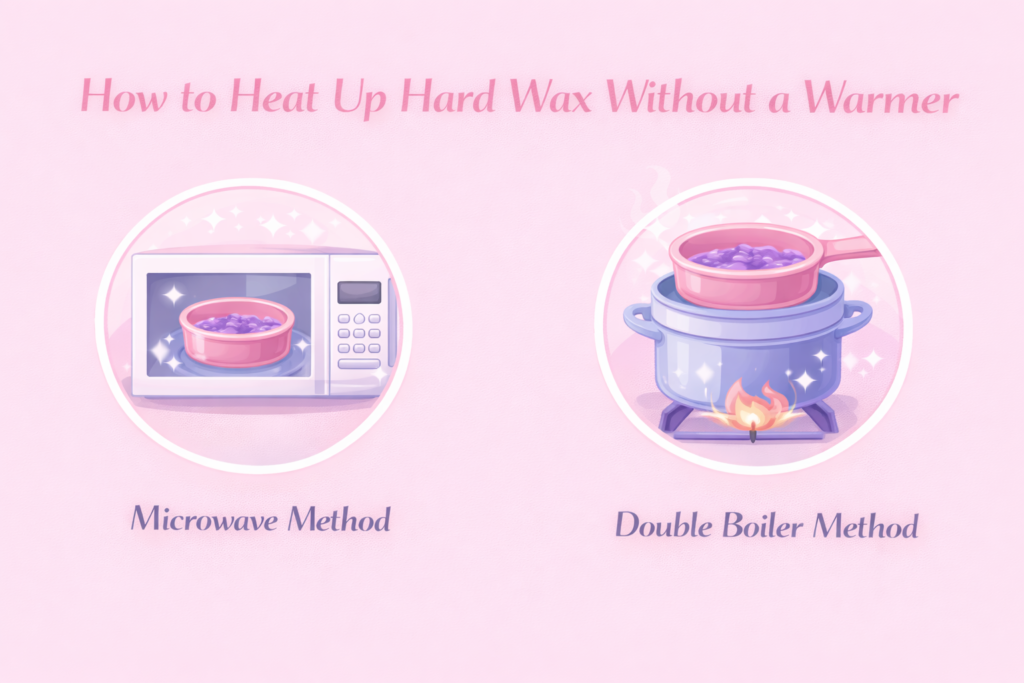
You can heat up hard wax without a hard wax warmer by using either the microwave method or the double boiler method, and both are safe if done carefully.
1. Microwave Method:
First, place the hard wax beads into a microwave-safe glass or silicone bowl, never plastic or metal. Put the bowl in the microwave and heat the wax on high for 10 to 15 seconds. Remove the bowl and stir thoroughly to distribute heat and prevent hot spots.
Repeat this process in short intervals, stirring after each round, until the wax reaches a smooth, honey-like consistency. Before applying, always test a small amount on the inside of your wrist to make sure it is warm, not hot.
Precaution: Never heat the wax for long periods at once, as this can cause overheating and burns.
2. Double Boiler Method:
Fill a saucepan halfway with water and bring it to a gentle simmer, not a rolling boil. Place the hard wax into a smaller, heat-resistant bowl that fits securely over the pot without touching the water. Set the bowl over the simmering water and allow the steam to melt the wax slowly.
Stir the wax regularly with a wooden or silicone stick to ensure even heating. Once the wax is fully melted and smooth, remove the bowl from heat and let it cool slightly before use.
Precaution: Do not allow water to splash into the wax, as moisture can affect its performance and cause splattering.
Can You Heat Hard Wax in The Microwave
Yes, you can heat hard wax in the microwave, but you need to be careful and follow the right steps to avoid burns. Most brands recommend wax warmers, but research shows microwaves can work if used correctly.
Always use a microwave-safe glass or silicone container and heat the wax in short bursts, usually 20 to 30 seconds at first. Stir the wax well after each interval to prevent hot spots, because hard wax has low water content and can overheat quickly.
When the wax starts to thicken again, reheat it in 10-second increments until it returns to a thick, honey-like consistency. Since microwaves do not maintain heat well, always test the temperature on your wrist before applying it to your skin.
What Temp Should Hard Wax Be
Hard wax should be applied at a temperature between 125 and 140 degrees Fahrenheit, which is approximately 50 to 60 degrees Celsius, according to research and professional guidelines. This temperature range allows the wax to melt smoothly and spread easily without becoming too hot for the skin.
If the wax is cooler than this range, it may be too thick to apply evenly and may not grip the hair properly. If it is hotter than recommended, it can increase the risk of burns, redness, or irritation.
The wax should feel warm, not hot, and have a thick, honey-like consistency before application. Always test a small amount on your wrist first to ensure it is safe and comfortable to use.
What Happens if Hard Wax Is Too Hot
If hard wax is too hot, it can cause several problems and make waxing unsafe and uncomfortable. Overheated wax becomes very runny and may drip or spread too thinly, which prevents it from setting properly on the skin. When this happens, the wax cannot grip the hair effectively, leading to poor hair removal.
More importantly, wax that is too hot poses a serious risk of skin injury. It can cause immediate pain, redness, and in severe cases, blistering or burns. Hot wax also loses its ideal thick, honey-like consistency that is needed for controlled application.
To stay safe, always test the wax temperature on your inner wrist before applying it to any sensitive area.
Can You Rewarm Hard Wax
Yes, you can rewarm hard wax, but only under very specific and safe conditions. If the wax has not touched the skin, such as unused wax left in your wax warmer from a previous session, it is generally safe to reheat and use hard wax again for personal use. In this case, you can simply turn off the warmer, cover the wax, and remelt it when needed.
However, hard wax that has already been applied to the skin and removed with hair should never be reused.
Once wax touches the skin, it can collect hair, dead skin cells, sweat, and natural oils, all of which can introduce bacteria into the wax. These contaminants remain trapped in the wax even after it cools.
Reheating the wax does not make it safe again because wax warmers do not reach temperatures high enough to kill bacteria or sterilize the product. As a result, reused wax can spread bacteria and increase the risk of skin infections, irritation, or breakouts.
This is why proper waxing hygiene requires discarding any wax that has come into contact with the skin, especially in professional or shared-use settings.
Why Is My Hard Wax Tacky?
Hard wax becomes tacky when it does not cool or set properly, and this usually happens because of temperature or application issues. If the wax is too hot, it stays sticky instead of firming up, and if it is too cold, it may not bond correctly with the hair.
High humidity or moisture on the skin, such as sweat or leftover lotion, can also make hard wax tacky.
Applying the wax too thinly is another common cause, because thin layers cool unevenly and fail to harden fully. To avoid this problem, make sure the skin is clean and dry, apply the wax in a thicker layer with firm pressure, and allow it enough time to cool until it feels firm but flexible before removal.
How to Use Hard Wax
To use hard wax, start by cleansing and drying the skin to remove oil, sweat, or lotion. Heat the wax until it reaches a warm, honey-like consistency and test the temperature on your wrist. Apply the wax in the direction of hair growth using firm pressure to help it grip the hair.
Allow the wax to cool and harden, then hold the skin taut and remove the wax quickly against the direction of hair growth. Finish by soothing the area with a calming product to reduce redness. For step-by-step instructions and detailed tips, read our in-depth article on how to use hard wax.
When Would You Use Hard Wax
You would use hard wax when you want a gentler and more precise waxing experience, especially on sensitive or delicate areas. Hard wax is ideal for places like the bikini line, underarms, face, and eyebrows because it grips the hair without sticking tightly to the skin.
It is also a good choice when the hair is short to medium length, since it shrink-wraps around each strand as it cools. Many people also use hard wax when they are new to waxing because it is easier to control and creates less mess.
Overall, you would choose hard wax anytime you want cleaner removal with less skin irritation and discomfort.
Can Hard Wax Pull Out Blackheads
No, hard wax cannot reliably pull out blackheads, although it may sometimes lift a few loose surface plugs by accident. Blackheads are not the same as hair; they are clogged pores made of oil, dead skin, and buildup stuck inside the follicle.
Hard Wax is designed to grip hair, not extract material from inside pores, so it cannot apply the deep pressure needed to remove true blackheads. At best, hard wax may remove some surface debris, but it will not clear clogged pores the way proper exfoliation, salicylic acid, or professional extraction does.
If someone relies on wax for blackheads, they may be disappointed because it simply is not made for that purpose.
Can I Use Hard Wax on My Pubic Hair
Yes, you can use hard wax on your pubic hair, and it is actually one of the best choices for sensitive areas like the bikini line and Brazilian waxing. Hard wax is designed to grip the hair firmly while being gentle on the skin, which makes it suitable for delicate regions where the skin is thinner and more sensitive.
It removes hair cleanly with less pulling on the skin, which can make the experience more comfortable. Many professionals prefer hard wax for intimate waxing because it reduces irritation and helps prevent unnecessary redness. So if you want to do bikini wax with hard wax at home, hard wax is a beginner-friendly and effective option.
How Many Times Can You Wax With Hard Wax
You can wax with hard wax as often as your hair growth cycle allows, but it is important to follow safe limits during each session. Most people wax every 3 to 6 weeks, depending on how quickly their hair grows.
In a single session, hard wax is gentle enough that you can usually go over the same small area two to three times without damaging the skin, because it grips the hair rather than the skin. However, repeatedly waxing the same spot beyond this can cause irritation. If a few hairs remain, using tweezers is a better option than applying more wax.
For hygiene, never reuse wax that has touched the skin, especially in professional settings. At home, unused wax may be reheated for personal use, but professionals must always use fresh wax for each client to prevent bacterial contamination.
How Long Does Hard Wax Last
Hard wax typically keeps your skin smooth for 3 to 6 weeks, but the exact duration depends on your body area, hair type, and natural growth cycle. Facial hair tends to grow back faster, often within 3 to 4 weeks, because those hairs are finer and have quicker growth patterns.
Body areas like the legs, arms, chest, or back usually stay smooth longer, often 4 to 6 weeks or more, because the hair is removed from the root and takes more time to regrow.
Staying consistent with waxing and following proper aftercare can help slow regrowth over time, and many people notice that their hair becomes finer and softer with regular hard wax sessions.
What Happens if You Leave Hard Wax on Too Long
If you leave hard wax on too long, it can become too hard and brittle, which makes it more difficult to remove cleanly. When wax overcools, it may crack or break instead of lifting off in one piece, leading to incomplete hair removal. This can cause you to pull repeatedly, which increases skin irritation and discomfort.
Overhardened wax can also grip the hair unevenly, leaving patches behind.
While leaving hard wax on too long usually does not damage the skin by itself, the extra pulling needed to remove it can cause redness or sensitivity. For best results, hard wax should be removed once it feels firm but still flexible, usually within a short cooling period after application.
Pros of Hard Wax | Benefits of Hard Wax
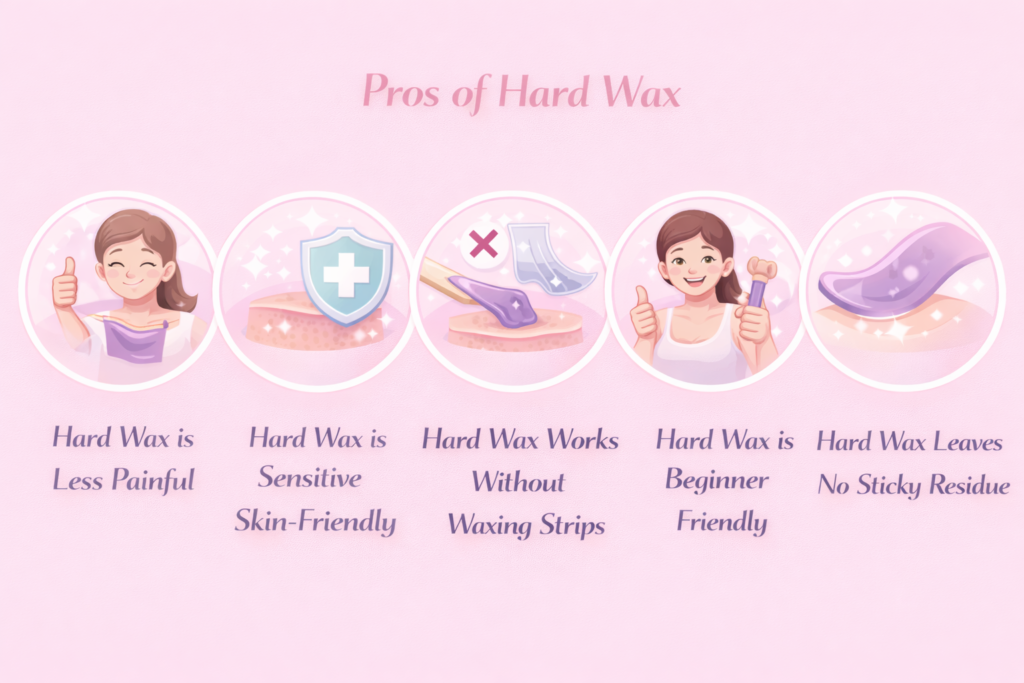
1. Hard Wax is Less Painful
Hard wax is generally less painful because it grabs the hair without clinging too much to the skin. Pain occurs during waxing when the wax pulls on both the hair and the delicate skin underneath, which creates that sharp, uncomfortable feeling everyone worries about.
Hard wax reduces this because it hardens around the hair itself, allowing it to lift the hair from the root while leaving most of the skin untouched.
Research supports this by noting that hard wax hardens onto the hair, which makes removal gentler. This is especially helpful for beginners or people with sensitive skin. As a result, the pulling sensation feels lighter, and the overall waxing experience becomes easier and more comfortable.
2. Hard Wax is Sensitive Skin-Friendly
Hard wax is more sensitive-skin friendly because it avoids many of the problems delicate skin faces during waxing. People with sensitive skin often deal with redness, irritation, burning, and small bumps because regular soft wax sticks strongly to both the hair and the skin.
This strong pull can stress the skin and make the experience uncomfortable. Hard wax helps prevent these issues because it grips only the hair and lifts away from the skin as it cools.
According to the BCIT Environmental Public Health Journal, hard wax is especially suitable for delicate and fragile skin for this exact reason. By reducing direct skin contact, it lowers irritation, minimizes redness, and creates a gentler, more comfortable waxing experience overall.
3. Hard Wax Works Without Waxing Strips
Hard wax does not require waxing strips, and this is a big advantage for anyone learning to wax. A waxing strip is a cloth or paper piece that you press onto soft wax and then pull off to remove the hair.
While strips work well, they can sometimes make the process harder because beginners may press too lightly or too firmly, causing uneven pulling or extra discomfort. Strips can also tug more on the skin, which can irritate sensitive areas.
Hard wax avoids these issues because it hardens on its own and becomes the strip. You simply let it cool and pull it off directly. This makes the technique easier to control, reduces mess, and often feels gentler on the skin.
4. Hard Wax is Beginner Friendly
Hard wax is very beginner friendly because it gives you more control and leaves less room for mistakes. When someone is new to waxing, they often worry about applying the wax too thin, pulling too early, or causing unnecessary pain.
Hard wax helps with these issues because it grips the hair instead of the skin, which makes the process more forgiving. It also hardens on its own, so you do not need to manage strips or worry about pressing them correctly. If you apply it a little unevenly, it usually still removes cleanly once it cools.
Beginners also like that hard wax allows them to work slowly without the wax drying too fast. Overall, it simplifies the technique and creates a gentler, easier learning experience.
5. Hard Wax Leaves No Sticky Residue
One of the biggest benefits of hard wax is that it does not leave behind sticky or glue-like residue on the skin. According to research, hard wax lifts off cleanly because it hardens around the hair instead of spreading thinly across the skin.
This makes cleanup much easier compared to soft wax, which can leave tacky patches that require oil or special wipes to remove. With hard wax, most of the product comes off in one piece, so your skin feels cleaner and less irritated afterward.
This simple, mess-free removal is a major advantage, especially for beginners or anyone with sensitive skin.
Cons of Hard Wax | Disadvantage of Hard Wax

1. Hard Wax is Expensive for Large Areas
Hard wax can be more expensive for large areas because you generally need more product to cover big sections of the body. Areas like the legs, arms, back, or chest require thick, even layers of wax so it can harden properly and grip the hair.
Since hard wax is already pricier than soft wax, using large amounts quickly increases the overall cost. The process can also take longer, which may raise the price in professional settings.
While hard wax is excellent for sensitive or smaller areas, many people switch to soft wax for large body zones to save time and money while still getting smooth results.
2. Hard Wax Cause Burns if Overheated
One drawback of hard wax is that it must be heated to 125–140°F, which means there is a real risk of burning the skin if the temperature gets too high. If the wax is overheated, it becomes too hot to spread safely and can cause redness, irritation, or even mild burns.
Research and professional guidelines emphasize that “its melting point should be low enough to spread across the skin without burning it,” which shows how important temperature control is. Beginners especially need to be cautious and always test the wax on a small area before applying it to sensitive skin.
Is Hard Wax Better Than Soft Wax
Whether hard wax is better than soft wax depends on your skin type, hair type, and the area you want to wax. Hard wax is gentler because it sticks to the hair instead of the skin, making it ideal for sensitive areas like the bikini line, underarms, and face.
Soft wax, on the other hand, is faster for large areas such as legs and arms because it spreads thinly and removes hair efficiently with strips. Hard wax tends to be more comfortable but slower, while soft wax is quicker but can feel harsher.
For a deeper comparison, you can read our detailed article on hard wax vs soft wax.
Is Hard Wax Better Than Sugar Wax
Hard wax can be better than sugar wax in certain situations, especially for removing coarse or stubborn hair and for small, sensitive areas like the bikini line and underarms. It grips thick hair strongly and usually removes it in fewer passes, making the process faster and more efficient. However, sugar wax is often gentler, less painful, and better for sensitive skin and full-body waxing.
If you want a detailed, side-by-side comparison of pain, results, skin type, hair type, cost, and best uses, read our in-depth article on Sugar Wax vs Hard Wax to find out which method is best for you.
Conclusion
Hard wax is a reliable and skin-friendly hair removal option when used correctly and with proper care. Its ability to grip hair instead of skin makes it especially useful for sensitive areas, beginners, and people with lower pain tolerance.
While it has some downsides, such as higher cost for large areas and the need for careful temperature control, its benefits often outweigh the drawbacks. By understanding the right hair length, correct technique, hygiene rules, and aftercare, you can get smooth, long-lasting results safely.
Whether you wax at home or professionally, informed use of hard wax leads to better outcomes, healthier skin, and a more comfortable waxing experience overall.